

If you are buying a home on James Island, the number that should drive your offer is not the list price. It is the monthly carry: principal and interest, flood insurance, wind and hail coverage, and the property tax ratio you will actually be assessed at. On James Island, those four lines routinely differ by several hundred dollars a month between two houses carrying the same asking price — usually because of elevation. Price the carry first, then work backward to what you can pay. Here is how to run that number, and where the November 2026 data says your leverage actually sits.
Key Takeaways
- The 30-year fixed averaged 7.11% as of November 12, 2026 — a fourth consecutive weekly decline, per Freddie Mac.
- Charleston Trident sellers received 95.8% of original list price in October 2026 — roughly $19,500 off the $445,239 median, per CTAR.
- The average NFIP flood premium in Charleston County is $922 a year, or $1,204 with fees, per FEMA policy data.
- Elevation — not square footage — is the single biggest swing factor in James Island carry costs.
- South Carolina's 4% legal residence ratio must be applied for and approved — it does not attach automatically at closing.
- Run the three-step James Island Carry Test below before you write an offer.
What the November 2026 Numbers Actually Say
Rates moved in buyers' favor this month. Freddie Mac put the 30-year fixed at 7.11% on November 12, 2026, down from 7.18% the prior week — a fourth straight decline and the lowest reading in seven weeks. The 15-year averaged 6.45%. The year-ago comparison matters more: twelve months earlier the 30-year sat at 6.24%.
Local supply tells a different story than the national headlines. In October 2026, per the Charleston Trident Association of Realtors, regional inventory finished at 5,582 homes — up just 1.1% year over year, with 3.6 months of supply. That is not a buyer's market by the traditional measure. But closed sales fell 6.2%, new listings 11.7%, and pending sales 13.1%. Both sides of the table have pulled back.
Two numbers matter most: 53 median days on market, and 95.8% of original list price received. Read together, they say correctly priced sellers are still transacting on reasonable terms while sellers who reached are sitting — and eventually trading. Your leverage sits with that second group, not spread evenly across the market.
The James Island Carry Test
Most buyers underwrite a Charleston home the way they would one in Columbia or Greenville: price, rate, taxes, done. On an island with this much elevation range, that method understates the real cost. The Carry Test is a three-step sequence that puts the coastal variables in front of the price negotiation instead of behind it.
Step 1 — Rate-Adjusted Base
Price principal and interest at today's rate, not September's quote. On 80% of the $445,239 Trident median — a $356,191 loan — 7.11% produces roughly $2,396 a month. The same loan at last November's 6.24% ran about $2,191. Identical house, $205 more per month, entirely from the rate.
Step 2 — Coastal Carry
Now add the three lines that separate James Island from an inland purchase. Flood first: FEMA policy data puts the Charleston County average NFIP premium at $922 a year, $1,204 all in — about $100 a month. That is an average across every zone in the county, which is why it is the wrong number for your house. Under Risk Rating 2.0 premiums price to the structure, so the gap between an elevated home and a pre-FIRM slab house a few blocks away is measured in multiples, not percentages. Second, wind and hail: a July 2026 Coalition for an Insurable Future report, built on FEMA's risk index, projected South Carolina could see the nation's second-highest homeowners premium increases over the next decade. Underwrite for a rising number. Third, the assessment ratio — 4% for an owner-occupied primary residence, 6% for second homes and investment property. Per the South Carolina Department of Revenue, legal residence must be approved before it is granted, through the Charleston County Assessor's office. Budgeting at 4% on a property that has not yet qualified is the most common underwriting error on second-home purchases here.
Step 3 — Concession Gap
Convert your realistic negotiating room into monthly dollars so it is comparable to Steps 1 and 2. At 95.8% of original list, the typical Trident seller concedes about $19,500 on a median-priced home. With 20% down at 7.11%, that is worth roughly $105 a month — and it tells you when to stop grinding on price and start solving for the carry.
| Step | What to pull | Who provides it |
|---|---|---|
| 1. Rate-Adjusted Base | P&I at this week's locked rate, not a stale quote | Your lender |
| 2. Coastal Carry | Elevation certificate, bindable flood quote, wind/hail quote, assessment ratio | Seller, insurance agent, county assessor |
| 3. Concession Gap | Days on market, original list vs. current list, price-change history | Your broker |
"Negotiation is currently recovering about one dollar for every two the rate took away. Charleston Trident sellers received 95.8% of original list price in October 2026 — roughly $19,500 off the $445,239 median. At the 7.11% average Freddie Mac reported on November 12, that concession is worth about $105 a month with 20% down. The move from 6.24% a year earlier to 7.11% added about $205 a month to the same purchase."— Chris Eller, Broker Associate, The Cassina Group. Calculated from Charleston Trident Association of Realtors October 2026 indicators and the Freddie Mac Primary Mortgage Market Survey of November 12, 2026.
How to Put This to Work Right Now
- Request the elevation certificate before the inspection period, not during it. If the seller has none, that cost and timeline are yours — price them in before you go under contract.
- Get a bindable flood quote, not a ballpark. Risk Rating 2.0 prices to the individual structure. An agent's estimate off the county average tells you almost nothing about your house.
- Re-run your pre-approval. Four consecutive weekly declines means a quote from six weeks ago understates your buying power.
- Target days on market, not price cuts. The regional median is 53 days. A James Island listing sitting past 75 with no reduction is a conversation worth having.
- Confirm your jurisdiction. James Island property sits in the Town of James Island, the City of Charleston, or unincorporated Charleston County. Permitting authority, services, and millage differ accordingly — and so does your renovation timeline.
- File for legal residence promptly after closing. Verify current requirements and deadlines directly with the Charleston County Assessor, and confirm the tax treatment of any second home or rental with your CPA.
Why James Island Rewards This Analysis
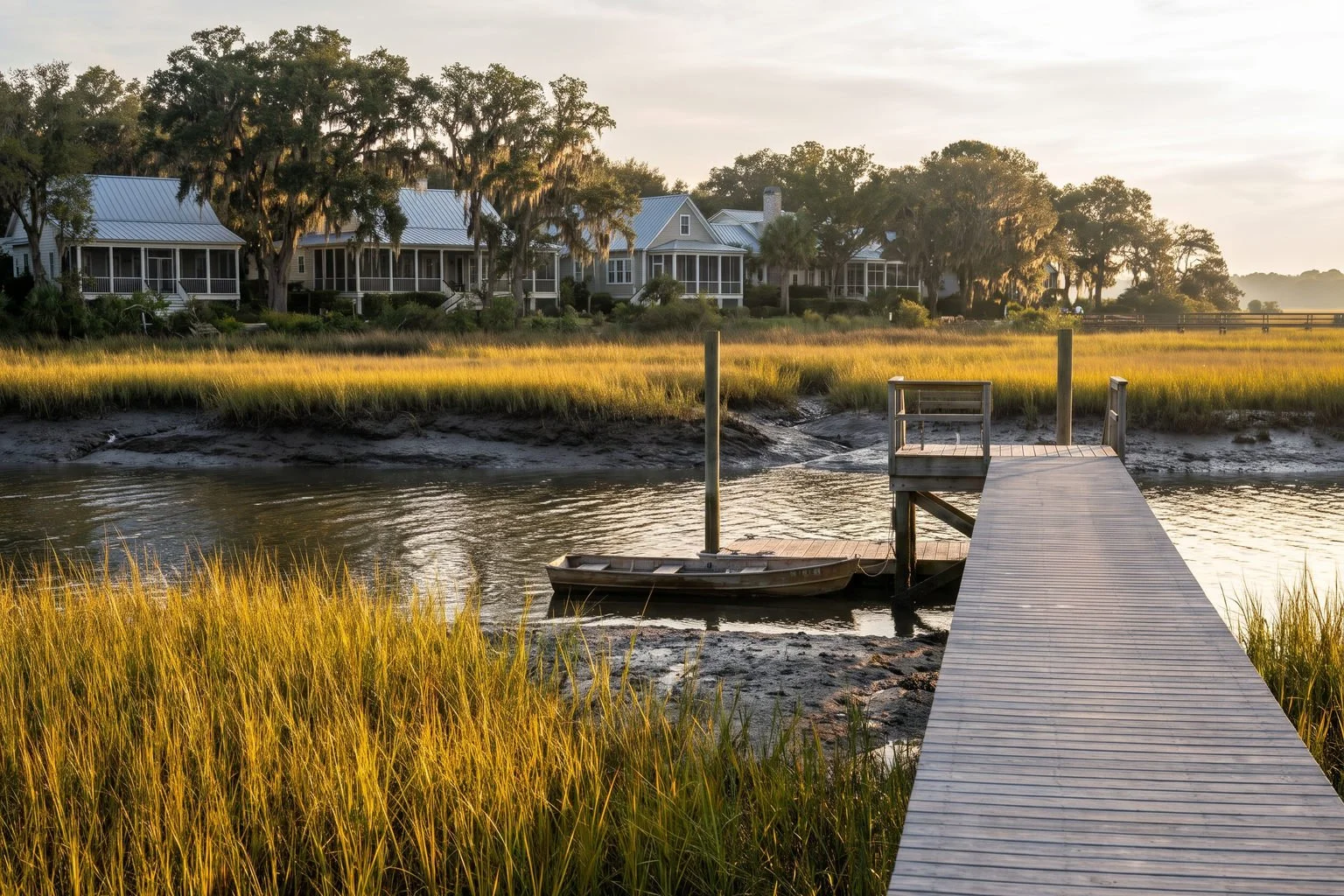
James Island occupies a specific position in the Charleston market: roughly ten minutes to downtown by the Connector, direct access to Folly Beach, and a price basis well below Mount Pleasant or the peninsula. That value gap is why demand holds even in slower quarters.
It also carries unusually wide elevation variance for its size. Two lots three blocks apart can fall in different flood zones with materially different insurance outcomes — which is why the Carry Test beats a CMA built on price per square foot alone. This is where value engineering gets interesting: an elevated, code-current new build often carries cheaper per month than a less expensive 1970s slab ranch once flood and wind premiums are priced in. The higher purchase price can be the lower total cost, and most buyers never run that calculation.
For context, Charleston County's single-family detached median sold price reached $725,000, up 3.6%, with active listings up 7.3% to 1,511 and months of supply at 3.2 versus 2.4 two years ago — per CTAR Market Monitor data compiled by The Alan Donald Team through September 2026. Buyers have more to choose from than in 2024, and a higher cost of carry. Only one of those shows up on the listing sheet.

Frequently Asked Questions
How much is flood insurance on James Island?
The Charleston County average NFIP premium is $922 a year, or $1,204 with fees, per FEMA policy data for July 2026. Under Risk Rating 2.0 your actual premium depends on the structure — elevation, foundation type, first-floor height — so treat the county average as a starting point and quote the specific address.
Do I need an elevation certificate to buy on James Island?
It is not universally required, but it is often the difference between an accurate flood quote and a guess. Ask for it during due diligence. If none exists, budget for a surveyor to produce one before your contingency period expires.
Is now a good time to buy on James Island?
Rates have fallen four weeks running to 7.11%, inventory is up slightly, and buyer competition has thinned — closed sales fell 6.2% and pending sales 13.1% in October. For a buyer prepared to underwrite the full carry, conditions are more workable than a year ago, though affordability is tighter: the regional index sits at 71 versus 81.
What is the difference between the 4% and 6% property tax ratio?
South Carolina assesses an owner-occupied primary residence at a 4% ratio and second homes or investment property at 6%. The 4% classification requires an application through the county assessor and must be approved before it is granted. Confirm current requirements with the Charleston County Assessor's office, and discuss investment property treatment with your accountant.
How far below asking should I offer on James Island?
Regionally, sellers received 95.8% of original list in October 2026 — a roughly 4% gap. That is an average, not a formula. A listing at 20 days with no price history rarely supports it; one at 90 days with two reductions often supports more. Days on market and price history should drive your number.
Is new construction a better buy than an older James Island home?
On monthly cost, frequently yes. Current wind code, elevated foundations, and a recent elevation certificate price materially better on insurance than an older slab home — an advantage that compounds as premiums rise. Run both through the Carry Test rather than comparing list prices.
Let's Run Your Numbers
Looking to buy, build, or invest in Charleston real estate? I'm Chris Eller, Broker Associate with The Cassina Group and a luxury real estate developer specializing in new construction and coastal properties across Charleston and the barrier islands.
Call or Text: 843-343-3359 | Email: Chris@TheCassinaGroup.com | Web: ChrisEllerRealEstate.com
If you're considering buying, selling, or building in Charleston or anywhere in the Lowcountry, reach out anytime for expert guidance.
