
Chris Eller Chris Eller

Charleston's $1M+ Buyers Are Rethinking How They Finance Waterfront Homes in 2026

Six months ago, most of my luxury buyers on Isle of Palms and Sullivan's Island were waiting. Waiting for rates to drop, waiting for the "right" moment, waiting for a signal that never quite arrived. That posture has changed. The buyers I'm working with today aren't waiting anymore — they're getting smarter about how they finance, and the conversation has shifted from "when will rates fall" to "how do I structure this loan to my advantage right now."

That shift matters because Charleston's luxury market runs almost entirely on jumbo financing. The moment a buyer crosses South Carolina's 2026 conforming loan limit of $832,750 — which happens on nearly every waterfront purchase on Isle of Palms, Sullivan's Island, or the Daniel Island marsh-front lots, and on a growing share of Mount Pleasant and downtown Charleston deals north of $1M — they're in jumbo territory. How that loan is structured can move the effective cost of a $2M home by tens of thousands of dollars a year. Most buyers don't realize how much room they have to negotiate that structure until someone walks them through it.

Market Insight: Rates Are Down From a Year Ago, But the Real Story Is the Jumbo Spread

As of mid-July 2026, Freddie Mac's Primary Mortgage Market Survey put the 30-year fixed conventional rate at 6.55%, up slightly from 6.49% the week before, but meaningfully lower than the 6.75% average this time last year. That year-over-year drop is real, and it's part of why showing activity on Isle of Palms and Sullivan's Island has picked up since spring.

The more interesting number for my clients isn't the conventional rate — it's the jumbo spread. Jumbo 30-year rates have been running close to 6.5% this year, and in a lot of cases they're now landing within a quarter point of conventional rates, sometimes even under them. That's a historically narrow spread. A decade ago jumbo buyers routinely paid a premium over conforming borrowers. Today, private banks and portfolio lenders are competing hard for high-net-worth clients, because a $1.5M mortgage is also a wealth management and private banking relationship. They're pricing accordingly.

What this means in plain terms: the penalty for buying a $2M home over a $700K home has shrunk. If the Fed moves on rate cuts later this year, most forecasts have 30-year jumbo rates settling somewhere in the 6.25% to 6.75% range by year-end, with a wider band of 6.5% to 7.25% if inflation proves sticky. Either way, the spread compression is likely to hold, which is good news for anyone financing a waterfront or new-construction purchase in the Lowcountry.

Educational Value: How Jumbo Financing Actually Works for a Charleston Luxury Purchase

Buyers who haven't financed above $1M before are often surprised by how different the jumbo process is from a standard conforming loan. Here's what I walk clients through:

1. Know your trigger point

Any single-family loan above $832,750 in Charleston, Berkeley, Dorchester, or Colleton County is jumbo — South Carolina has no high-cost county designation, so the limit is flat statewide. A $950,000 cottage on James Island and a $4M new-build on Sullivan's Island are both jumbo the moment the loan amount crosses that line, even if the price points feel worlds apart.

2. Shop the spread, not just the headline rate

On conventional loans, rates cluster tightly across lenders — maybe an eighth to a quarter point apart. Jumbo rates vary far more, because each lender prices risk differently and weighs the relationship value differently. I've seen quotes on the same $2M loan vary by half a point between a national bank and a regional private bank. On a jumbo balance, that's real money — get at least three quotes, including one from a private bank that wants your deposit relationship.

3. Understand the documentation lift

Jumbo underwriting digs deeper: full asset verification, often 12-24 months of reserves, and closer scrutiny if income comes from a business, investments, or out-of-state sources — common for the relocation buyers I work with from the Northeast and Southeast. Get pre-approved early, not after you've written an offer on a Sullivan's Island listing.

4. Weigh ARM vs. fixed honestly

With rates elevated but expected to soften, I'm seeing more sophisticated buyers take a 7/1 or 10/1 ARM on jumbo balances, betting they'll refinance or sell before the adjustment period. It's a legitimate strategy if you have a realistic 5-10 year horizon on the property, but it's the wrong move for a forever home. [Internal link: Fixed vs. ARM financing for Charleston second homes]

Buyer/Seller Strategy: What to Do With Rates Where They Are Right Now

For buyers: Don't wait for a rate that may not come. Get pre-approved with two or three jumbo lenders now, compare structures (not just the rate — points, rate locks, prepayment terms), and consider a temporary buydown funded through seller concessions if you're negotiating on a listing that's had some days on market. On Isle of Palms and Sullivan's Island specifically, well-priced waterfront inventory is still moving quickly enough that financing delays can cost you the property — have your jumbo pre-approval buttoned up before you tour.

For sellers: Buyers financing above $832,750 face a slower, more document-heavy approval process than conforming buyers. Ask your agent to vet financing strength early, and don't assume a large down payment means a smooth close — request a jumbo pre-approval letter, not just a pre-qualification, before you take a home off the market for a buyer under contract.

For both: Rate locks matter more in a market like this one, where weekly moves of a few basis points are common. If you're under contract and rates dip even slightly, ask your lender about a float-down option rather than locking blind on day one.

Local Market Context: What This Looks Like Across Charleston's Luxury Neighborhoods

Charleston's overall median sale price is running around $458,000, up roughly 8% year over year — but that number tells you almost nothing about the barrier island and luxury segment, where jumbo financing is the norm rather than the exception. On Isle of Palms and Sullivan's Island, oceanfront and marsh-front new construction routinely lands in the $2.5M to $6M range, financed almost entirely through jumbo or portfolio products. Mount Pleasant and Daniel Island sit in a hybrid zone — plenty of conforming purchases, but the new-construction and waterfront product increasingly crosses into jumbo territory as elevated, hurricane-code-compliant builds push construction costs higher.

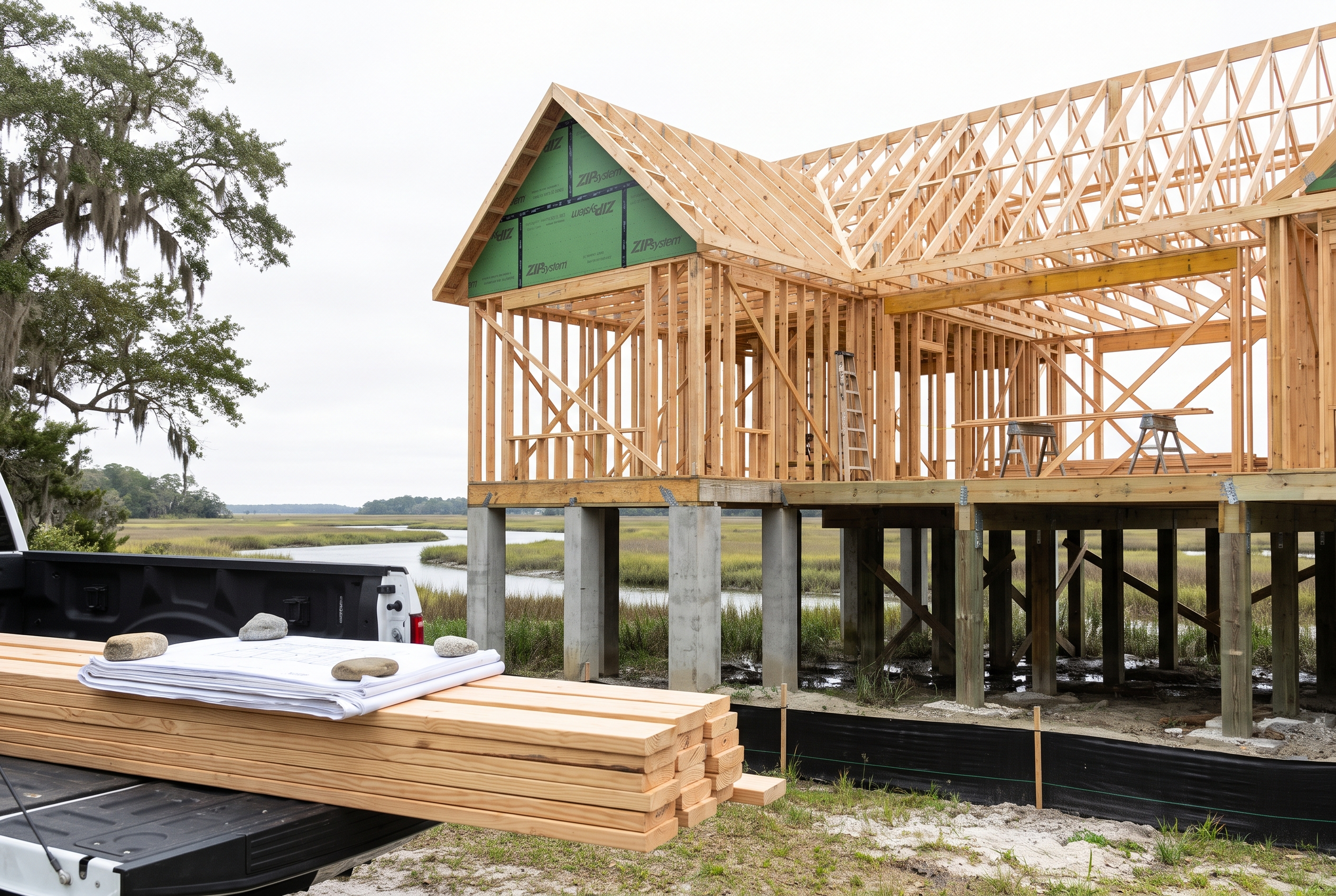
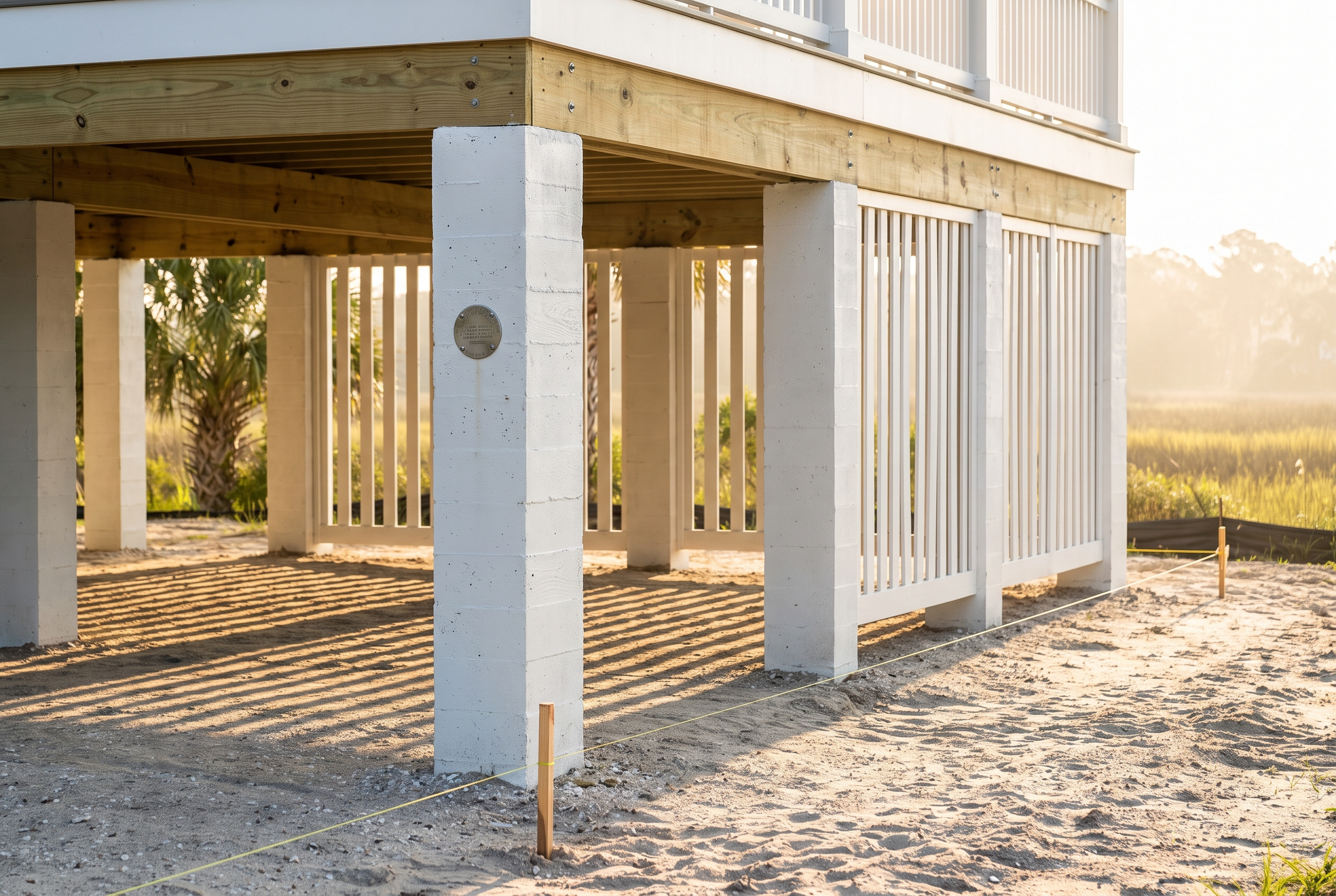
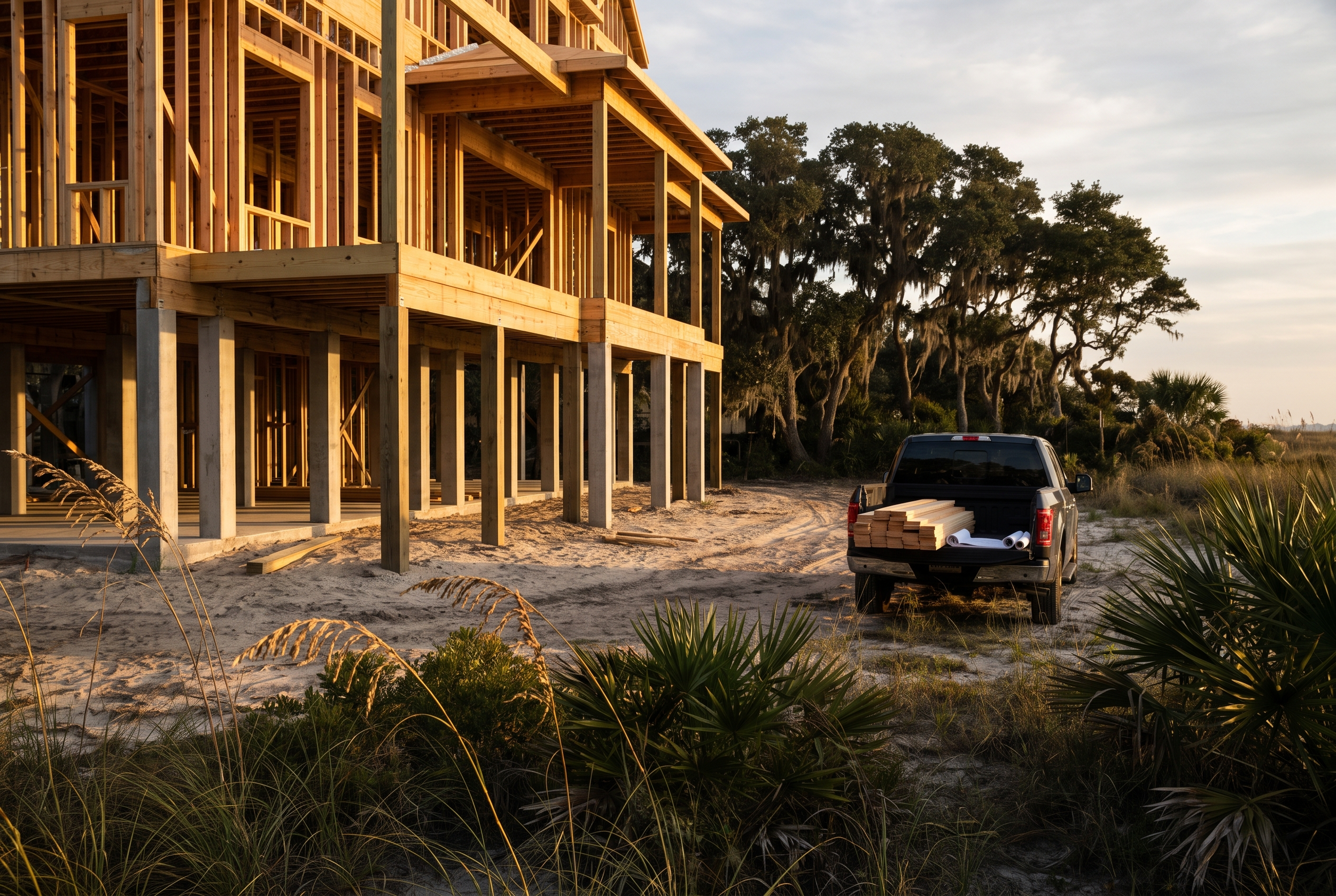
Coastal construction economics play into the financing conversation too. Elevated pilings, impact-rated glazing, and flood-zone compliance on Isle of Palms and Sullivan's Island add real cost to new builds, which pushes more buyers into jumbo loan amounts even on lots that wouldn't have required it five years ago. Insurance underwriting has tightened alongside financing, so I'm advising buyers to get a homeowners and flood insurance quote locked in during due diligence, not after closing — a jumbo lender will want to see it, and a surprise premium can change your monthly payment math materially.

On the investment side, I'm fielding more calls from buyers using jumbo financing on short-term rental purchases in Mount Pleasant and James Island, where debt-service-coverage-ratio (DSCR) loan products — underwritten on rental income rather than personal income — are filling a gap for buyers who don't want to run purchases through traditional W-2 documentation. [Internal link: DSCR loans for Charleston investment properties]

Frequently Asked Questions

What is the jumbo loan limit in Charleston, SC for 2026?

The 2026 conforming loan limit in South Carolina is $832,750 for a single-family home, and it applies statewide since no SC county carries a high-cost designation. Any loan above that amount, in Charleston, Berkeley, or Dorchester County, is classified as jumbo.

Are jumbo mortgage rates higher than conventional rates right now?

Not by much. The spread between jumbo and conforming rates has narrowed to roughly a quarter point in 2026, and some qualified borrowers are seeing jumbo rates at or below conventional pricing, particularly through private banks competing for high-net-worth relationships.

How much down payment do I need for a jumbo loan in Charleston?

It varies by lender and loan size, but most jumbo programs on Isle of Palms, Sullivan's Island, or Mount Pleasant waterfront purchases require 20-30% down, with larger loan amounts (above $3M) sometimes requiring 30-35% and 12-24 months of documented reserves.

Should I lock my rate now or wait for a Fed rate cut?

If you've found the right property, lock and negotiate a float-down option with your lender rather than trying to time the market. Waterfront and new-construction inventory in Isle of Palms and Sullivan's Island moves fast enough that losing a home to financing delay usually costs more than a fraction of a rate point would have saved.

Can I use rental income to qualify for a jumbo loan on an investment property?

Yes. DSCR (debt-service-coverage-ratio) jumbo products, increasingly used on Mount Pleasant and James Island short-term rental purchases, qualify the loan based on the property's rental income rather than the buyer's personal income documentation.

Do coastal construction requirements affect how much I need to finance?

Often, yes. Elevated pilings, impact-rated windows, and flood-zone compliance on Isle of Palms and Sullivan's Island add construction cost, which can push a new-build loan amount from conforming into jumbo territory even on a lot that wouldn't have required it a few years ago.

Ready to Talk Financing Strategy?

Looking to buy, build, or invest in Charleston real estate? I'm Chris Eller, Broker Associate with The Cassina Group and a luxury real estate developer specializing in new construction and coastal properties across Charleston and the barrier islands. Call/Text: 843-343-3359 | Email: Chris@TheCassinaGroup.com | Website: ChrisEllerRealEstate.com. If you're considering buying, selling, or building in Charleston or anywhere in the Lowcountry, reach out anytime for expert guidance.

Read More
Chris Eller Chris Eller

Why Building a New Home in Charleston Costs More This Year — And Where Smart Buyers Are Building Instead

A client called me last month with a simple question: "Chris, I got a bid for my Mount Pleasant build eight months ago, and the number I'm looking at now is almost 9% higher. What happened?" It's a conversation I'm having more often this year. Buyers who did their homework in 2025 are coming back to updated builder proposals and wondering if their contractor is padding the number. In most cases, they're not — the cost to build in Charleston has genuinely shifted, and it's happening for reasons that have very little to do with your builder and a lot to do with what's happening in Washington and Town Hall.

If you're planning a new build on Isle of Palms, a custom home in Mount Pleasant, or a spec project on James Island, you need to understand two forces working together right now: rising material costs tied to federal tariffs, and tightening land and permit availability in our most desirable growth corridors. Neither is going away soon. Here's what's actually driving your number, and how I'm advising buyers and builders to respond.

Market Insight: Tariffs and Permit Caps Are Squeezing Charleston Builders From Both Sides

Nationally, construction input prices climbed at a 12.6% annualized rate in early 2026 — the fastest pace since 2022. The culprit is a stack of tariffs that hit nearly every major structural material at once. Steel, aluminum, and copper are now carrying 50% tariffs. Cement imported from Canada and Mexico — which the U.S. relies on for roughly 20% of total consumption because domestic production can't cover demand — is facing a 25% tariff. And Canadian softwood lumber, which supplies about 85% of U.S. softwood imports, is now effectively taxed at close to 45% between anti-dumping duties and a Section 232 tariff. Framing lumber has been running around $590 per thousand board feet, and NAHB economists expect continued volatility as Canadian mills pull back production.

The dollar impact per home has moved fast. Early tariff estimates from NAHB pegged the added cost at roughly $10,900 per home; more recent industry modeling puts the residential sector's total tariff burden closer to $17,500 per new home nationally, or about $30 billion industry-wide. Nearly two-thirds of builders surveyed report they're already passing at least some of this through to buyers.

Here in the Charleston area, that national pressure is colliding with a very local constraint: land and permitting. Mount Pleasant capped new home permits at 25 per developer every six months as part of its growth-management push (with a handful of existing agreements, like Carolina Park and Liberty Hill Farm, grandfathered in). That's real scarcity in one of our highest-demand submarkets, and it's pushing both buyers and builders toward Berkeley County growth corridors — Nexton, Cane Bay, and similar master-planned communities — where lot supply and permitting timelines are more favorable. Meanwhile, Charleston's broader housing market keeps growing regardless: home sales are up 2.5% year-over-year through the first five months of 2026, and the region's median sales price sits around $450,000, with single-family homes closer to $480,000. Demand isn't the problem. Capacity is.

Educational Value: What's Actually in Your Construction Budget Line-by-Line

When a client asks me to walk through a bid, I break the increases down into three buckets so it's not just an abstract percentage:

  • Structural materials. Framing lumber, steel connectors, rebar, and structural steel (common in larger custom homes and elevated coastal construction) are the line items most exposed to the tariffs above. On a typical 3,500–4,500 square foot custom build, this is where I'm seeing most of the year-over-year increase concentrated.

  • Cement and masonry. Foundations, driveways, and hardscaping on Isle of Palms and Sullivan's Island projects — where elevated pilings and reinforced foundations are already required by coastal building code — are now absorbing the cement tariff on top of already-elevated coastal foundation costs.

  • Land and permitting. This one doesn't show up as a material line item, but it's real money. When lot supply tightens in Mount Pleasant, buildable lot prices rise, and builders competing for a limited number of permits sometimes price in that scarcity. [Internal link: Mount Pleasant new construction guide]

For buyers evaluating a lot purchase or a builder proposal right now, I recommend asking for a materials-locked or materials-escalation-capped contract whenever possible. A cost-plus contract without any cap on material escalation is the riskiest structure to sign into during a year like this one — you want either a guaranteed maximum price with a defined tariff-contingency line, or a clear cap on how much steel, lumber, and cement costs can move before you have the right to review and approve.

Buyer/Seller Strategy: What to Do About It Right Now

If you're actively planning a build or under contract for one, here's how I'm advising clients this summer:

  • Lock materials pricing where you can. Ask your builder whether steel, lumber, and cement can be pre-purchased or price-locked at contract signing. Many Charleston-area builders can hold pricing for 60–90 days with a deposit; that window has become more valuable than it used to be.

  • Get real about your contingency line. A 5% contingency was reasonable in 2023. With input prices moving at double-digit annualized rates, I'm telling clients to budget 8–10% on custom builds, especially anything with structural steel or a large foundation footprint.

  • Consider Berkeley County if Mount Pleasant lot supply is the bottleneck. Nexton and Cane Bay offer more predictable permitting timelines and, in many cases, meaningfully lower land costs per buildable lot than what's left in Mount Pleasant's capped-permit environment — without sacrificing commute access to the peninsula or the airport.

  • If you're selling an existing home to fund a new build, price for today's buyer, not last year's. Buyers comparing your resale to new construction are now weighing higher new-build costs against your home's finished, move-in-ready value — that can work in a seller's favor if your home is priced and marketed correctly.

  • Watch the tariff review timeline. Commerce has signaled it may lower the Canadian lumber duty from roughly 35% to closer to 25%, with a decision expected within the coming months. If that happens, framing costs could ease — but I wouldn't delay a build banking on it. Structure your contract to benefit if pricing drops, rather than betting the whole budget on it.

Local Market Context: Charleston's Building Pipeline Isn't Slowing Down

Despite the cost pressure, Charleston's fundamentals keep pulling builders and buyers forward. The region has roughly 975 registered new and custom home builders competing for business, which keeps pricing more competitive here than in tighter-supply metros. Port of Charleston expansion, a major Berkeley Hospital capacity expansion, new manufacturing investment, and continued commercial growth on Johns Island are all adding jobs and household formation that new construction has to keep up with — tariffs or not.

On the coastal side, elevated construction on Isle of Palms and Sullivan's Island was already carrying a premium before this year's tariff increases, given required piling foundations, wind-rated systems, and flood-zone compliance. That premium has widened further, which is one more reason I'm steering some clients toward Mount Pleasant, James Island, and Berkeley County sites where standard foundations keep the structural material bill more contained. Investment buyers should also note that with new-construction costs rising faster than resale values in some pockets, well-located existing homes with strong rental histories are pencil-testing better on a cost-per-square-foot basis than they were twelve months ago — worth a look if your strategy is cash flow rather than a custom build.

Frequently Asked Questions

How much more does it cost to build a house in Charleston in 2026 compared to last year?

Most Charleston-area builders are reporting cost increases in the high single digits to low double digits year-over-year, concentrated in structural materials like lumber, steel, and cement. The exact number depends heavily on your home's structural system, foundation type, and how much of your contract was locked before this year's tariff increases took effect.

Why did Mount Pleasant limit new home building permits?

Mount Pleasant capped new residential permits at 25 per developer every six months as a growth-management measure, with exceptions for a few developments under existing agreements. The practical effect for buyers and builders is tighter buildable lot supply and more competition for the permits that are available.

Should I lock in a construction contract now or wait to see if material prices drop?

I generally don't recommend waiting on a home you're ready to build. Instead, negotiate contract terms that protect you either way — a price lock or capped escalation clause on structural materials, and language that lets you benefit if tariffs are reduced before your materials are purchased.

Is it cheaper to build in Berkeley County than in Mount Pleasant right now?

In many cases, yes — land costs per buildable lot in Nexton, Cane Bay, and similar Berkeley County communities are often lower than what remains available in Mount Pleasant's constrained-permit environment, and permitting timelines tend to be more predictable.

How do coastal building codes affect new construction costs on Isle of Palms and Sullivan's Island?

Required elevated pilings, wind-rated structural systems, and flood-zone compliance already put coastal new construction at a premium over inland builds. This year's steel and cement tariffs have widened that gap further, since elevated and reinforced foundations use more of the materials most affected by current tariffs.

What contract structure best protects me from rising material costs?

A guaranteed maximum price contract with a clearly defined, capped material-escalation clause offers the most protection. An open-ended cost-plus contract with no escalation cap carries the most risk in a year when structural material prices are moving quickly.

Ready to Build or Invest in Charleston?

Looking to buy, build, or invest in Charleston real estate? I'm Chris Eller, Broker Associate with The Cassina Group and a luxury real estate developer specializing in new construction and coastal properties across Charleston and the barrier islands. Call/Text: 843-343-3359 | Email: Chris@TheCassinaGroup.com | Website: ChrisEllerRealEstate.com. If you're considering buying, selling, or building in Charleston or anywhere in the Lowcountry, reach out anytime for expert guidance.

Read More
Chris Eller Chris Eller

Isle of Palms Buyers Are Finally Getting Room to Negotiate — Here’s What’s Driving It

For the first time in several summers, buyers looking on Isle of Palms aren’t getting steamrolled into waiving every contingency just to get an accepted offer. Sellers are still getting paid — median and average prices are up sharply year-over-year — but they’re working harder for it: homes are sitting on the market more than twice as long as they were a year ago, and the gap between list price and sale price has widened noticeably. If you’ve been priced out of IOP in past cycles, this is the first market in a while worth taking a second look at.

Market Insight: What’s Actually Happening, By the Numbers

I pulled the Charleston Trident Association of REALTORS®’ most recent Local Market Update for Isle of Palms (Areas 44 & 45), current through June 2026:

Single-Family Detached, June 2026 vs. June 2025:

  • Closed sales: 15, up from 12 (+25.0%)

  • Median sales price: $3,230,000, up from $2,332,500 (+38.5%)

  • Days on market until sale: 74 days, up from 32 (+131.3%)

  • Percent of original list price received: 88.6%, down from 92.6%

  • Inventory of homes for sale: 72, up from 62 (+16.1%)

  • New listings: 20, up from 11 (+81.8%)

Single-Family Detached, Year-to-Date (Jan-June) 2026 vs. 2025:

  • Closed sales: 69, up from 50 (+38.0%)

  • Median sales price: $2,350,000, down from $2,710,000 (-13.3%)

  • Days on market: 69 days, up from 50 (+38.0%)

Townhouse-Condo Attached, June 2026 vs. June 2025:

  • Closed sales: 11, up from 4 (+175.0%)

  • Median sales price: $819,000, up from $803,500 (+1.9%)

  • Days on market: 110 days, up from 23 (+378.3%)

  • Inventory: 15, down from 27 (-44.4%)

Educational Value: Why the June Median and the YTD Median Tell Different Stories

That YTD median-price decline sitting next to a sharply higher June-only median is worth pausing on — it’s not a contradiction, it’s a mix effect. A handful of larger closings in June pulled that single month’s median up, while the broader six-month trend shows a market absorbing more (and somewhat more moderately priced) inventory than it did a year ago. Read together, the story is: more homes are changing hands, buyers have considerably more selection and more time to decide, and sellers of anything short of a truly exceptional property are having to be realistic on price and terms to get a deal done. The condo segment tells a slightly different story: inventory actually tightened even as days-on-market stretched out dramatically, suggesting the condos that are selling are taking longer to find the right buyer at the right price, even with fewer choices on the market.

Buyer & Seller Strategy: What to Actually Do Right Now

If you’re selling a single-family home on Isle of Palms this quarter, price it to the current market, not to last summer’s headlines — the days of near-automatic full-price offers in a matter of days are behind us for now. Properties priced sharply and shown well are still moving; the 72 homes currently on the market give buyers real alternatives if yours doesn’t stand out.

If you’re buying, this is the most buyer-friendly Isle of Palms has looked in several years. Longer days on market and a widening gap between list and sale price mean there’s genuine room to negotiate — on price, on closing costs, on repair credits — that simply wasn’t there in 2023 and 2024. If IOP has been on your list but felt unreachable, it’s worth having a real conversation about what’s actually available right now.

Local Market Context: How This Fits the Broader Charleston Picture

Isle of Palms is behaving less like an isolated luxury island market and more like the rest of Charleston right now — inventory rebuilding, days-on-market stretching out, and sellers recalibrating off 2021-2023 peak expectations. That said, IOP’s fundamentals haven’t changed: land is finite, teardown-and-rebuild activity remains steady, and a well-priced, well-shown home in this market is still moving. What’s different is that buyers finally have the time and leverage to make sure it’s the right home at the right price, rather than whatever they could get under contract fastest.

Frequently Asked Questions

Is Isle of Palms a buyer’s market or a seller’s market right now?

It’s shifting toward buyers. Days on market for single-family homes nearly doubled year-over-year (74 vs. 32 days) and sellers are accepting 88.6% of list price versus 92.6% a year ago — sellers are still getting paid, but buyers have real negotiating room for the first time in several years.

Why did the median sales price go up in June but down year-to-date?

A handful of larger single-family closings pulled the June-only median to $3,230,000, while the broader January-through-June figure of $2,350,000 reflects a wider mix of price points changing hands. Both are accurate; they’re just measuring different things.

Is now a good time to buy on Isle of Palms?

If you’ve been priced out or outbid in past years, the current combination of more inventory, longer days on market, and wider list-to-sale gaps means more room to negotiate than IOP has offered in recent memory.

Is now a good time to sell on Isle of Palms?

Yes, if you price to today’s comparables rather than last year’s peak. Sellers who price sharply and show well are still closing quickly; overpriced listings are the ones sitting.

How does the condo market compare to single-family on Isle of Palms?

Condos are seeing tighter inventory (down 44.4% year-over-year) but even longer days on market (110 vs. 23 days) — fewer choices, but buyers are still taking their time to find the right unit at the right price.

Where does this data come from?

The Charleston Trident Association of REALTORS®’ Local Market Update for Isle of Palms, current through June 2026, accessed via CharlestonRealtors.com. Full Q3 2026 figures will be available once July, August, and September close.

Thinking about buying or selling on Isle of Palms? Numbers tell you what happened last month — they don’t tell you what to do about it. I’m Chris Eller, Broker Associate with The Cassina Group and a luxury real estate developer specializing in new construction and coastal properties across Charleston and the barrier islands. Call/Text: 843-343-3359 | Email: Chris@TheCassinaGroup.com | Website: ChrisEllerRealEstate.com. If you’re considering buying, selling, or building on Isle of Palms or anywhere in the Lowcountry, reach out anytime for a direct read on where things stand today.

Related Reading: Isle of Palms Real Estate Guide · Wild Dunes Real Estate Guide · Flood Insurance & Financing Guide for Isle of Palms, SC · Selling Your Home in Isle of Palms, SC: Market Timing & Pricing Guide

Source: Charleston Trident Association of REALTORS® / CHS Regional MLS, Local Market Update, June 2026 (data current as of July 9, 2026), accessed via CharlestonRealtors.com. This report will be refreshed as July, August, and September 2026 data are published to complete the full Q3 2026 picture.

Read More
Chris Eller Chris Eller

One-Story Home Plans Are Trending Nationally — What That Means If You’re Building in Charleston

If you’ve toured new-construction communities anywhere from Nexton to Kiawah in the past year, you’ve probably noticed it: more one-story floor plans on the builder’s model row than there were five years ago. That’s not a Charleston-specific quirk — it’s part of a national shift the National Association of Home Builders has been tracking in new-construction data, and the Lowcountry happens to be one of the markets where the trend makes the most practical sense.

Market Insight: Why One-Story Plans Are Gaining Ground Nationally

Builders have been leaning into single-story floor plans for a mix of reasons: they’re generally faster and less expensive to frame than a comparable two-story home, they appeal to the country’s growing 55-and-over buyer pool who want to age in place without a staircase, and they hold their footprint (and cost) more contained against rising overall home prices. None of that is unique to Charleston, but all of it maps directly onto who’s actually building here right now.

Educational Value: Why This Trend Lands Especially Hard in Charleston

Charleston’s buyer pool skews heavily toward two groups who both gravitate to one-story living: retirees relocating from the Northeast and Midwest into 55+ and low-maintenance communities, and second-home buyers who want a lock-and-leave property without stairs to manage. Del Webb at Cane Bay and Four Seasons at Lakes of Cane Bay — both active 55+ communities in the Cane Bay Plantation area — are built almost entirely around single-story ranch plans for exactly this reason. On the barrier islands and in resort communities like Kiawah and Seabrook, one-story cottage-style plans have long been the default for second-home buyers who want easy indoor-outdoor living without the maintenance of a multi-story coastal home.

There’s a coastal-construction wrinkle worth flagging, too: on flood-zone lots along the Charleston coast, “one story” often really means one finished story sitting above an elevated ground-level parking/storage area — a hybrid that still delivers single-level living once you’re upstairs, without sacrificing the elevation coastal construction standards typically require. Always confirm whether a “one-story” listing is a true slab-on-grade build or an elevated home with living space on the second level — the practical experience of the home, and the flood-insurance picture, differ significantly between the two.

Buyer Strategy: What to Do If a One-Story Plan Matters to You

If a one-story plan matters to you — for aging-in-place, resale appeal, or simple preference — it’s increasingly available across more price points and more Charleston-area communities than it was even a few years ago, but it isn’t universal. Historic peninsula and Old Village-style neighborhoods are still dominated by multi-story homes by necessity of lot size and architectural character, while newer planned communities in Summerville, Cane Bay, and parts of West Ashley are where one-story inventory runs deepest. If you’re building rather than buying resale, ask your builder directly how a one-story version of your preferred plan affects both framing cost and roofline — trading a second story for a larger footprint isn’t always cost-neutral once you account for foundation and roofing square footage.

Local Market Context: Where One-Story Inventory Is Concentrated Right Now

Cane Bay Plantation and the broader Summerville/Berkeley County corridor currently carry the deepest bench of one-story new-construction options in the Charleston market, driven heavily by 55+ product. On the coast, expect the “elevated one-story” hybrid rather than true slab-on-grade, and expect a longer, more involved permitting and design process than an inland build. If you’re weighing a one-story plan against a two-story on a specific lot, that decision is worth making before you commit to a builder, not after.

Frequently Asked Questions

Are one-story homes more popular in new construction right now?

Yes — national builder data shows single-story plans gaining share, driven by construction cost, an aging buyer pool, and buyers wanting to contain square footage against rising home prices.

Where can I find one-story new construction in the Charleston area?

Cane Bay Plantation and the Summerville/Berkeley County corridor have the deepest one-story inventory, particularly in 55+ communities like Del Webb at Cane Bay and Four Seasons at Lakes of Cane Bay.

Can you build a true one-story home on a Charleston-area flood-zone lot?

Often what reads as “one-story” on the coast is actually an elevated home with one finished level above ground-level parking or storage — confirm which you’re looking at, since it affects both the living experience and flood insurance costs.

Is a one-story home cheaper to build than a two-story home?

Not always — a one-story plan generally frames faster and cheaper, but trading a second story for a larger footprint increases foundation and roofing square footage, which can offset some of the savings depending on the plan.

Are one-story homes better for aging in place?

Yes, that’s one of the main drivers of the trend — no stairs to manage makes single-story plans a common choice for retirees and buyers planning to stay in a home long-term.

Inspired by NAHB’s July 2026 reporting on one-story home trends in new construction (nahb.org/blog/2026/07/one-story-homes-becoming-more-popular); localized and independently written for the Charleston market by Iconic Developments, LLC.

Looking for the right floor plan for your lot? Whether you’re weighing a one-story plan against a two-story on a specific Charleston-area lot, or trying to figure out what an elevated coastal build actually delivers in usable one-level living space, Iconic Developments, LLC can walk you through the real cost and design tradeoffs before you commit to a builder. Call/Text: 843-343-3359 | Email: Chris@IconicDevelopments.com | Website: IconicDevelopments.com.

Related Reading: Custom vs. Semi-Custom vs. Production Builders in Charleston, SC · Who’s Building in Del Webb at Cane Bay? · Retiring in Summerville, SC: What to Know Before You Buy · Coastal Construction Standards: What Makes a Builder “Flood-Zone Experienced” in Charleston

Read More
Chris Eller Chris Eller

New to Charleston? Here's What Out-of-State Buyers Get Wrong Before They Buy

Every week I get a version of the same call. A buyer from Ohio, New Jersey, or Chicago has found "the one" on Zillow — a charming James Island cottage or a new build in Carnes Crossroads — and they're ready to write an offer sight unseen. Then I ask one question that stops them cold: "What flood zone is it in, and have you gotten an insurance quote yet?" Silence. Nine times out of ten, they haven't even thought about it.

Charleston is absorbing more relocation buyers than almost any mid-size metro in the Southeast right now, pulled in by Boeing's expanding footprint, the Port of Charleston, MUSC, Volvo's Ridgeville plant, and a $9 billion Google data center investment that's reshaping the Lowcountry job market. That demand is real, and the homes are genuinely beautiful. But out-of-state buyers keep making the same expensive mistakes because Charleston real estate doesn't behave like real estate anywhere else they've lived. This guide covers what actually matters before you write an offer — not the generic relocation checklist you'll find everywhere else.

Market Insight: Where Rates and Inventory Stand Right Now

The 30-year fixed mortgage rate averaged 6.55% this week, according to Freddie Mac's Primary Mortgage Market Survey — up slightly from 6.49% the week before, though still below the 6.75% buyers were facing at this time last year. That modest year-over-year improvement, combined with inventory that has loosened compared to the ultra-tight years of 2021–2023, means relocation buyers finally have room to negotiate — something that wasn't true even eighteen months ago.

Charleston's median home price sits around $441,000, up modestly from 2025, which tells you the market is appreciating steadily rather than spiking. For most relocation buyers, the real value is landing in the $400K–$700K range across West Ashley, James Island, Summerville, and parts of Mount Pleasant — areas that offer more house and land for the dollar than downtown Charleston, Isle of Palms, or Sullivan's Island, where entry points run dramatically higher. The practical takeaway: rates aren't dropping fast, but they're also not the obstacle they were, and sellers in the $400K–$700K band are increasingly willing to negotiate on price, closing costs, or repairs.

Educational Value: The Due Diligence Steps Out-of-State Buyers Skip

Buyers relocating from inland states almost never grew up thinking about flood zones, and it shows. Here's the process I walk every relocation client through before they get emotionally attached to a listing:

1. Check the FEMA flood zone by exact address — not by neighborhood

This is the single biggest surprise for out-of-state buyers. Two homes a quarter-mile apart can sit in completely different flood zones with wildly different insurance costs. A house in Zone AE might run $3,000–$8,000 a year in flood premiums alone — enough to reduce your effective purchasing power by $65,000 or more once a lender factors it into your debt-to-income ratio. Pull the FEMA Flood Map Service Center data for the specific parcel before you fall in love with the house.

2. Request the elevation certificate before you write the offer

The elevation certificate — not the flood zone label alone — is what actually drives your insurance quote. Two homes in the same zone can have very different premiums depending on how high the finished floor sits above base flood elevation. Get this document during your initial showing tour, not after you're under contract with a ticking due diligence clock.

3. Get a flood and homeowners insurance quote before your offer is accepted

Locals know to quote insurance before locking in a price. Out-of-state buyers routinely skip this and get blindsided during underwriting. It's worth noting that roughly a quarter of flood insurance claims in this region come from properties in low-to-moderate risk zones — meaning "not in a high-risk zone" is not the same as "no risk." Budget for it regardless of the label.

4. Assemble your remote team early: agent, surveyor, insurer, lender, and attorney

[Internal link: How to buy a Charleston home remotely as an out-of-state buyer] covers this in more depth, but the short version is: South Carolina requires an attorney at closing, and a good local survey will catch setback, wetlands, and easement issues before they become renegotiation points.

Buyer Strategy: What to Do Right Now

If you're actively house-hunting from out of state, here's the sequence that protects you and strengthens your negotiating position:

Get pre-approved with a lender familiar with South Carolina coastal underwriting — not just a national online lender who won't flag flood insurance implications during pre-approval.

Build your target list around flood zone and elevation, not just school district or square footage. This filters out homes that look affordable on Zillow but aren't once insurance is priced in.

Use current negotiating leverage. With inventory looser than the last few years, buyers in the $400K–$700K range can reasonably ask for seller-paid closing costs, rate buydowns, or repair credits — especially on listings sitting more than 30 days.

Schedule your due diligence period assuming you'll need a flood/elevation review, a full home inspection, and a wind mitigation inspection — three separate line items many out-of-state buyers budget for as one.

Don't skip the in-person visit, even if you're buying remotely. Photos don't show you tidal smell at low tide, road noise near the connector, or how a lot actually drains after a Lowcountry downpour.

Local Market Context: Where Relocation Demand Is Landing

Mount Pleasant remains the single most popular landing spot for relocation buyers who want proximity to downtown and the beaches without downtown or barrier-island pricing — see [Internal link: Mount Pleasant new construction guide] for current pricing by neighborhood. West Ashley has picked up significant relocation interest from buyers wanting larger lots and older homes at a discount to James Island or peninsula pricing. Daniel Island continues to draw relocation buyers seeking new construction with amenities and strong long-term appreciation, while James Island appeals to buyers who want water access and a shorter commute downtown without Isle of Palms or Sullivan's Island price points.

For buyers considering new construction as part of their relocation — a growing share of my out-of-state clients — coastal construction costs remain elevated relative to inland South Carolina due to wind/hurricane code requirements, elevation and pile-foundation costs in flood-prone areas, and longer permitting timelines tied to stormwater and wetlands review on barrier islands. Factor a realistic 6–9 month timeline into any new-build relocation plan, not the 4-month estimate a national builder website might suggest.

Investment demand from relocation buyers is also worth noting: many out-of-state purchasers are buying with an eye toward long-term rental income or eventual retirement use, particularly in James Island and Mount Pleasant, where short-term rental restrictions are more favorable than on the barrier islands. If rental income is part of your plan, confirm current short-term rental ordinances for the specific municipality before you buy — they vary significantly between the City of Charleston, Mount Pleasant, and Isle of Palms.

Frequently Asked Questions

Is now a good time to buy a home in Charleston if I'm relocating from out of state?

Rates in the mid-6% range aren't as low as 2021, but inventory is looser and sellers in most price bands are more willing to negotiate than they were two years ago. For relocation buyers with flexible timing, current conditions favor negotiating on price and terms rather than waiting for rates to drop further.

How do I buy a house in Charleston if I can't visit often?

Work with a local agent who can do video walkthroughs, coordinate inspections and surveys on your behalf, and manage the South Carolina attorney-closing process remotely. Plan at least one in-person visit before writing an offer and, ideally, one during your due diligence period.

What's the biggest hidden cost for out-of-state buyers in Charleston?

Flood insurance. Costs vary enormously based on exact flood zone and elevation certificate — sometimes by thousands of dollars a year between two nearby homes. Get a quote before your offer is accepted, not after.

Which Charleston-area neighborhoods are best for relocation buyers on a $400K–$700K budget?

West Ashley, James Island, Summerville, and parts of Mount Pleasant currently offer the strongest value in that range, with more land and lower flood-risk exposure than downtown Charleston or the barrier islands.

Do I need a real estate attorney to buy a home in South Carolina?

Yes. South Carolina requires an attorney to handle closing, unlike many other states where title companies close transactions. Your agent should help you line up a closing attorney early in the process.

Should I build new construction as an out-of-state buyer, or buy existing?

New construction gives you more control over layout, elevation, and finishes, but coastal permitting and construction timelines run 6–9 months in flood-prone areas. Existing homes close faster but require sharper due diligence on flood history and past repairs. The right answer depends on your timeline and risk tolerance.

Ready to Make Your Move to Charleston?

Looking to buy, build, or invest in Charleston real estate? I'm Chris Eller, Broker Associate with The Cassina Group and a luxury real estate developer specializing in new construction and coastal properties across Charleston and the barrier islands. Call/Text: 843-343-3359 | Email: Chris@TheCassinaGroup.com | Website: ChrisEllerRealEstate.com. If you're considering buying, selling, or building in Charleston or anywhere in the Lowcountry, reach out anytime for expert guidance.

Read More
Chris Eller Chris Eller

Mount Pleasant Buyers Are Finally Getting Breathing Room — Here's Where to Look in 2026

For most of the last five years, working with buyers in Mount Pleasant meant one conversation on repeat: write strong, write fast, and be ready to lose anyway. That conversation has changed. I've had three separate buyer clients in the last month walk into a Carolina Park or Park West showing, take their time, and still get the house — sometimes with a seller concession attached. That would have been unthinkable in 2022 or 2023. It's not a soft market. It's a market that finally has some slack in it, and Mount Pleasant — Charleston's largest and most diverse submarket — is where that shift is showing up first and most clearly.

If you've been priced out of Mount Pleasant, sitting on the sidelines waiting for a "crash," or wondering whether now's finally the moment to sell the house you bought during the pandemic rush, this is the update you need. I'll walk through what the numbers are actually saying, break down where the opportunity is by neighborhood — Old Village, I'On, Carolina Park, and Park West — and tell you exactly how I'd approach a purchase or a sale here right now.

Market Insight: Mount Pleasant Is Rebalancing, Not Correcting

Let's start with financing, because it's driving buyer behavior more than anything else. Freddie Mac's Primary Mortgage Market Survey put the 30-year fixed rate at 6.55% for the week of July 16, 2026, up slightly from 6.49% the week before. Rates have been bouncing in a mid-6% band for months — not the sub-6% relief some buyers are holding out for, but stable enough that serious buyers are no longer waiting on the Fed to act before they move.

Locally, the data backs up what I'm seeing in showings. Mount Pleasant's median home price has come down to roughly $685,000 in early 2026 after peaking well above $800,000 last year, and homes are sitting for a median of 107 days on market compared to 81 days a year ago. Price reductions are now showing up on about 75% of active listings, up from two-thirds last year, and only about 10% of homes are selling over asking — down from 13% a year ago. The sale-to-list ratio has settled at 97.47%, which tells you sellers are still getting close to full value, just not the bidding-war premiums of 2021-2023.

Zoom out to the full Charleston Trident Association of Realtors footprint — Berkeley, Charleston, Colleton, and Dorchester counties — and the picture is one of steady growth with real pockets of divergence: new listings across the region were up 9.3% year-over-year as of April, and median sales price across the four-county area rose 7.8% to $457,968. New construction inventory regionwide sits at roughly 2.7 months of supply, still tight by historical standards, which is exactly why builders are still active in Mount Pleasant even as resale price growth cools.

Educational Value: Reading Mount Pleasant Neighborhood by Neighborhood

"Mount Pleasant" isn't one market — it's four or five distinct ones stacked on top of each other, and treating it as a single number is how buyers end up disappointed and sellers end up overpriced. Here's how I break it down for clients:

Old Village

The historic core, and still the tightest inventory in town. Antebellum and Charleston-single-style homes on tree-lined streets, walking distance to Shem Creek and the Pitt Street shops. Pricing regularly clears $2.5M and up for anything with real bones or water proximity. This is a scarcity market — new listings here move fast regardless of the broader rate environment, because there's simply nowhere else to build more of it.

I'On

New Urbanist design, deep walkability, and a lifestyle that's hard to replicate elsewhere in the Lowcountry. I'On continues to trade at a premium to the Mount Pleasant median and holds value well in softer markets because demand for the walkable, front-porch, neighborhood-square format hasn't slowed — if anything it's grown as more buyers relocate from denser Northeast and West Coast markets.

Carolina Park

The north Mount Pleasant growth engine. Newer, contemporary construction, strong amenities, and a heavy pull for relocating professionals. Median pricing here runs $1.15M–$1.5M with HOA dues around $1,300 a year. This is where I'm seeing the most price flexibility from builders and resale sellers right now — it's newer inventory competing directly with active new-construction communities, which keeps pricing honest.

Park West

The family-first alternative — pools, tennis, athletic fields, and a lower entry point than Carolina Park or I'On for comparable square footage. Park West is where I'd point a move-up buyer who wants new-construction quality without new-construction pricing, since resale inventory here has aged into real value.

[Internal link: Mount Pleasant new construction guide]

Buyer/Seller Strategy: What to Actually Do Right Now

If you're buying: the 107-day median days-on-market and 75% price-reduction rate are your leverage. Don't chase list price on anything that's been sitting more than three weeks — ask for the reduction history and negotiate off the current number, not the original one. On new construction, builders in Carolina Park and the north-Mount Pleasant corridor are still offering rate buydowns and closing-cost credits to keep contracts moving; always ask before you negotiate on price alone, since a 1-2 point buydown can beat a straight price cut on monthly payment.

If you're selling: price at or slightly under recent comparable closings, not last year's peak. With sale-to-list sitting at 97.47%, overpricing by even 3-5% is what's driving the 75% of listings that need a reduction — and every reduction resets the "days on market" clock buyers are watching. In Old Village and I'On, where scarcity still favors sellers, you have more room; in Carolina Park and Park West, where you're competing with active builder inventory, price sharp and be ready to offer a modest concession rather than sit.

If you're building or buying new construction: Mount Pleasant land is scarce and infill lots carry a premium — expect $350K-$700K for attached and smaller-footprint new construction, and $500K-$900K-plus for established-community single family, with true waterfront new construction like recent Intracoastal Waterway projects clearing well past $2M-$3M for 6,000+ square foot homes. Factor elevation requirements and stormwater review into your budget and schedule early; Mount Pleasant's permitting process moves faster than the barrier islands, but flood zone and tree ordinance review still add real weeks to a build timeline.

Local Market Context: Where Mount Pleasant Fits in Charleston's Luxury Picture

Mount Pleasant remains the bridge between downtown Charleston's historic premium and the barrier islands' waterfront luxury tier — which is exactly why it holds up better than most secondary markets when rates stay elevated. Investment and rental demand is steady rather than explosive right now: with days on market up and price growth cooling, I'm advising investor clients to underwrite on cash flow and long-term appreciation rather than the flip-and-exit math that worked two years ago. The new-construction pipeline is still active — 2.7 months of supply regionwide is tight — which means builders are motivated but not desperate, a genuinely good environment for buyers who do their homework and negotiate with real comps in hand rather than emotion.

Frequently Asked Questions

Is Mount Pleasant, SC a buyer's market or seller's market in 2026?

It's shifting toward buyers. A 97.47% sale-to-list ratio and rising median days on market (107 vs. 81 a year ago) mean sellers are still getting close to asking, but buyers now have time to negotiate and inspect rather than waive contingencies to compete.

What is the median home price in Mount Pleasant right now?

Roughly $685,000 as of early 2026, down from a peak above $800,000 last year, though pricing varies enormously by neighborhood — from $350K entry-level new construction to $2.5M-plus in Old Village and true waterfront properties.

Which Mount Pleasant neighborhood has the best new construction?

Carolina Park and the north Mount Pleasant corridor have the most active new-construction pipeline right now, with Park West offering a lower-cost family-oriented alternative and select infill and waterfront projects available for buyers wanting true custom builds closer to the water.

How do current mortgage rates affect buying in Mount Pleasant?

With the 30-year fixed averaging 6.55% as of mid-July 2026, monthly payment math matters more than ever — which is why builder rate buydowns are often a better lever than chasing price reductions alone, especially on new construction.

Is it a good time to sell a home in Mount Pleasant?

Yes, if you price realistically. Homes priced at or near current comparable closings are still selling close to list; the properties sitting are the ones priced off last year's peak. Old Village and I'On retain the most seller leverage due to scarcity.

How does Mount Pleasant compare to Daniel Island or Isle of Palms for investment?

Mount Pleasant offers more inventory diversity and a lower entry point than Daniel Island or Isle of Palms, making it a stronger fit for buy-and-hold rental strategies, while the islands remain the play for long-term appreciation and second-home / short-term rental demand.

Ready to Move on Mount Pleasant?

Looking to buy, build, or invest in Charleston real estate? I'm Chris Eller, Broker Associate with The Cassina Group and a luxury real estate developer specializing in new construction and coastal properties across Charleston and the barrier islands. Call/Text: 843-343-3359 | Email: Chris@TheCassinaGroup.com | Website: ChrisEllerRealEstate.com. If you're considering buying, selling, or building in Charleston or anywhere in the Lowcountry, reach out anytime for expert guidance.

Read More
Chris Eller Chris Eller

Charleston Home Sellers: Why Precise Pricing Beats Optimism This Fall

Every seller I talk to right now asks some version of the same question: "Is my house still going to sell for what my neighbor's sold for last year?" It's a fair question, and the honest answer is — it depends entirely on how you price and present it. The Charleston market hasn't collapsed. It's shifted. Buyers have more listings to compare, more time to decide, and less patience for a home priced on hope instead of data. That's a real change from the bidding-war years, and sellers who don't adjust their strategy are the ones sitting on the market into October.I'm seeing this play out block by block in Mount Pleasant, on Isle of Palms, and across the peninsula: two nearly identical homes, two very different outcomes, because one seller priced to the comps and staged for the buyer they wanted, and the other listed at last year's number and is now watching showings dry up. If you're weighing whether to list this fall, or you're already on the market and wondering why the phone isn't ringing, this is the strategy conversation you need to have before you touch your price.

Market Insight: What's Actually Happening Right Now

The 30-year fixed mortgage rate averaged 6.55% as of July 16, 2026, per Freddie Mac's Primary Mortgage Market Survey — up slightly from 6.49% the week before, but still below the 6.75% buyers were facing this time last year. Rates aren't the story anymore. Inventory is. Nationally, a record share of sellers are cutting their list price — 34.2% did so in February, and more than a third were still cutting into spring, with average reductions running 4% to 7.3% below the original ask, according to Redfin. Buyer concessions tell the same story: sellers gave concessions in 46.2% of U.S. home sales in the three months ending May 31, 2026, the highest share for any spring period since Redfin began tracking the data in 2019.Charleston isn't immune to that shift, but it's outperforming the national mood. The Charleston Trident Association of REALTORS® reports home sales up 2.5% year-over-year and median prices up 2.3%, with the regional median now around $450,000 and single-family homes closer to $480,000. Active inventory has rebuilt to roughly 5,300 listings — the most buyer choice this market has seen in several years. In upper-tier Mount Pleasant, CTAR data from March 2026 put the median single-family price at $977,500 in Upper Mount Pleasant and $1,162,500 in Lower Mount Pleasant, and coastal luxury inventory on Isle of Palms and Sullivan's Island continues to trade in the $1.5M–$3M+ range, fueled by equity-rich, often all-cash buyers relocating out of higher-tax, higher-density metros.Translation for sellers: demand hasn't left Charleston. Buyer leverage has increased. That's a very different problem than a market downturn, and it calls for a different playbook.

Educational Value: How Charleston Buyers Are Actually Shopping Right Now

With more inventory to compare, today's buyer behaves less like someone racing to make an offer and more like a shopper cross-referencing five houses before they commit to one. Here's the process I'm watching repeat on nearly every listing:

1. They filter by price-per-square-foot against true comps

Buyers and their agents are pulling closed sales from the last 60–90 days, not six months ago, and not Zestimates. A Mount Pleasant listing priced against a comp from last November is already stale. [Internal link: Mount Pleasant new construction guide]

2. They scroll past weak photography without a second look

In a market with options, listings with dated iPhone photos or no twilight/aerial shots get skipped entirely — buyers don't even schedule a showing. Professional photography and, for waterfront or marsh-view properties, drone footage are no longer optional upgrades.

3. They negotiate on day one, not day thirty

Buyers are opening with inspection contingencies and closing-cost asks built into the initial offer, expecting sellers to concede something. Sellers who go in assuming a clean, full-price offer are often disappointed by what actually lands in their inbox.

4. They cross-shop new construction against resale

With builders in Carolina Park, Point Hope, and Daniel Island offering rate buydowns and closing-cost credits, resale sellers are increasingly competing against a brand-new home with a lower effective monthly payment — even if the sticker price is similar.

Buyer/Seller Strategy: What To Do If You're Listing This Fall

If you're preparing to list a home in Mount Pleasant, on James Island, downtown, or on the barrier islands over the next 60 days, here's the strategy I'd walk you through in person:Price to the last 60 days, not the last 12 months. Charleston appreciation has slowed to a steady 3–5% annually in most submarkets. If your comp set is pulling from a year ago, you're pricing into a market that no longer exists. Ask your agent for a written comp analysis dated within the last 30 days before you set a number.Build in one round of negotiation, not two. With concessions showing up in nearly half of all closed sales, price your home so that a reasonable buyer ask — closing costs, a repair credit, a small price reduction — still nets you your target. Pricing at the ceiling and hoping nobody negotiates is how listings go stale.Stage for the buyer who's cross-shopping new construction. If your resale home is competing against a builder incentive, your edge is character, location, and move-in readiness — not price alone. Fresh paint, decluttering, and addressing the top three "buyer objection" items (dated kitchen, worn flooring, deferred maintenance) do more for your net proceeds than a price cut.List with a real marketing plan, not just an MLS entry. In a market with 5,300+ competing listings, professional photography, a targeted social and email push, and broker-to-broker outreach before the home even hits the MLS are what separate a 14-day sale from a 90-day sale.Don't chase the market down. If you price too high and have to cut in 30-day increments, buyers see the price history and assume something's wrong with the house. One accurate price beats three reluctant reductions — both for your timeline and for what buyers are willing to offer.

Local Market Context: Where Sellers Have the Most (and Least) Leverage

Leverage isn't uniform across the Lowcountry right now. On Isle of Palms and Sullivan's Island, limited buildable inventory and strong cash-buyer demand mean well-priced, well-maintained waterfront and near-beach properties are still moving with real competition — especially anything under $2.5M in walkable proximity to the beach. [Internal link: Isle of Palms investment property guide]In Mount Pleasant and Daniel Island, the story is more nuanced. Entry-level and move-up inventory (roughly $700K–$1.2M) is sitting longer because buyers have genuine alternatives, including new construction with builder incentives. Homes with dated finishes or busy roads are the ones absorbing the national price-cut trend locally.Downtown Charleston and James Island continue to draw strong interest from both primary-residence buyers and short-term rental investors, though buyers here are increasingly diligent about flood zone status, elevation certificates, and insurance costs before writing an offer — all of which should be part of your listing package, not something a buyer discovers during due diligence. [Internal link: coastal construction and permitting guide]Across all these submarkets, the sellers getting the strongest outcomes are the ones treating this like the professional transaction it is: accurate pricing, real preparation, and a marketing plan built for a buyer who has choices.

Frequently Asked Questions

Is fall 2026 a good time to sell a home in Charleston?

Yes, with the right pricing. Charleston sales and prices are still up year-over-year, and fall traditionally brings serious, motivated buyers rather than casual lookers. The caveat is that overpriced homes sit — accurate pricing matters more this fall than it has in several years.

Should I cut my price if my Mount Pleasant home hasn't sold in 30 days?

Before cutting price, get a fresh comp analysis and an honest look at photography, staging, and showing feedback. Often the fix is presentation, not price. If comps confirm you're priced above the market, one meaningful adjustment beats several small ones.

How much should I expect to negotiate with buyers right now?

Nationally, sellers are giving concessions — closing costs, repair credits, or minor price reductions — in nearly half of all closed sales. Building a small negotiation cushion into your listing price is more realistic than expecting a clean full-price offer.

Does new construction competition really affect resale home sales in Charleston?

Yes, particularly in Mount Pleasant, Carolina Park, Point Hope, and Daniel Island, where builders are offering rate buydowns and closing-cost incentives. Resale sellers in these areas should highlight what a new build can't offer — mature landscaping, established neighborhoods, and immediate move-in availability.

Are waterfront homes on Isle of Palms and Sullivan's Island selling differently than the rest of Charleston?

Generally yes. Limited buildable inventory and strong cash-buyer demand keep well-priced waterfront and near-beach listings competitive, even as inland submarkets see more price sensitivity and longer days on market.

What's the biggest pricing mistake Charleston sellers are making this fall?

Pricing off comps that are six to twelve months old. Appreciation has slowed to a steady pace, and a comp from last year's peak activity no longer reflects what buyers are willing to pay today.

Ready to List or Just Want a Read on Your Home's Value?

Looking to buy, build, or invest in Charleston real estate? I'm Chris Eller, Broker Associate with The Cassina Group and a luxury real estate developer specializing in new construction and coastal properties across Charleston and the barrier islands. Call/Text: 843-343-3359 | Email: Chris@TheCassinaGroup.com | Website: ChrisEllerRealEstate.com. If you're considering buying, selling, or building in Charleston or anywhere in the Lowcountry, reach out anytime for expert guidance.

Read More
Chris Eller Chris Eller

James Island Investment Property in 2026: The Rental Math, the Rule Changes, and What Charleston Investors Need to Know

I've had three separate investor clients bring me James Island listings in the last month, and every one of them asked the same question a different way: "Is this actually a good rental, or am I just buying a nice house near the water?" It's a fair question, and right now it's harder to answer than it was even a year ago. Prices have pulled back, the City of Charleston is mid-fight over its short-term rental ordinance, flood insurance underwriting has gotten stricter, and mortgage rates are still sitting in the mid-6% range. None of that makes James Island a bad investment. It makes it a market where you actually have to run the numbers instead of assuming the tide lifts every boat.

James Island has always been the quieter alternative to Mount Pleasant and the barrier islands — closer to downtown than almost anywhere else, less expensive per square foot than Sullivan's Island or Isle of Palms, and full of the kind of mid-century ranches and 1970s-80s builds that investors love to renovate or rent as-is. That combination is exactly why it's worth a serious look right now, but only if you understand what's changed underneath it.

Market Insight: Rates, Prices, and a Regulatory Fight That Isn't Settled

The 30-year fixed mortgage rate averaged 6.49% this week according to Freddie Mac's Primary Mortgage Market Survey, up slightly from 6.43% the week before but still below the 6.72% investors were financing at a year ago. For an investment property purchase — where lenders typically price 0.5 to 0.75 points above owner-occupied rates and require 20-25% down — that difference matters. It's the gap between a deal that cash-flows on paper and one that needs a rent increase to work.

On price, James Island has actually softened. Median sale prices in the neighborhood have come down meaningfully from a year ago, with several sources tracking James Island at roughly $485,000 to $530,000 depending on the data window and property mix. That's a real pullback from the peak, and it's the first time in a few years that James Island has looked less like "priced for perfection" and more like a market where a disciplined buyer can negotiate.

The bigger story, though, is regulatory. The City of Charleston has been working through its first major short-term rental ordinance overhaul since 2018, including a proposal that would let the Fire Marshal set occupancy limits by bedroom count with an eight-guest hard cap. As of this week, Charleston's Planning Commission deferred action on the proposed changes — meaning the rules aren't finalized, but they're clearly moving toward tighter occupancy and safety standards, not looser ones. If you're underwriting a James Island STR deal on today's rules, build in room for that ceiling to come down.

Educational Value: How to Actually Underwrite a James Island Rental

Here's the process I walk clients through before they write an offer on James Island:

Step 1 — Confirm which jurisdiction you're in. This is the step most out-of-town buyers skip, and it's the one that decides your entire strategy. The Town of James Island and the portions of James Island inside the City of Charleston operate under completely different short-term rental rules. In the Town of James Island, you cannot operate a short-term rental (under 30 days) in a non-owner-occupied home — full stop. In the City of Charleston's Category 3 zone, which covers most of James Island, West Ashley, Johns Island, and Cainhoy, a property of any age is generally eligible for a short-term rental permit. Same island, two very different business plans. Pull the parcel and confirm jurisdiction before you fall in love with the house.

Step 2 — Price the flood insurance before the rent. FEMA flood mapping updates have pushed more James Island parcels into higher-risk zones, and a meaningful share of the island's housing stock now carries elevated long-term flood risk exposure. This isn't a reason to avoid the island, but it is a line item that can swing your monthly cash flow by several hundred dollars. Get a flood insurance quote in hand before you finalize your offer, not after closing. [Internal link: Coastal construction and flood insurance guide for Charleston buyers]

Step 3 — Model both strategies, not just the one you want. Run the property as a long-term rental and as a short-term rental side by side. Charleston-area short-term rentals have posted strong headline numbers — average daily rates in the $130 range citywide, with waterfront barrier island properties like Isle of Palms commanding closer to $750 a night — but STR income is lumpier, more regulation-exposed, and carries higher operating costs (cleaning, furnishing, platform fees, permit renewal). Long-term rentals in James Island are more predictable and lower-maintenance, generally penciling out in the 4.5% to 6.5% cap rate range for a stabilized, well-maintained property in a desirable pocket of the island.

Step 4 — Stress-test at today's rate, not last year's. If the deal only works assuming rates drop another point, it isn't a deal — it's a bet on the Fed. Underwrite at 6.49% or higher and see if the numbers still hold.

Buyer/Seller Strategy: What to Do Right Now

For investors: James Island's price pullback is your opening, but treat it as a long-term rental play first and an STR upside second, not the other way around. The regulatory environment is too unsettled right now to underwrite a purchase where short-term rental income is the only thing making the math work. If the long-term rental numbers work on their own, an STR permit — where jurisdiction allows it — becomes a bonus, not a lifeline.

For sellers holding investment property on James Island: this is a reasonable window to sell into if you've been on the fence, particularly if your property sits in the Town of James Island (rather than the City of Charleston's Category 3 zone) and can't be marketed as a short-term rental to a non-owner-occupant buyer. That limits your buyer pool to long-term rental investors and owner-occupants, and it's worth pricing accordingly rather than waiting for a buyer pool that isn't there.

For anyone building or renovating on the island: factor elevation, flood zone compliance, and updated insurance underwriting into your budget at the front end. A renovation that doesn't address flood mitigation is a renovation that gets re-priced by your insurer the day you try to rent it out.

Local Market Context: Where James Island Fits in the Charleston Investment Picture

James Island's core appeal hasn't changed: it's five to ten minutes from downtown Charleston, close to Folly Beach, and full of housing stock that's more affordable to acquire and renovate than Mount Pleasant, Daniel Island, or the barrier islands. That's what continues to draw young professionals and established families who want proximity without paying Isle of Palms or Sullivan's Island prices.

But James Island is not currently the cash-flow leader in the Charleston metro. Investors chasing pure cap rate have generally found better numbers in North Charleston and Summerville, where acquisition costs are lower and flood exposure is less of a factor. James Island's case is different — it's an appreciation and proximity play, backed by a location that simply can't be replicated further out, combined with rental demand that isn't going anywhere. That's a legitimate strategy, but it's a different strategy, and you should buy on James Island because you understand that distinction, not because you assumed all Charleston-area rentals pencil out the same way.

Frequently Asked Questions

Is James Island a good place to buy an investment property in 2026?

It can be, especially with recent price softening, but it's better suited to long-term rental strategies than short-term rentals given the current regulatory uncertainty and jurisdictional patchwork across the island.

Can I run a short-term rental on James Island?

It depends on jurisdiction. The Town of James Island prohibits short-term rentals in non-owner-occupied homes. Portions of James Island inside the City of Charleston's Category 3 zone generally allow short-term rental permits regardless of the property's age. Confirm which jurisdiction your parcel falls under before assuming either way.

How much does flood insurance cost on James Island?

It varies significantly by elevation, flood zone designation, and construction type, and costs have been rising as FEMA mapping updates push more parcels into higher-risk categories. Get a quote before you make an offer — it's one of the biggest swing factors in whether a rental cash-flows.

What's a realistic cap rate for a James Island rental property?

Stabilized long-term rentals in desirable James Island pockets are generally landing in the 4.5% to 6.5% cap rate range. Short-term rental returns can be higher on paper but come with more volatility, higher operating costs, and regulatory exposure.

Are mortgage rates expected to drop enough to change the investment math?

Rates have been range-bound in the mid-6% area for months, with the 30-year averaging 6.49% most recently. Underwrite deals at current rates rather than assuming a meaningful drop, and treat any future rate relief as upside rather than a requirement.

Why did James Island home prices drop?

Reported year-over-year price declines reflect a combination of rate-driven buyer pullback, more inventory sitting on market, and a shift in mix toward properties requiring more updating. It's created a more negotiable environment than James Island has seen in several years.

Ready to Run the Numbers on a Charleston Investment Property?

Looking to buy, build, or invest in Charleston real estate? I'm Chris Eller, Broker Associate with The Cassina Group and a luxury real estate developer specializing in new construction and coastal properties across Charleston and the barrier islands. Call/Text: 843-343-3359 | Email: Chris@TheCassinaGroup.com | Website: ChrisEllerRealEstate.com. If you're considering buying, selling, or building in Charleston or anywhere in the Lowcountry, reach out anytime for expert guidance.

Read More
Chris Eller Chris Eller

Isle of Palms Investment Property in 2026: What a Beach House Actually Earns — and What It Really Costs to Own

<!DOCTYPE html>
<html lang="en">
<head>
<meta charset="UTF-8">
<meta name="viewport" content="width=device-width, initial-scale=1.0">
<title>Isle of Palms Investment Property in 2026: What a Beach House Actually Earns | Chris Eller</title>
<meta name="description" content="What an Isle of Palms investment property really earns in 2026 — rental income, taxes, insurance, and licensing — from a Charleston developer and broker.">
</head>
<body>

<article>

<h1>Isle of Palms Investment Property in 2026: What a Beach House Actually Earns — and What It Really Costs to Own</h1>

<p>Every week, I talk with buyers who have the same idea: purchase a house on Isle of Palms, rent it when they're not using it, and let the beach pay the mortgage. It's a good instinct — Charleston tourism just posted a record year, and the barrier islands remain some of the most sought-after vacation real estate on the East Coast. But the gap between the properties that perform and the ones that quietly bleed cash is wider than most buyers realize.</p>

<p>The difference isn't luck. It's underwriting. The investors who do well on the islands buy with a clear-eyed model of gross rental income, management costs, insurance in a coastal flood zone, licensing fees, and the 14% in accommodations taxes that come off the top of every booking. The ones who struggle bought on emotion, assumed peak-week rates applied year-round, and discovered the real numbers after closing.</p>

<p>As a developer and broker who builds and sells on these islands, I run these numbers constantly — for my own projects and for clients. Here's an honest look at what an <strong>Isle of Palms investment property</strong> earns in 2026, what it costs to operate, and how the current market has created the best acquisition window island investors have seen in several years.</p>

<h2>Market Insight: A Rare Alignment for Island Buyers</h2>

<p>Three conditions are lining up right now, and it's worth understanding each in plain terms.</p>

<h3>Rates just hit a seven-week low</h3>

<p>The 30-year fixed averaged 6.43% in Freddie Mac's most recent weekly survey, down from 6.49% the week prior — the lowest reading in nearly two months. On a $1.5M loan, that drift saves real money, and more importantly, it signals a financing environment that's easing rather than tightening. Jumbo and second-home pricing runs higher, but the direction matters for your exit as much as your entry: cheaper money later means a deeper buyer pool when you sell.</p>

<h3>Buyers finally have leverage again</h3>

<p>Charleston-area inventory has rebuilt to roughly 5,300 active listings — up about 9% year over year — and median days on market now sits near 68 days. Regionally, prices are still inching up (about 1.8% year over year per CTAR data), but the frenzy is gone. On the islands specifically, that means negotiability on price, seller-paid closing costs, and inspection items that simply didn't exist in 2021–2022. When a beach house sits for 90 days, the conversation changes.</p>

<h3>Demand is outrunning new rental supply</h3>

<p>Here's the number that matters most for rental underwriting: short-term rental supply on Isle of Palms grew roughly 30% over the past year, yet average nightly rates and gross revenues still rose. Traveler demand is absorbing new inventory rather than being diluted by it. Charleston welcomed 7.9 million visitors last year — a record — generating $14.3 billion in economic impact, and 2026's calendar (Spoleto's 50th anniversary, Wine + Food's 20th, a full slate of spring events) keeps that engine running. The average visitor spends nearly $600 on accommodations per trip. IOP captures a premium slice of that.</p>

<h2>The Real Numbers: Underwriting an IOP Rental in 2026</h2>

<p>Current market data puts the average Isle of Palms short-term rental at roughly $86,000–$87,000 in gross annual revenue, on an average nightly rate around $768 and occupancy in the low 40% range. Averages hide the spread, though. A dated interior-row cottage might gross $45,000–$60,000; a renovated 5–6 bedroom second-row home with a pool can clear $150,000–$250,000+; premium oceanfront can go well beyond that. Bedrooms, pool, proximity to the beach, and design quality drive the delta.</p>

<p>Now the expense side — this is where most first-time island investors get surprised. Working from a representative $120,000 gross revenue property:</p>

<ul>
<li><strong>Accommodations taxes (~14%):</strong> Collected from guests and remitted — state sales tax, state and local accommodations taxes, and IOP's 1% Beach Preservation Fee. Booking platforms handle some of this, but compliance is on you.</li>
<li><strong>Property management (20–30% of gross):</strong> Full-service island managers typically charge 20–30%. Self-managing saves the fee but is a real job — housekeeping, maintenance calls, guest communication at 11 pm on a Saturday in July.</li>
<li><strong>STR business license:</strong> IOP's fee is revenue-based — $450 on the first $2,000 of gross revenue plus $4.60 per additional $1,000. On $120,000 gross, budget roughly $990/year, renewed by April 30.</li>
<li><strong>Insurance (the big one):</strong> Wind/hail, flood, and liability coverage on a barrier island can run $15,000–$35,000+ annually depending on elevation, construction type, and flood zone. A newer elevated home built to current wind code in an AE zone insures dramatically better than an older slab-on-grade in a VE zone. This single line item can swing your return by two full points.</li>
<li><strong>Property taxes at the 6% rate:</strong> Investment property in South Carolina is assessed at 6%, not the 4% owner-occupied rate — roughly two and a half times the tax bill on the same value.</li>
<li><strong>Maintenance and reserves:</strong> Salt air is relentless. HVAC, decking, exterior paint, and appliances all cycle faster at the beach. Budget 2–3% of property value annually, plus furnishing refresh every 4–5 years.</li>
</ul>

<p>Net-net: a well-bought, well-run IOP rental typically produces a modest cash yield — often 2–4% on equity after all expenses at today's rates — with the bulk of the return coming from appreciation, principal paydown, tax treatment, and personal use value. If someone promises you a double-digit cash-on-cash return on an island beach house at current pricing, check their insurance assumptions. They're usually missing.</p>

<h2>Buyer Strategy: How to Buy Right in This Market</h2>

<p><strong>Underwrite the license and zoning before you write the offer.</strong> Isle of Palms requires a short-term rental business license for any rental under 30 days, with safety, occupancy, and parking requirements. Some regimes and neighborhoods — particularly within <a href="#">[Internal link: Wild Dunes investment guide]</a> — carry their own rental rules. Confirm the property's rental history and license status during due diligence, not after.</p>

<p><strong>Get insurance quotes during your due diligence period.</strong> Not estimates — actual quotes on the specific structure. Elevation certificate, wind mitigation features, roof age, and flood zone determine whether you're at $15K or $35K, and that answer should shape your offer price.</p>

<p><strong>Buy the revenue drivers, not just the address.</strong> Bedroom count, a pool, and walkability to the beach move gross revenue more than interior finishes do. A 6-bedroom second-row home with a pool will out-earn a 3-bedroom oceanfront condo nearly every time. If you're evaluating new construction or a renovation play, this is where a builder's eye pays for itself — sometimes the highest-ROI move is adding the pool and the sixth bedroom, not paying up for the finished product. See <a href="#">[Internal link: What it costs to build a custom home in Charleston]</a>.</p>

<p><strong>Negotiate like it's 2026, not 2021.</strong> With 68-day average market times, use them. Seller-paid rate buydowns, closing cost credits, and repair concessions are all on the table right now — I covered the buydown math in <a href="#">[Internal link: Charleston mortgage rate buydown strategy]</a>.</p>

<p><strong>Model your exit at purchase.</strong> The deepest resale pool for island property is families buying a primary or true second home — which means the best exits are properties that show beautifully as homes, not as 22-guest rental machines. Buy something you'd be proud to live in, and you've protected your downside.</p>

<h2>Local Context: Why the Islands Hold Value</h2>

<p>Isle of Palms and Sullivan's Island sit on a fixed supply of land twenty minutes from a booming metro. Charleston keeps adding jobs, flights, and national attention; the islands can't add lots. Sullivan's Island prohibits short-term rentals almost entirely, which concentrates the entire barrier-island rental market onto IOP — a structural advantage for IOP owners that rarely gets priced into the conversation. Meanwhile, new construction on the island is constrained by lot scarcity, elevation requirements, and coastal permitting timelines, so renovated and newly built inventory commands a durable premium. For investors who want Charleston exposure with lower insurance loads, <a href="#">[Internal link: Mount Pleasant new construction guide]</a> and James Island offer long-term rental plays — but for vacation rental economics, IOP is the island that works.</p>

<h2>Frequently Asked Questions</h2>

<h3>Are short-term rentals allowed on Isle of Palms?</h3>
<p>Yes. IOP allows short-term rentals island-wide with a city business license, subject to safety, occupancy, and parking requirements. This distinguishes it from Sullivan's Island, where STRs are essentially prohibited, and from the City of Charleston, where they're heavily restricted.</p>

<h3>How much rental income does an Isle of Palms beach house generate?</h3>
<p>The island average is roughly $86,000–$87,000 in gross annual revenue in the current market, but performance varies widely — from $45,000 for smaller interior homes to $250,000+ for large, renovated homes near the ocean with pools.</p>

<h3>What does insurance cost on an Isle of Palms investment property?</h3>
<p>Plan on $15,000–$35,000+ per year for wind, flood, and liability coverage combined, depending on elevation, flood zone, construction age, and wind mitigation features. Newer elevated construction built to current code insures substantially better.</p>

<h3>Do I pay higher property taxes on a rental property in South Carolina?</h3>
<p>Yes. Non-owner-occupied property is assessed at the 6% ratio versus 4% for a primary residence, which roughly two-and-a-half-times the effective tax bill. Factor this into underwriting from day one.</p>

<h3>Is 2026 a good time to buy an investment property in Charleston?</h3>
<p>Conditions favor prepared buyers: rates at a seven-week low (6.43% on the 30-year), inventory up about 9% year over year, 68-day average market times, and record tourism demand. Buyers have negotiating leverage they haven't had in years, while rental demand remains strong.</p>

<h3>Should I self-manage or hire a property manager on IOP?</h3>
<p>Island managers charge 20–30% of gross revenue for full service. Self-managing preserves that margin but demands real time — turnovers, maintenance, and guest issues in peak season. Most out-of-town owners net more with professional management through better pricing and occupancy.</p>

<h2>Ready to Run the Numbers on a Specific Property?</h2>

<p>Looking to buy, build, or invest in Charleston real estate? I'm Chris Eller, Broker Associate with The Cassina Group and a luxury real estate developer specializing in new construction and coastal properties across Charleston and the barrier islands. Call/Text: 843-343-3359 | Email: Chris@TheCassinaGroup.com | Website: ChrisEllerRealEstate.com. If you're considering buying, selling, or building in Charleston or anywhere in the Lowcountry, reach out anytime for expert guidance.</p>

</article>

<!--
SEO METADATA
Primary keyword: Isle of Palms investment property
Secondary keywords: Charleston short-term rental investment, Isle of Palms rental income, beach house ROI Charleston, Isle of Palms short-term rental license, coastal investment property South Carolina, buying a vacation rental in Charleston
Meta description: What an Isle of Palms investment property really earns in 2026 — rental income, taxes, insurance, and licensing — from a Charleston developer and broker.
-->

</body>
</html>
Read More
Chris Eller Chris Eller

Charleston Buyers Are Waiting on Mortgage Rates to Drop — Here's Why That's Costing Them the Best Deals of 2026

Almost every buyer conversation I've had this month starts the same way: "We're just going to wait until rates come down." I understand the instinct. Nobody wants to lock in a 6.5% payment if 5.5% might be sitting six months out. But here in Charleston, that wait-and-see approach is quietly costing buyers the best negotiating window this market has offered since before the pandemic — and most of them don't realize it until the house they wanted is under contract to someone else.

Mortgage rates aren't the whole story right now. Inventory across Berkeley, Charleston, and Dorchester counties has rebuilt to levels we haven't seen in years, days on market have stretched out, and sellers are negotiating in ways they simply weren't in 2022 and 2023. That combination — a rate environment that feels uncomfortable next to a market that's finally giving buyers leverage — is exactly the setup savvy buyers should be moving on, not sitting out. Whether you're shopping a $650,000 Mount Pleasant townhome or a $3M waterfront lot on Sullivan's Island with jumbo financing, the math on waiting doesn't hold up the way most buyers assume. Here's what's actually happening with rates, what it means dollar-for-dollar on a Lowcountry purchase, and how I'm advising clients to play it.

Market Insight: Where Mortgage Rates Actually Stand Right Now

As of the most recent Freddie Mac Primary Mortgage Market Survey, the 30-year fixed averaged 6.49%, holding in the mid-6% range it's occupied for weeks. Jumbo 30-year fixed rates — the loans most of my Isle of Palms, Sullivan's Island, and Daniel Island buyers are using — are running around 6.63%, with the jumbo-to-conventional spread sitting at roughly 0.25%, one of the narrowest spreads in years. That narrow spread matters: it means high-net-worth buyers aren't paying much of a premium anymore to finance a $1.5M+ purchase, and some lenders are pricing jumbo loans competitively — or even below — conventional rates for borrowers with strong credit and deposit relationships.

The Fed doesn't meet again until July 28–29, and between now and then there are two inflation reports (CPI and PCE) that will shape whether rates hold, tick up, or ease slightly. Fannie Mae's forecast has 30-year rates averaging around 6.4% through the rest of the year; the Mortgage Bankers Association projects 6.5% through 2026, 2027, and 2028. In plain terms: nobody credible is forecasting a return to 5% this year. If you're waiting for that, you're planning around a scenario the people who study this for a living don't expect to happen.

Educational Value: What a Half-Point Actually Costs You on a Lowcountry Purchase

Buyers fixate on the rate number without doing the payment math, so let's do it. On a $1.2M purchase with 20% down — a realistic entry point for a renovated James Island cottage or a smaller new-construction home in Mount Pleasant — a $960,000 loan looks like this:

  • At 5.99%: roughly $5,750/month principal and interest

  • At 6.49% (today's rate): roughly $6,062/month

  • At 6.99%: roughly $6,380/month

That's about a $630/month swing across a full point of rate movement — meaningful, but not the difference between buying and not buying for most of my clients. Now look at jumbo financing on a $1.5M loan (typical for a $1.9M–$2.1M purchase on Isle of Palms or Sullivan's Island with 20-25% down): at 6.63% today versus 6.49% a few months ago, that's roughly a $140/month difference. Compare that to what happens if you wait for a rate drop and it triggers a demand spike — which is exactly what happened the last two times rates dipped meaningfully. Every buyer who'd been sitting on the sidelines came back in at once, competition returned, and list prices moved faster than the rate savings did. Waiting for a lower rate often means paying more for the house to get a lower payment — a wash at best, a loss at worst.

The buyers doing this right in 2026 are financing at today's rate with a plan to refinance if and when rates ease, rather than trying to time a market that even the Fed can't predict with precision. [Internal link: Mount Pleasant new construction guide]

Buyer & Seller Strategy: What To Do With This Market Right Now

For buyers, the leverage right now isn't in the rate — it's in the negotiation. Days on market across the Charleston-Trident MLS have stretched into the 53–70 day range in many segments, well above the frantic pace of 2021-2022. That means:

  • Rate buydowns are back on the table. Sellers building new construction or sitting on a longer-marketed listing will often fund a 1-2 year temporary buydown or permanent points buydown rather than cut price, which preserves their comp for the neighborhood while getting you a materially lower payment in year one.

  • Seller-paid closing costs are negotiable again. I'm getting these concessions written into offers routinely on properties that have sat 30+ days — something that was unheard of eighteen months ago.

  • Jumbo borrowers should shop three lenders, not one. With the jumbo-conventional spread this tight, rate variance between lenders on the same loan can run 0.5-1.0%, which on a $1.5M loan is roughly $135,000 over the life of the loan. Private banking relationships and deposit-based rate discounts are especially worth exploring for buyers in the $2M+ range.

For sellers, the read is different but not bad news: price to today's market, not to 2022 nostalgia, and expect financing concessions to be part of the negotiation. A seller who resists a $15,000 buydown request on a $1.4M listing that's been sitting 45 days is often the same seller who ends up taking a $40,000 price cut two months later. The concession is usually the cheaper move.

Local Market Context: Luxury Financing and the Charleston Construction Pipeline

Charleston's inventory rebuild — active listings have grown well past 2021's historic lows — is giving buyers more selection without the desperation pricing of the past two years. Median price across the Charleston-Trident market has continued climbing modestly even as inventory grows, which tells you demand hasn't disappeared, it's just become more selective. That's the environment I'd call the most balanced, buyer-friendly Charleston has seen since before 2019, and it won't last forever — once rates do ease meaningfully, expect the return of multiple-offer competition on well-located inventory in Mount Pleasant, Daniel Island, and the barrier islands.

On the construction and investment side, financing terms matter just as much as purchase-money rates. Construction-to-permanent loans and spec financing for coastal builds are pricing close to conventional jumbo rates right now, which is a meaningful shift from the wider spreads builders were quoting a few years ago. For clients building elevated, flood- and wind-code-compliant homes on Isle of Palms or Sullivan's Island, that narrower financing gap changes the return math on new construction versus buying an older, non-conforming home and renovating. If you're evaluating a spec build or an investment property purchase, run both scenarios with current financing costs before you commit — the numbers have shifted enough in the last year that assumptions from 2023 or 2024 may no longer hold. [Internal link: coastal new construction cost guide]

Frequently Asked Questions

Are Charleston mortgage rates going to drop in 2026?

Most major forecasters — Fannie Mae, the Mortgage Bankers Association, and the major rate trackers — expect 30-year rates to hold in the 6.4%-6.5% range through the rest of 2026, with jumbo rates close behind. A dip below 6% is possible but is expected to be brief if it happens, not a sustained trend.

What's the difference between conventional and jumbo mortgage rates right now?

The spread is unusually narrow in 2026 — about 0.25% — meaning jumbo borrowers with strong credit aren't paying much of a premium over conventional rates, and some are getting comparable or better pricing through private banking relationships.

Should I wait for rates to drop before buying on Isle of Palms or Sullivan's Island?

I generally advise against it. Historically, rate drops trigger renewed buyer competition that pushes prices up faster than the payment savings from a lower rate. Buying now with a plan to refinance later, or negotiating a seller-funded buydown, usually nets out better than waiting.

Can I negotiate a mortgage rate buydown with the seller in Charleston right now?

Yes, and it's increasingly common on listings that have been on market 30+ days. Sellers are often more willing to fund a temporary or permanent buydown than to cut their asking price, since it preserves neighborhood comps.

How much does a half-point rate difference cost on a $1M+ home in Charleston?

On an $800,000 loan, a half-point swing is roughly $250-$300 per month. On jumbo loans above $1.5M, that same swing runs closer to $400-$500 per month — meaningful, but often smaller than the price premium buyers pay when they wait and re-enter a more competitive market.

Is now a good time to finance new construction on the barrier islands?

Construction and jumbo financing spreads have narrowed considerably, making the cost of building competitive with buying and renovating an older non-conforming home. Run current numbers before assuming construction financing is more expensive than it was a year or two ago — the gap has closed.

Ready to Move on Charleston Real Estate?

Looking to buy, build, or invest in Charleston real estate? I'm Chris Eller, Broker Associate with The Cassina Group and a luxury real estate developer specializing in new construction and coastal properties across Charleston and the barrier islands. Call/Text: 843-343-3359 | Email: Chris@TheCassinaGroup.com | Website: ChrisEllerRealEstate.com. If you're considering buying, selling, or building in Charleston or anywhere in the Lowcountry, reach out anytime for expert guidance.

Read More
Chris Eller Chris Eller

Why Charleston's Luxury Buyers Are Paying a Premium for Wellness-Driven Design

A client walked through a spec home on Isle of Palms last month, took one look at the primary bath, and asked where the sauna was. Not the pool. Not the view. The sauna. Two years ago that question didn't come up. Today it's one of the first things my luxury buyers ask about, right alongside elevation certificates and flood zone status.

That shift matters if you're building, buying, or selling above the $2 million mark in Charleston right now. The historic district just closed 53 homes at $2 million or more in the first quarter of 2026, up from 32 during the same stretch last year, and nine properties closed above $5 million in January alone compared to three the year before. Buyers with that kind of budget aren't just paying for square footage or a Battery address anymore. They're paying for how the house makes them feel day to day, and design teams from Sullivan's Island to Daniel Island have taken notice. If you're planning a custom build or evaluating a spec home this year, understanding what's driving that premium — and what's worth your construction dollar versus what's just noise — is the difference between a smart investment and an expensive trend chase.

Market Insight: What's Actually Moving Luxury Buyers Right Now

The 30-year mortgage rate sat at 6.49% as of Freddie Mac's July 9 survey, ticking up slightly from 6.43% the week before but still well below the 6.72% mark from a year ago. For buyers writing checks or financing a small fraction of a $3 million-plus purchase, that rate movement is background noise. What isn't noise is where the money is actually going once it hits the market.

National data now puts a real number on something Charleston builders have felt anecdotally for two years: wellness-focused residential properties are commanding a 10 to 25 percent price premium over comparable homes without those features. That's not a rounding error — on a $3 million build, that's $300,000 to $750,000 of value tied directly to design choices like circadian lighting, air filtration, and a dedicated recovery or movement space. Locally, Lower Mount Pleasant's single-family median jumped 20.4% to $1,294,000 in early 2026, with homes averaging just 33 days on market and closing at 96.2% of list price — a market with almost no room for a builder to phone in the finish package.

Meanwhile the rural-coastal corridor around Awendaw and McClellanville posted a 69.6% surge in sales volume and a 23.2% jump in median price, which tells you demand isn't just chasing the Battery or the beach — it's chasing space, privacy, and a slower pace, wrapped in the same design expectations luxury buyers bring everywhere else.

Educational Value: What "Wellness Design" Actually Means in a Charleston Build

I want to be direct about this because the phrase gets thrown around loosely by listing agents. Wellness design in 2026 luxury construction isn't a yoga mat and a Peloton in the bonus room. It's a set of specific, budgetable systems:

  • Air and water quality infrastructure — whole-home filtration and air purification systems, increasingly with health-monitoring sensors built in. In a coastal climate with our humidity and mold risk, this is also just good building science.

  • Circadian and layered lighting — lighting design that shifts color temperature through the day, tied into the home automation system rather than bolted on afterward.

  • Recovery and movement spaces — infrared saunas, cold plunge setups, steam showers, and stretch or yoga areas, often woven into the primary suite wing rather than isolated in a separate room.

  • Spa-grade primary baths — heated floors, deep soaking tubs, and natural stone or organic finishes that read as calm rather than clinical.

  • Quiet smart-home integration — biometric entry, app-controlled climate, and voice systems designed to disappear into the architecture instead of looking like a control room.

If you're pricing a custom build in Charleston today, the baseline hard construction cost runs $300 to $600-plus per square foot depending on finish level and site complexity, with high-end coastal builds carrying elevated foundations and hurricane-rated systems that can push a 2,000-square-foot home past $700,000 to $1,000,000 in construction cost alone. Wellness infrastructure typically adds a meaningful but bounded line item — usually 5 to 12% of the total build cost depending on how far you go — well inside the premium the market is currently paying for it. [Internal link: Cost to Build a Custom Home in Charleston]

Buyer/Seller Strategy: What To Do With This Right Now

For buyers shopping spec inventory on Isle of Palms, Sullivan's Island, or Daniel Island this summer, don't just tour the kitchen and the primary suite. Ask what the mechanical plan is for air filtration, whether the lighting system is programmable by zone, and whether the primary bath was designed with a wellness sequence in mind or just dropped in a soaking tub because that's what comps required. A spec builder who thought about this from the schematic phase built it into the bones of the house. One who added it late usually shows seams — awkward plumbing runs, undersized electrical panels, HVAC that can't support a sauna's heat load.

For sellers and developers sitting on a custom lot or a teardown-rebuild opportunity, this is a value-engineering conversation worth having with your architect before you break ground, not after. Adding a compact recovery wing — sauna, cold plunge, a stretch area with good natural light — to a primary suite addition is a fraction of the cost of a room addition elsewhere in the house, and right now it's the fraction of the house buyers in this price tier are most willing to pay up for. If your build is already framed and you missed the window, a plunge pool or outdoor shower sequence tied to the pool deck delivers a similar buyer signal for less disruption.

For anyone financing part of a build or purchase, 6.49% isn't a rate that should freeze a decision at this price point, but it is a rate that rewards getting your construction loan and take-out financing structured correctly before you're mid-build. Talk to your lender about rate locks and construction-to-perm terms now rather than assuming rates will move meaningfully in your favor before your project is framed.

Local Market Context

Charleston's luxury tier isn't behaving like a single market right now — it's behaving like several. Downtown's historic district posted a 12.1% rise in transactions and a 7.8% median price increase to $1,400,000, driven by buyers who want architectural pedigree and walkability and are willing to pay record prices for it — 2025 closed with sales at 5 East Battery ($18.25 million) and 51 East Bay Street (north of $21.5 million), and 2026 has already produced multiple $5 million-plus closings in a single month. That buyer is renovating historic wellness features into houses that predate the concept entirely, which is its own specialized construction conversation involving BAR review and preservation constraints.

Out on the barrier islands, new construction and major renovations on Isle of Palms and Sullivan's Island are where I'm seeing wellness programs built in from day one, because these are ground-up or near-teardown projects without historic district review slowing the design process. Daniel Island splits the difference — enough new construction inventory that buyers are comparison-shopping wellness features between builders the way they'd compare kitchen packages five years ago. Investment-minded buyers should note that homes with these features are showing faster absorption and stronger price retention in a market where days-on-market is already tight across the board — Lower Mount Pleasant's 33-day average is not an outlier, it's becoming the norm for well-designed luxury product.

Frequently Asked Questions

How much does it cost to build a luxury custom home in Charleston in 2026?

Hard construction costs currently run $300 to $600-plus per square foot for luxury-tier finishes, with high-end coastal builds — elevated foundations, hurricane-rated windows and systems — often landing between $700,000 and $1,000,000-plus for a 2,000-square-foot home. Add 15 to 25% on top for lot, site work, design, engineering, and permitting to get a realistic total project budget.

Are wellness amenities actually worth the money in a spec or custom home?

Based on current national pricing data, wellness-focused homes are commanding a 10 to 25% premium over comparable inventory without those features, while the added construction cost typically runs a fraction of that. For most Charleston luxury builds, it's currently one of the better returns on a design dollar available.

Which Charleston-area neighborhoods have the strongest luxury new construction demand right now?

Isle of Palms and Sullivan's Island for ground-up barrier island builds, Daniel Island for new construction with more predictable permitting timelines, Lower Mount Pleasant for fast-absorbing luxury resale and renovation product, and downtown Charleston's historic district for buyers prioritizing architectural pedigree over new-build efficiency.

Does adding a sauna or cold plunge actually increase resale value, or is it a fad?

The data so far points to a genuine premium rather than a passing trend, particularly for primary suite integration rather than stand-alone novelty rooms. That said, execution matters — a wellness feature that strains the home's mechanical systems or feels bolted on will not carry the same value as one designed into the original plan.

What's the current mortgage rate environment doing to luxury buyers in Charleston?

The 30-year fixed rate averaged 6.49% as of July 9, 2026, per Freddie Mac — essentially flat and modestly below year-ago levels. At the luxury price point, rate movement in this range rarely changes buying decisions, but it does make construction loan structuring and rate-lock timing worth a real conversation with your lender.

Should I add wellness features to an existing home before I sell, or leave it to the next owner?

If you're already planning a primary suite renovation or have an underused bonus room, layering in wellness infrastructure now captures the premium at resale. If it would require a stand-alone addition with no other renovation planned, it's a closer call best run through a value-engineering conversation with your builder before committing capital.

Ready to Build, Buy, or Sell in Charleston?

Looking to buy, build, or invest in Charleston real estate? I'm Chris Eller, Broker Associate with The Cassina Group and a luxury real estate developer specializing in new construction and coastal properties across Charleston and the barrier islands. Call/Text: 843-343-3359 | Email: Chris@TheCassinaGroup.com | Website: ChrisEllerRealEstate.com. If you're considering buying, selling, or building in Charleston or anywhere in the Lowcountry, reach out anytime for expert guidance.

Read More
Chris Eller Chris Eller

Building on Isle of Palms or Sullivan's Island? Here's Why Your Timeline Is Longer Than Your Contractor Told You

Every few weeks I get a version of the same call. A buyer has closed on a lot on Isle of Palms or Sullivan's Island, they've got a builder lined up, and they're expecting to break ground in a month or two. Then they meet with the building department, find out their base flood elevation requirement, price out pilings, and call their insurance agent — and the timeline they had in their head quietly falls apart. That's not a builder failing to communicate. That's coastal construction in Charleston in 2026, and it's a different animal than building inland in Mount Pleasant or Summerville.

This isn't meant to scare anyone off. Waterfront and near-waterfront property on the barrier islands is still some of the most durable, appreciating real estate in the Lowcountry, and I have clients who've built here successfully and are thrilled with the outcome. But going in with accurate expectations on flood elevation requirements, permitting timelines, construction costs, and insurance is the difference between a smooth 14-month build and a frustrating, budget-blowing 24-month one. Here's what buyers and builders are actually dealing with right now.

Market Insight: What's Changed for Coastal Construction This Year

A few things are shaping coastal building decisions on Isle of Palms and Sullivan's Island heading into the back half of 2026. First, mortgage rates have eased slightly — the 30-year fixed averaged 6.43% as of the most recent Freddie Mac Primary Mortgage Market Survey, down from 6.49% the week before and a seven-week low. That's not dramatic relief, but it's enough to bring some construction-to-perm borrowers back to the table who had paused when rates were closer to 7%.

Second, NOAA's 2026 Atlantic hurricane outlook is calling for a below-normal season — 8 to 14 named storms, 3 to 6 hurricanes, 1 to 3 major hurricanes — driven by a developing El Niño pattern that tends to suppress storm organization. That's good news for this season specifically, but it hasn't slowed the multi-year trend in coastal insurance pricing, which is the bigger issue for anyone building here.

Third — and this is the one that actually affects your build — insurance costs keep climbing regardless of how quiet any single season turns out to be. Coastal South Carolina homeowners have already absorbed 25% to 50% renewal increases over the past several years, and industry projections now point to premiums rising another 60% to 200%+ over the next decade in the highest-risk zones. For AE and VE zone properties around Charleston, NFIP flood premiums commonly run $1,500 to $4,500 a year, and excess flood coverage on VE zone lots can exceed $10,000 per $1 million in coverage. Under FEMA's Risk Rating 2.0 model, two houses in the same flood zone can carry very different premiums depending on elevation, distance from water, and construction type — which means your elevation decisions at the design stage directly affect your carrying costs for as long as you own the home.

Educational Value: How Flood Elevation and Permitting Actually Work Here

If you're building new or substantially renovating on Isle of Palms or Sullivan's Island, here's the sequence that actually plays out:

1. Determine your flood zone and Base Flood Elevation (BFE)

Your lot's FEMA flood zone designation and BFE drive everything downstream — foundation type, finished floor height, and insurance cost. On Isle of Palms, the lowest floor of new or substantially improved structures must sit at or above BFE plus one foot, or 13 feet above mean sea level, whichever is higher. On Sullivan's Island, elevation requirements commonly run in the 12 to 15 foot range depending on location, and any lot in a VE zone requires the structure to be elevated on pilings — no exceptions.

2. Design around elevation, setbacks, and architectural review

Sullivan's Island layers additional zoning controls on top of FEMA requirements — height limits, setback rules, and a design review process through the town's architectural board. Isle of Palms has its own flood damage prevention ordinance and building code (currently the 2021 SC-modified International Building Code family) that your architect and builder need to design to from day one, not retrofit later.

3. Budget for the foundation realistically

A pile-driven foundation — treated timber or concrete pilings, typically driven 15 to 25 feet depending on soil conditions — commonly runs $15,000 to $40,000 or more depending on pile count and required height above grade. If you're adding a porch or lower-level living space in a flood zone, expect that to require its own pilings or breakaway wall construction, adding another $5,000 to $15,000. CMU block pier foundations can come in lower, $12,000 to $25,000 for a typical 2,000-square-foot footprint, but only work where elevation requirements are less severe. None of this is optional scope you can value-engineer away — it's baked into the flood ordinance.

4. Expect a longer permitting and construction runway than an inland build

Sullivan's Island permitting typically takes 3 to 6 months given zoning and flood elevation review, with construction running another 9 to 12 months — call it 12 to 18 months lot-to-move-in for a well-run project. Isle of Palms tends to move a bit faster, roughly 2 to 4 months for permitting. Compare that to a typical inland Mount Pleasant new construction timeline and you're looking at meaningfully more lead time here — which matters if you're timing a sale, a lease-back, or a rate lock.

Buyer & Builder Strategy: What to Do Before You Buy the Lot

Get the elevation certificate and flood zone determination before you're under contract on the lot, not after. It should shape your offer price, not just your design. If a seller already has a current elevation certificate, that alone can save $300 to $600 in re-certification costs and speeds up your insurance quoting significantly.

Get a real construction budget from your builder that separately line-items site work, piling or foundation cost, and flood-compliant framing — before you fall in love with a floor plan that doesn't fit your lot's elevation requirement. I walk every development client through this before they close on raw land, because the difference between a CMU pier foundation and full piling can be a $20,000-plus swing that should be in your numbers on day one, not discovered mid-permit.

Shop flood and wind/hurricane insurance early — during design, not at closing. Because Risk Rating 2.0 prices your specific elevation and construction type rather than just your flood zone, an agent who specializes in coastal SC coverage can tell you which design choices actually move your premium, and that's information worth having before your foundation plan is locked.

If you're financing, talk to a construction-to-perm lender who has actually closed loans on the barrier islands. Not every lender is comfortable with elevated coastal construction draws and the longer 12-to-18-month timeline, and the wrong lender relationship here can cost you weeks.

Local Market Context: Why Buyers Still Choose to Build Here Anyway

Despite all of the above, demand for new construction on Isle of Palms and Sullivan's Island hasn't softened — it's simply become a more informed buyer pool. Land is finite on both islands, teardown-and-rebuild activity remains steady, and a well-elevated, properly engineered new build commands a real premium over older, non-conforming structures both in resale value and insurability. [Internal link: Isle of Palms vs. Sullivan's Island buying guide]

For investors, elevated new construction also tends to perform better in the short-term rental market — buyers and renters increasingly ask about flood zone and elevation before booking, and a documented, code-compliant build is a selling point you can market directly. [Internal link: Charleston short-term rental investment analysis] If you're weighing barrier island land against a Daniel Island or Mount Pleasant new construction lot, the calculus is different — longer timeline and higher foundation cost here, offset by scarcity value and rental performance that inland product generally can't match. [Internal link: Mount Pleasant new construction guide]

Frequently Asked Questions

How long does it take to build a house on Isle of Palms or Sullivan's Island?

Plan on 12 to 18 months from lot purchase to move-in on Sullivan's Island, and slightly faster on Isle of Palms given its shorter permitting window. Both are longer than a typical inland Charleston-area build due to flood elevation review and architectural approval.

Do I have to build on pilings in Charleston's coastal flood zones?

If your lot is in a VE zone, yes — pilings are required with no exception. In some AE zones, a CMU pier foundation may satisfy elevation requirements at a lower cost, depending on the required Base Flood Elevation for your specific lot.

How much does flood insurance cost on Isle of Palms or Sullivan's Island?

Typical NFIP premiums for Charleston-area AE and VE zone properties run $1,500 to $4,500 per year, though high-risk VE zone excess coverage can run well beyond that. Your specific elevation, distance from water, and construction type all factor into the final number under FEMA's Risk Rating 2.0.

Will an elevation certificate lower my insurance premium?

It can. If your home sits higher than FEMA's estimated elevation for your zone, a current elevation certificate can correct that estimate and meaningfully lower your quote — and it typically pays for itself in year one.

Is now a good time to build on the barrier islands given rising insurance costs?

It depends on your time horizon and how the property is designed. A properly elevated, code-compliant new build tends to hold insurability and resale value better than older non-conforming homes, even as area-wide premiums trend upward over the next decade.

Are mortgage rates affecting construction-to-perm loans on the islands right now?

Rates have eased slightly, with the 30-year fixed near 6.43% as of the latest Freddie Mac survey. That's helped bring some paused construction-to-perm borrowers back, though lender comfort with elevated coastal builds still varies — choose a lender with barrier island experience.

Looking to buy, build, or invest in Charleston real estate? I'm Chris Eller, Broker Associate with The Cassina Group and a luxury real estate developer specializing in new construction and coastal properties across Charleston and the barrier islands. Call/Text: 843-343-3359 | Email: Chris@TheCassinaGroup.com | Website: ChrisEllerRealEstate.com. If you're considering buying, selling, or building in Charleston or anywhere in the Lowcountry, reach out anytime for expert guidance.

Read More
Chris Eller Chris Eller

Daniel Island Is About to Add 2,200 Homes — Here's What That Means If You're Buying or Selling There

I've had three separate conversations this month with clients asking some version of the same question: "Is Daniel Island still worth the premium, or is all this new construction going to flood the market and tank resale values?" It's a fair question, and it's the wrong way to think about it. Daniel Island isn't one market — it's several stacked on top of each other, and what's happening along Clements Ferry Road has almost nothing to do with what's happening on the waterfront near the Pierce Coastal Community Park.

Buyers are watching more than 2,200 new residences move through planning, permitting, and construction across Daniel Island and the surrounding Clements Ferry corridor, and sellers of established homes are wondering whether that pipeline is competition or validation. Meanwhile, resale activity on the island itself tells a very different story — sales volume up over 31% and a median price north of $1.5 million through mid-2026. Both things are true at once, and untangling them is the actual work right now.

Market Insight: Two Speeds, One Island

The 30-year fixed mortgage rate averaged 6.49% as of July 9, 2026, ticking up slightly from 6.43% the week before but still meaningfully below the 6.72% buyers were facing a year ago. That modest relief, combined with Charleston's broader inventory rebuild — roughly 5,300 active listings regionally and a 3.8-month supply, the most balanced the market has been since 2019 — is pulling more buyers off the sidelines across the Lowcountry.

Daniel Island isn't behaving like the rest of the region, though. Established homes here are still moving with real velocity: 64 days on market on average, up from 51 last year, but nowhere close to a buyer's market. Luxury listings are running 45 to 75 days, which for a $2M-plus waterfront property is normal, not a warning sign. The island's core constraint hasn't changed — it's a developed, geographically finite community, and there simply isn't more land being created. That scarcity is exactly why prices held despite a broader regional cooldown; interior and infill lots are trading at a premium precisely because there won't be more of them next year.

Where the pipeline matters is Clements Ferry Road and the newer phases pushing north and west off the island proper. That's where the volume is — new subdivisions, townhome communities, and phased developments that will add meaningfully to Berkeley County's housing stock over the next several years. It's new supply, but it's largely a different product type and price point than a 0.3-acre lot two blocks from the Daniel Island Club.

Educational Value: How to Read a "Growing" Market Correctly

When clients hear "2,200 homes coming," they usually jump straight to oversupply fears. Here's how I actually walk through it with buyers and sellers:

Step 1 — Separate the geography. Daniel Island proper (east of the Beresford Creek marshes, inside the original master plan) has almost no remaining raw land. What's left is infill, teardown-rebuild opportunities, and the final phases of planned waterfront neighborhoods. Clements Ferry Road and the areas north toward Cainhoy are a separate submarket entirely — more land, more density, different buyer profile.

Step 2 — Identify who's building and where. On Daniel Island itself, you're realistically looking at three builders: John Wieland, Cline Homes, and David Weekley, most of them working within existing platted lots or small infill parcels. East West Partners is finishing out The Waterfront Phase 3 — 47 units of condos, townhomes, and duplexes — which is the last major waterfront release of this size the island will likely see. The Marshes at Daniel Island, a joint effort from Stanley Martin Homes and custom builder Homes By Dickerson, will bring up to 80 townhomes and single-family homes to market with pricing that starts around $2.4 million. That's not competition for a $700,000 resale home — it's a separate luxury tier entirely.

Step 3 — Price the land, not just the house. Waterfront lots on Daniel Island are running $500,000 to over $1 million before a shovel goes in the ground. Interior lots land between $200,000 and $500,000. If you're comparing a resale home to new construction, that land basis tells you whether the builder has room to compete on price — and on Daniel Island, they usually don't.

Buyer/Seller Strategy: What to Actually Do Right Now

If you're buying on Daniel Island: Don't wait for the 2,200-home pipeline to "soften" the market — most of that volume is landing in Clements Ferry submarkets that won't materially affect pricing on the island's established streets. If you want in on Daniel Island proper, waterfront and infill lots with finite supply, move now while rates are trending down from last year's highs. [Internal link: Daniel Island buyer's guide to infill lots and teardowns]

If you're building new on Daniel Island: Budget the land cost as its own line item before you talk to a builder — a $650,000 waterfront lot plus construction costs changes your total basis math completely versus a $250,000 interior parcel. Get your builder relationship and lot under contract simultaneously; on an island with this little available land, sequencing matters.

If you're selling an established Daniel Island home: Your competition isn't The Marshes or The Waterfront — it's other resale inventory in your immediate price band. Lean into what new construction can't offer: mature landscaping, established HOA track record, proximity to the historic district-feel of the original town plan, and a shorter commute to the amenities buyers actually use daily. Price for the 45-75 day luxury timeline and don't panic if you're not under contract in two weeks — that's not this market.

If you own land or are considering selling a lot: This is a seller's market for raw land specifically. With only a handful of active builders and a finite remaining supply, well-located parcels — especially anything with water access or marsh views — are commanding real premiums right now.

Local Market Context: Daniel Island Inside the Broader Charleston Picture

Regionally, Charleston is having its most balanced year since 2019 — inventory has rebuilt, median days on market has stretched out, and buyers finally have negotiating room in most submarkets. Daniel Island is the exception that proves the rule. It's the kind of community — like Sullivan's Island or the peninsula's most established blocks — where scarcity insulates pricing even when the broader region loosens up.

Investment demand remains strong here too. With its top-rated schools, walkable town center, marina access, and proximity to both downtown Charleston and I-526, Daniel Island continues to pull relocation buyers and second-home purchasers who could look anywhere in the Lowcountry and choose this island specifically. That's a demand driver new construction volume elsewhere in the region doesn't touch. [Internal link: Charleston waterfront investment property guide]

Flood exposure is worth addressing directly rather than glossing over — environmental assessments show a significant share of Daniel Island properties carry meaningful flood risk over a 30-year horizon, consistent with most low-lying Lowcountry barrier and marsh-adjacent communities. This isn't a reason to avoid the market; it's a reason to budget elevation, flood insurance, and resilient construction detailing into your due diligence from day one, whether you're buying resale or building new.

FAQ

Is Daniel Island real estate a good investment in 2026?

Yes, with the caveat that you're paying for scarcity. Finite land supply, strong school demand, and consistent relocation interest have kept prices resilient even as the broader Charleston market has become more balanced. Waterfront and infill lots are the strongest long-term holds.

Will the new construction on Clements Ferry Road lower Daniel Island home values?

Unlikely in any meaningful way. Most of the 2,200-home pipeline is in a different submarket, price point, and buyer segment than established Daniel Island resale inventory. It expands the region's housing stock without directly competing with core island properties.

How much does land cost on Daniel Island right now?

Waterfront lots typically run $500,000 to over $1 million; interior lots range from roughly $200,000 to $500,000, depending on location, size, and proximity to amenities.

Who is building new homes on Daniel Island?

The active builder pool is small: John Wieland, Cline Homes, and David Weekley handle most single-family and townhome construction, while East West Partners and Stanley Martin Homes (with Homes By Dickerson) are leading the larger waterfront and Marshes phased communities.

What's the median home price on Daniel Island in 2026?

Sales through mid-2026 show a median price of roughly $1.5 to $1.625 million, though this varies significantly by product type — resale interior homes price well below new waterfront construction.

How long do homes take to sell on Daniel Island?

Average days on market is around 64, up from 51 a year ago, with luxury properties typically taking 45 to 75 days. That's a normal timeline for high-end coastal Lowcountry real estate, not a sign of a slowing market.

Ready to Talk Strategy?

Looking to buy, build, or invest in Charleston real estate? I'm Chris Eller, Broker Associate with The Cassina Group and a luxury real estate developer specializing in new construction and coastal properties across Charleston and the barrier islands. Call/Text: 843-343-3359 | Email: Chris@TheCassinaGroup.com | Website: ChrisEllerRealEstate.com. If you're considering buying, selling, or building in Charleston or anywhere in the Lowcountry, reach out anytime for expert guidance.

Read More
Chris Eller Chris Eller

Building on Isle of Palms or Sullivan's Island? Here's Why Your Timeline Is Longer Than Your Contractor Told You

Every few weeks I get a version of the same call. A buyer has closed on a lot on Isle of Palms or Sullivan's Island, they've got a builder lined up, and they're expecting to break ground in a month or two. Then they meet with the building department, find out their base flood elevation requirement, price out pilings, and call their insurance agent — and the timeline they had in their head quietly falls apart. That's not a builder failing to communicate. That's coastal construction in Charleston in 2026, and it's a different animal than building inland in Mount Pleasant or Summerville.

This isn't meant to scare anyone off. Waterfront and near-waterfront property on the barrier islands is still some of the most durable, appreciating real estate in the Lowcountry, and I have clients who've built here successfully and are thrilled with the outcome. But going in with accurate expectations on flood elevation requirements, permitting timelines, construction costs, and insurance is the difference between a smooth 14-month build and a frustrating, budget-blowing 24-month one. Here's what buyers and builders are actually dealing with right now.

Market Insight: What's Changed for Coastal Construction This Year

A few things are shaping coastal building decisions on Isle of Palms and Sullivan's Island heading into the back half of 2026. First, mortgage rates have eased slightly — the 30-year fixed averaged 6.43% as of the most recent Freddie Mac Primary Mortgage Market Survey, down from 6.49% the week before and a seven-week low. That's not dramatic relief, but it's enough to bring some construction-to-perm borrowers back to the table who had paused when rates were closer to 7%.

Second, NOAA's 2026 Atlantic hurricane outlook is calling for a below-normal season — 8 to 14 named storms, 3 to 6 hurricanes, 1 to 3 major hurricanes — driven by a developing El Niño pattern that tends to suppress storm organization. That's good news for this season specifically, but it hasn't slowed the multi-year trend in coastal insurance pricing, which is the bigger issue for anyone building here.

Third — and this is the one that actually affects your build — insurance costs keep climbing regardless of how quiet any single season turns out to be. Coastal South Carolina homeowners have already absorbed 25% to 50% renewal increases over the past several years, and industry projections now point to premiums rising another 60% to 200%+ over the next decade in the highest-risk zones. For AE and VE zone properties around Charleston, NFIP flood premiums commonly run $1,500 to $4,500 a year, and excess flood coverage on VE zone lots can exceed $10,000 per $1 million in coverage. Under FEMA's Risk Rating 2.0 model, two houses in the same flood zone can carry very different premiums depending on elevation, distance from water, and construction type — which means your elevation decisions at the design stage directly affect your carrying costs for as long as you own the home.

Educational Value: How Flood Elevation and Permitting Actually Work Here

If you're building new or substantially renovating on Isle of Palms or Sullivan's Island, here's the sequence that actually plays out:

1. Determine your flood zone and Base Flood Elevation (BFE)

Your lot's FEMA flood zone designation and BFE drive everything downstream — foundation type, finished floor height, and insurance cost. On Isle of Palms, the lowest floor of new or substantially improved structures must sit at or above BFE plus one foot, or 13 feet above mean sea level, whichever is higher. On Sullivan's Island, elevation requirements commonly run in the 12 to 15 foot range depending on location, and any lot in a VE zone requires the structure to be elevated on pilings — no exceptions.

2. Design around elevation, setbacks, and architectural review

Sullivan's Island layers additional zoning controls on top of FEMA requirements — height limits, setback rules, and a design review process through the town's architectural board. Isle of Palms has its own flood damage prevention ordinance and building code (currently the 2021 SC-modified International Building Code family) that your architect and builder need to design to from day one, not retrofit later.

3. Budget for the foundation realistically

A pile-driven foundation — treated timber or concrete pilings, typically driven 15 to 25 feet depending on soil conditions — commonly runs $15,000 to $40,000 or more depending on pile count and required height above grade. If you're adding a porch or lower-level living space in a flood zone, expect that to require its own pilings or breakaway wall construction, adding another $5,000 to $15,000. CMU block pier foundations can come in lower, $12,000 to $25,000 for a typical 2,000-square-foot footprint, but only work where elevation requirements are less severe. None of this is optional scope you can value-engineer away — it's baked into the flood ordinance.

4. Expect a longer permitting and construction runway than an inland build

Sullivan's Island permitting typically takes 3 to 6 months given zoning and flood elevation review, with construction running another 9 to 12 months — call it 12 to 18 months lot-to-move-in for a well-run project. Isle of Palms tends to move a bit faster, roughly 2 to 4 months for permitting. Compare that to a typical inland Mount Pleasant new construction timeline and you're looking at meaningfully more lead time here — which matters if you're timing a sale, a lease-back, or a rate lock.

Buyer & Builder Strategy: What to Do Before You Buy the Lot

Get the elevation certificate and flood zone determination before you're under contract on the lot, not after. It should shape your offer price, not just your design. If a seller already has a current elevation certificate, that alone can save $300 to $600 in re-certification costs and speeds up your insurance quoting significantly.

Get a real construction budget from your builder that separately line-items site work, piling or foundation cost, and flood-compliant framing — before you fall in love with a floor plan that doesn't fit your lot's elevation requirement. I walk every development client through this before they close on raw land, because the difference between a CMU pier foundation and full piling can be a $20,000-plus swing that should be in your numbers on day one, not discovered mid-permit.

Shop flood and wind/hurricane insurance early — during design, not at closing. Because Risk Rating 2.0 prices your specific elevation and construction type rather than just your flood zone, an agent who specializes in coastal SC coverage can tell you which design choices actually move your premium, and that's information worth having before your foundation plan is locked.

If you're financing, talk to a construction-to-perm lender who has actually closed loans on the barrier islands. Not every lender is comfortable with elevated coastal construction draws and the longer 12-to-18-month timeline, and the wrong lender relationship here can cost you weeks.

Local Market Context: Why Buyers Still Choose to Build Here Anyway

Despite all of the above, demand for new construction on Isle of Palms and Sullivan's Island hasn't softened — it's simply become a more informed buyer pool. Land is finite on both islands, teardown-and-rebuild activity remains steady, and a well-elevated, properly engineered new build commands a real premium over older, non-conforming structures both in resale value and insurability. [Internal link: Isle of Palms vs. Sullivan's Island buying guide]

For investors, elevated new construction also tends to perform better in the short-term rental market — buyers and renters increasingly ask about flood zone and elevation before booking, and a documented, code-compliant build is a selling point you can market directly. [Internal link: Charleston short-term rental investment analysis] If you're weighing barrier island land against a Daniel Island or Mount Pleasant new construction lot, the calculus is different — longer timeline and higher foundation cost here, offset by scarcity value and rental performance that inland product generally can't match. [Internal link: Mount Pleasant new construction guide]

Frequently Asked Questions

How long does it take to build a house on Isle of Palms or Sullivan's Island?

Plan on 12 to 18 months from lot purchase to move-in on Sullivan's Island, and slightly faster on Isle of Palms given its shorter permitting window. Both are longer than a typical inland Charleston-area build due to flood elevation review and architectural approval.

Do I have to build on pilings in Charleston's coastal flood zones?

If your lot is in a VE zone, yes — pilings are required with no exception. In some AE zones, a CMU pier foundation may satisfy elevation requirements at a lower cost, depending on the required Base Flood Elevation for your specific lot.

How much does flood insurance cost on Isle of Palms or Sullivan's Island?

Typical NFIP premiums for Charleston-area AE and VE zone properties run $1,500 to $4,500 per year, though high-risk VE zone excess coverage can run well beyond that. Your specific elevation, distance from water, and construction type all factor into the final number under FEMA's Risk Rating 2.0.

Will an elevation certificate lower my insurance premium?

It can. If your home sits higher than FEMA's estimated elevation for your zone, a current elevation certificate can correct that estimate and meaningfully lower your quote — and it typically pays for itself in year one.

Is now a good time to build on the barrier islands given rising insurance costs?

It depends on your time horizon and how the property is designed. A properly elevated, code-compliant new build tends to hold insurability and resale value better than older non-conforming homes, even as area-wide premiums trend upward over the next decade.

Are mortgage rates affecting construction-to-perm loans on the islands right now?

Rates have eased slightly, with the 30-year fixed near 6.43% as of the latest Freddie Mac survey. That's helped bring some paused construction-to-perm borrowers back, though lender comfort with elevated coastal builds still varies — choose a lender with barrier island experience.

Looking to buy, build, or invest in Charleston real estate? I'm Chris Eller, Broker Associate with The Cassina Group and a luxury real estate developer specializing in new construction and coastal properties across Charleston and the barrier islands. Call/Text: 843-343-3359 | Email: Chris@TheCassinaGroup.com | Website: ChrisEllerRealEstate.com. If you're considering buying, selling, or building in Charleston or anywhere in the Lowcountry, reach out anytime for expert guidance.

Read More
Chris Eller Chris Eller

Charleston Home Sellers: Why Your First Price Has to Be Your Best Price in 2026

A homeowner in Mount Pleasant called me last month convinced her house would sell in a weekend, because that's what happened to her neighbor two years ago. She listed at what felt like a fair "stretch" number. Three weeks later: two showings, zero offers, and a growing sense of panic. This is playing out across the Charleston region right now, from Park West to Isle of Palms to James Island, and it's catching sellers off guard because the muscle memory from 2021 and 2022 no longer matches what buyers are actually willing to do.

The Charleston market hasn't collapsed — far from it. Peninsula Charleston is still posting double-digit price growth, and pockets like Awendaw and Wando are red hot. But the days of listing high and letting the market "find its level" through a bidding war are gone in most price bands and most neighborhoods. Sellers who price like it's still 2022 are the ones sitting unsold at Labor Day, watching their listing go stale while a better-priced competitor down the street closes in three weeks. This piece breaks down what's actually happening in the data, and exactly how to price and position a Charleston-area listing to sell on your timeline, not the market's.

Market Insight: The Charleston Market Is Splitting in Two

Mortgage rates continue to ease, with the 30-year fixed averaging 6.43% this week, down from 6.49% the week before and sitting near a seven-week low. That's helping affordability at the margins and keeping buyer traffic alive, but it hasn't restored the urgency that drove multiple-offer situations two years ago. Buyers today have time, they have choices, and they're using both.

The regional numbers still look strong on the surface. Peninsula Charleston transactions are up 12.1% year over year with median price climbing to $1.4M. But look one layer deeper and the story changes: only 8.7% of Charleston-area homes are selling over asking price, down sharply from 16.67% a year ago, and the share of listings taking at least one price reduction has jumped from 6.38% to 20.66%. The sale-to-list ratio has slipped to roughly 97%, meaning the average seller is now leaving 3% on the table versus their original number — real money on a $900,000 Mount Pleasant listing.

What makes this tricky is that Charleston isn't one market — it's a dozen micro-markets moving in opposite directions. Lower Mount Pleasant single-family homes are still moving fast, closing in about 33 days at 96.2% of original list price, up from 94.9% a year ago — but condos in that same zip code have seen days on market more than double, from 33 to 70. Daniel Island has cooled about 4% off its 2025 peak to a $1.8M median, a healthy correction rather than a crash, while growth corridors like Awendaw/McClellanville (+23.2% median price) and Wando/Cainhoy (+31.7%) are still accelerating. Pricing off last year's comps, or a neighbor's outcome in a different sub-market, is the most common mistake I'm seeing right now.

Educational Value: How to Actually Price a Charleston Home to Sell in 2026

Getting the number right the first time isn't guesswork — it's a process. Here's the approach I walk sellers through before we ever put a sign in the yard:

1. Pull true active comps, not just solds. Solds tell you what buyers paid three months ago. Active listings and pending sales tell you what today's buyer is comparing your home against right now. In a market where days on market are stretching, the gap between those two numbers matters more than usual.

2. Calculate your neighborhood's absorption rate. How many months of inventory exist at the current sales pace in your specific micro-market — not "Charleston" broadly, but Sullivan's Island, or the specific Mount Pleasant elementary school zone you're in. Anything under four months still favors sellers; six-plus months means buyers are setting the terms.

3. Price to capture the widest buyer pool on day one. Homes priced even 3–5% above true market value see meaningfully longer days on market and end up settling lower than if they'd been priced correctly from the start. A home priced at market value typically draws roughly 60% of active buyers shopping that price point in week one; priced 5% high, that might drop to 20%. The gap compounds — fewer showings, less competitive tension, a weaker final number.

4. Build in a pre-planned adjustment, not a panic cut. If a listing hasn't generated a serious offer by day 21, a single confident price adjustment — paired with refreshed photos and marketing — reads to buyers as strategic repositioning, not desperation. Waiting until day 45 to make the same move reads very differently, and buyers' agents notice the difference. [Internal link: How Charleston buyers evaluate stale listings]

5. Know your window matters. Sellers who accept an offer in week one of a listing have roughly a 57% chance of closing at or near list price. By week five, that number falls to around 32%. Time on market is not neutral — it works against the seller.

Seller Strategy: What to Do Right Now

If you're listing in the next 60–90 days in the Charleston area, here's where I'd focus:

Price at true current market value, not last year's high-water mark. Use pending sales and active competition, weighted toward the last 30–45 days, not the last two quarters.

Consider a concession instead of a discount. Roughly 44% of 2026 home sales nationally have involved some seller concession, most commonly a 2/1 rate buydown funding a temporary reduction in the buyer's rate — 2% lower in year one, 1% lower in year two. On a $700,000 Mount Pleasant purchase, that's real monthly payment relief, and it often closes deals faster than an equivalent price cut because it solves the buyer's actual pain point: payment, not sticker price.

Get ahead of the appraisal. With sale-to-list ratios tightening, appraisal gaps are becoming a live issue again. A pre-listing appraisal or a sharp CMA prevents a renegotiation surprise at week four of contract.

For waterfront and flood-zone properties, lead with your elevation certificate. An EC is no longer required for NFIP pricing under Risk Rating 2.0, but it remains one of the most persuasive documents you can hand a buyer — private insurers still weigh it heavily, and homes in Special Flood Hazard Areas on Isle of Palms, Sullivan's Island, or the Wando/Cainhoy corridor still need one for accurate rating. A current EC ($300–$600) showing your home above Base Flood Elevation can lower a buyer's projected insurance quote — and a buyer who can see a manageable insurance number is a buyer who offers instead of walking away. [Internal link: Flood insurance guide for Isle of Palms and Sullivan's Island buyers]

Stage and photograph like it's a $2M listing even if it isn't. With buyers scrolling more listings before ever requesting a showing, the properties that generate showings in week one — when your odds of a strong close are highest — are the ones that look finished, bright, and market-ready in photos.

Local Market Context: Charleston's Coastal and Luxury Segments

Charleston's luxury and coastal segments behave differently than the broader region. Downtown and Peninsula properties still command premiums thanks to constrained inventory and no path to meaningfully increase supply inside the historic district. Isle of Palms and Sullivan's Island remain driven less by rate sensitivity and more by lifestyle buyers and second-home purchasers, though even here, well-capitalized buyers are more willing to negotiate than two years ago, and are asking harder questions about insurance costs, wind mitigation, and flood zone designation before writing offers.

Mount Pleasant continues to be Charleston's bellwether suburb, with single-family homes moving briskly while the condo segment softens — a split that matters for pricing strategy depending on which product you're selling. Daniel Island's modest pullback from 2025's peak looks like healthy stabilization rather than a warning sign, particularly given continued new construction demand. [Internal link: Daniel Island new construction pipeline update] Meanwhile, growth corridors in Berkeley County — Wando, Cainhoy, and the reaches toward Awendaw — are absorbing overflow demand from buyers priced out of the barrier islands and Mount Pleasant proper, which is why those areas keep seeing double-digit appreciation while closer-in submarkets normalize.

For investors and move-up buyers, it's also a window: sellers who need to move are more willing to negotiate on price, timeline, or concessions than at any point in the last three years — real opportunity in a market with long-term fundamentals still intact.

Frequently Asked Questions

Should I still price my Charleston home above market value to leave room for negotiation?

Generally, no. In today's market, pricing 3–5% over true value tends to reduce buyer interest right when it matters most — the first two weeks — and often results in a lower final sale price than pricing at market value from day one.

How long should I wait before lowering my listing price?

If a well-priced, well-marketed listing hasn't produced a serious offer within about three weeks, that's the signal to make one confident adjustment paired with fresh photos and marketing, rather than waiting a month or more.

Is a rate buydown or a price reduction better for selling my home?

It depends on the buyer pool. A 2/1 rate buydown often resonates more with financed buyers focused on monthly payment, while a price reduction matters more to cash buyers and investors focused on basis. Many Charleston sellers are finding buydowns close faster because they solve the buyer's actual affordability concern.

Do I need a new elevation certificate to sell my home in Charleston or on the barrier islands?

It's not always legally required, but for homes in Special Flood Hazard Areas — common on Isle of Palms, Sullivan's Island, and low-lying parts of James Island — a current Elevation Certificate can meaningfully improve a buyer's insurance quote and speed up their decision to make an offer.

Are home prices actually dropping in Charleston right now?

Not uniformly. Downtown Charleston, Awendaw, and Wando/Cainhoy are still seeing strong appreciation. Daniel Island has softened slightly off its 2025 peak, and price reductions are up sharply across the region — but this reflects a market normalizing from an unsustainable pace, not a downturn.

What's the best time to list a home in Mount Pleasant or on Isle of Palms?

Late summer into early fall tends to bring serious, motivated buyers with fewer competing listings than the spring rush, particularly for move-in-ready homes priced correctly from the start.

Ready to Price It Right the First Time?

Looking to buy, build, or invest in Charleston real estate? I'm Chris Eller, Broker Associate with The Cassina Group and a luxury real estate developer specializing in new construction and coastal properties across Charleston and the barrier islands. Call/Text: 843-343-3359 | Email: Chris@TheCassinaGroup.com | Website: ChrisEllerRealEstate.com. If you're considering buying, selling, or building in Charleston or anywhere in the Lowcountry, reach out anytime for expert guidance.

Read More
Chris Eller Chris Eller

Charleston Buyers Finally Have Leverage Again — And the Smart Ones Are Using It on Their Rate

By Chris Eller, Broker Associate, The Cassina Group  |  July 6, 2026

If you've been circling the Charleston market waiting for a signal to move, this summer is giving you one. For the first time in years, buyers on Isle of Palms, in Mount Pleasant, and across the Lowcountry are walking into negotiations with real leverage — and the most sophisticated of them aren't just chasing a lower purchase price. They're restructuring the single biggest number in the deal: the monthly payment.

Here's the problem most buyers still get wrong. They fixate on the sticker price and treat the interest rate as something handed down from the heavens, fixed and non-negotiable. It isn't. With Charleston inventory back up to roughly 5,300 active listings and the average home now sitting on the market longer than it did a year ago, sellers are increasingly willing to pay to buy down your rate. Done right, a seller-funded rate buydown can put more money in your pocket every month than a $10,000 price cut — and in today's Charleston market, you can often negotiate for both. This is the play experienced buyers are running right now, and it's the one worth understanding before you write your next offer.

Where Charleston Mortgage Rates Actually Sit This Week

Let's start with the number everyone asks about. As of the July 2 Freddie Mac survey, the 30-year fixed averaged 6.43%, down from 6.49% the week before — a seven-week low. Daily trackers like Bankrate had the average ticking slightly higher to around 6.54% by July 6, which is a good reminder that daily rates move between the weekly survey releases and the rate you're quoted depends on your credit, down payment, and loan structure.

The bigger story isn't the exact decimal — it's the direction and the market it's landing in. Rates easing to a seven-week low at the same moment Charleston inventory has rebuilt has created the most balanced conditions the Lowcountry has seen since roughly 2019. Purchase demand is edging up as affordability improves marginally, but there are finally enough homes on the market that buyers don't have to waive every contingency and overbid by $50,000 to compete. That combination — softer rates plus more supply — is exactly what shifts negotiating power back toward the buyer.

What "More Balanced" Looks Like on the Ground in Charleston

Numbers on a national dashboard don't tell you what's happening on Rifle Range Road or Daniel Island. Here's the translation into local terms.

Average days on market across the Charleston region is now around 51 days, up from about 47 a year ago. That extra time on market is where your leverage comes from — a listing that's been sitting for five or six weeks belongs to a seller who is very likely carrying two mortgages, staring down a relocation deadline, or simply watching showing traffic slow. That seller is the one who says yes to a rate buydown.

At the same time, well-priced, move-in-ready homes in the most desirable pockets — think a renovated home walking distance to Shem Creek, or new construction on Daniel Island — are still going under contract in 30 to 45 days. Charleston County's single-family median has held firm in the low-$700,000s, up modestly year over year, and Mount Pleasant continues to run in the $830,000–$855,000 range. This is not a market that's crashing — it's normalizing, which is a much healthier thing. The homes struggling are the overpriced and the tired; priced right and shown well, they still move. Your job as a buyer is to find the motivated seller and structure an offer that solves their problem while lowering your cost of ownership.

The Rate Buydown, Explained the Way I'd Explain It to a Client

A rate buydown means paying money upfront — ideally the seller's money — to lower your interest rate. There are two flavors, and knowing which to use is where good representation earns its keep.

The Temporary Buydown (the 2-1)

The most popular structure in 2026 is the 2-1 buydown. Your rate drops 2% in year one and 1% in year two, then settles at the full note rate from year three on. On a $400,000 loan, that can mean a payment around $1,993 in year one instead of roughly $2,496 at the full rate — saving you north of $500 a month early on, when moving costs, furniture, and any renovation punch-list items are hitting all at once. The cost typically runs 2–3% of the loan amount, and the entire point is to get the seller to fund it out of proceeds.

The Permanent Buydown (paying points)

Alternatively, you (or the seller) can buy the rate down permanently by paying discount points at closing. This locks in a lower rate for the life of the loan. It makes the most sense when you're confident you'll hold the property long enough to recoup the upfront cost and you don't expect to refinance soon.

The honest caveat

A temporary buydown is a bet that rates won't fall sharply. If rates are trending down — and this summer they've been softening — there's a real argument for negotiating a lower purchase price instead, taking the today's rate, and refinancing later when rates drop. That's the tradeoff to weigh with your lender and your agent before you commit. Neither answer is universally right; it depends on how long you'll hold and where you think rates are headed.

Your Play Right Now: How to Structure the Offer

If you're buying in Charleston this summer, here's the actionable version.

  • Target the right listings. Focus your leverage on homes that have been on the market 30+ days. That's where a seller will entertain a full 2-1 buydown. On a hot new listing in a prime Mount Pleasant school district, you'll have far less room.

  • Lead with your pre-approval. Concessions get granted to buyers who look certain to close. Come in with a strong, current pre-approval so the seller sees your request as the cost of a done deal, not a negotiating stall.

  • Ask for concessions, not just a price cut. A seller-paid 2-1 buydown can beat a $10,000 price reduction on monthly value. Frame the ask around the seller's net proceeds — often you can structure it so their bottom line barely moves while your payment drops meaningfully.

  • Mind the concession caps. Maximum seller concessions vary by loan type, so coordinate the structure with your lender before you write it into the contract.

  • Keep refinancing on the table. If you take a buydown or pay points, understand your break-even and your refinance options if rates keep easing. Don't over-pay for a rate you might replace in 18 months. [Internal link: Charleston buyer's guide to financing new construction]

The Local Angle: Coastal Costs Buyers Forget to Budget

One thing I tell every buyer moving to the barrier islands: the interest rate is only part of your monthly number. On Isle of Palms, Sullivan's Island, Folly Beach, and the low-lying parts of James Island, insurance and flood exposure can move your true cost of ownership as much as a point on your rate. Wind and flood premiums have climbed across the coast, elevation certificates matter, and a home in an X flood zone will carry a very different insurance picture than one in an AE zone a few streets away.

This is where the rate-buydown strategy and coastal reality intersect. The monthly relief you negotiate through a buydown can offset the higher insurance load that comes with waterfront and near-water Charleston property — but only if you underwrite the full picture before you write the offer. Get insurance quotes during due diligence, not after. For new construction, confirm the finished-floor elevation and how the home was built to current wind code; a properly elevated, code-current build can meaningfully improve both your insurability and your long-term resale. [Internal link: Coastal building and flood elevation guide for Charleston]

Investors should run the same math. Charleston's rental and short-term-rental demand remains strong on the islands and downtown, but the deals that pencil are the ones where financing structure, insurance, and holding costs are all modeled honestly up front — not the ones that assume the 2021 rate environment is coming back.

Frequently Asked Questions

What is the current mortgage rate in Charleston, SC?

As of early July 2026, the 30-year fixed averaged 6.43% in Freddie Mac's July 2 survey — a seven-week low — with daily trackers showing rates around 6.5%. Your actual rate depends on credit, down payment, loan type, and whether you use a buydown.

Is now a good time to buy a home in Charleston?

For many buyers, yes. Inventory has rebuilt to roughly 5,300 listings, homes are sitting a bit longer, and rates have eased — creating the most balanced Charleston market since about 2019. Buyers have more selection and more negotiating room than they've had in years.

Can I get the seller to pay for my mortgage rate buydown?

Often, yes — especially on homes that have been listed 30+ days. A seller-funded 2-1 buydown can lower your payment more than an equivalent price cut while barely changing the seller's net proceeds. Concession limits vary by loan type, so structure it with your lender.

Should I buy down my rate or negotiate a lower price?

It depends on how long you'll hold and where rates are headed. If rates keep falling, a lower price plus a future refinance may win. If you want immediate monthly relief and plan to stay, a buydown can be the better move. Run both scenarios before deciding.

How much are closing costs and insurance on a coastal Charleston home?

Beyond typical closing costs, barrier-island and low-lying properties carry wind and flood insurance that can significantly affect your monthly cost. Always get insurance quotes and confirm the flood zone and elevation during due diligence, not after closing.

Are Charleston home prices going to drop in 2026?

A sharp drop looks unlikely. Prices have held firm — Charleston County's single-family median is in the low-$700,000s and up modestly year over year. The market is normalizing rather than declining: overpriced and dated homes are sitting, while well-priced, move-in-ready homes still sell quickly.

Looking to buy, build, or invest in Charleston real estate? I'm Chris Eller, Broker Associate with The Cassina Group and a luxury real estate developer specializing in new construction and coastal properties across Charleston and the barrier islands.

Call/Text: 843-343-3359  |  Email: Chris@TheCassinaGroup.com  |  Website: ChrisEllerRealEstate.com

If you're considering buying, selling, or building in Charleston or anywhere in the Lowcountry, reach out anytime for expert guidance.

Read More
Chris Eller Chris Eller

Luxury Buyers Finally Have Room to Breathe in Charleston's 2026 Market

For five years, buying a high-end home in Charleston meant moving at someone else's pace. Waiving inspections, stretching offers over asking, competing against cash before you'd finished your morning coffee. That version of the market is fading. Heading into the second half of 2026, the Lowcountry is the most balanced it has been since 2019 — more listings, softer competition, and mortgage rates that just touched a seven-week low. For buyers eyeing a waterfront home on Sullivan's Island, a new build in Mount Pleasant, or a barrier-island retreat on Isle of Palms, the question has quietly flipped. It's no longer "how do I win?" It's "which one do I actually want?" That shift is real, but it isn't uniform, and the buyers who understand where the leverage lives will do far better than those reacting to headlines.

What the Charleston Market Looks Like Right Now

The tri-county market has rebuilt to roughly 5,300 active listings, pushing supply toward 3.8 months. Technically that's still a seller's market — balance usually takes six months of inventory — but it's the most choice Charleston buyers have had in half a decade. Just as telling: closed residential sales jumped 12.7% from April into May 2026, climbing from 1,517 to 1,709 transactions. So this isn't a frozen market where buyers are sitting out. It's an active one where they simply have more to choose from.

Rates are cooperating too. The 30-year fixed averaged 6.43% as of July 2, 2026, down from 6.49% the week prior and a full quarter-point below the 6.67% of a year ago. Nobody's calling that cheap, but the direction matters. When rates drift down and inventory drifts up at the same time, affordability improves from both sides at once — and that combination is exactly what's pulling more buyers off the sidelines.

What This Actually Means for You

Translated out of market-speak: you now have negotiating room you didn't have in 2022 or 2023. On the right listing — one that's been sitting, or priced on last year's optimism — you can ask for a price adjustment, request repairs, or negotiate a rate buydown without losing the house to three backup offers. Sellers who priced ahead of the market are recalibrating, and that gap between ask and reality is where luxury buyers find value.

The catch is that "more balanced" is an average, and averages hide the truth on the barrier islands. Genuinely scarce, irreplaceable properties — oceanfront on Isle of Palms, deep-water on Sullivan's, a lot inside Old Village — are barely affected by rising county-wide inventory, because they were never part of that supply to begin with. You'll feel the buyer-friendly shift most on inland Mount Pleasant, Daniel Island interior lots, and new construction. You'll feel it least where the dirt itself is the asset.

How to Read a Charleston Listing in This Market

Before you fall for the photography, run every luxury listing through the same quick filter:

  • Days on market. A home that's been listed 90-plus days in a market still technically favoring sellers is telling you something — usually that it's overpriced. That's leverage.
  • Price history. One reduction is a correction. Two or three is a seller who misjudged the market and is now motivated. Motivation is negotiable.
  • Elevation and flood zone. On the islands and marshfront, this drives insurance cost, financing, and resale. A newer elevated home can be cheaper to own than an older grade-level one, even at a higher sticker price.
  • Build quality versus finish. Staging sells emotion. What matters at this price point is the envelope — roof, windows, HVAC, framing, and coastal-grade construction — because that's what you can't cheaply fix later.

Apply that filter and the "balanced market" stops being a statistic and becomes a shortlist of specific homes where you hold the cards.

Build or Buy? The 2026 Math on the Islands

With more resale inventory around, a lot of buyers are asking whether it still makes sense to build. On the barrier islands, the answer often stays yes — not because building is cheap, but because the alternative is competing for a tiny pool of existing homes that rarely match what you actually want.

The numbers frame the decision. New construction in Mount Pleasant generally runs from roughly $450K into the $1.5M range, with the broader market median around $685K. On Isle of Palms, new construction typically starts in the upper $800s, and a custom build on a prime lot runs $500 to $800-plus per square foot — before the land. Island lots are inherently limited by geography, though 2026 has brought a modest uptick in opportunities. For a buyer who wants elevated construction, current wind and flood code, a layout built around how they live, and a warranty instead of someone else's deferred maintenance, building is frequently the better long-term play. For a buyer who values certainty of cost and move-in timing, a well-bought resale wins. There's no universally right answer — only the right answer for your timeline, your risk tolerance, and the specific lot.

The Local Context That Doesn't Show Up in National Headlines

National outlets keep running "the market is shifting" stories, and they're not wrong — the South is now carrying roughly 60% more new-home inventory than it did in 2019. But Charleston's luxury and coastal tiers don't move with the national tide. A few things keep them insulated: land scarcity on the islands, a steady stream of relocation and second-home demand from higher-cost markets, and coastal construction costs that put a hard floor under replacement value. When it costs $500 to $800 per foot just to rebuild on Isle of Palms, deeply discounted island pricing simply doesn't materialize the way it might for a tract home inland. Forecasts still point to gradual appreciation in the 3–5% range for premium Mount Pleasant and island product. Translation for a buyer: this is a window of better selection and improved negotiating position — not a fire sale, and not a reason to wait for a crash that the fundamentals don't support.

What I'd Do Right Now

If you're a serious buyer at the $1M-plus level, this is a good stretch to be active. Get fully underwritten so you can move decisively when the right home surfaces — sellers still reward certainty. Target listings with real days on market and price history; that's where the discounts live. Don't overwait on genuinely scarce island property hoping for a discount that the supply picture doesn't justify. And treat build-versus-buy as a live comparison on every opportunity, because in 2026 the answer really does flip block to block. The buyers who win this market aren't the ones waiting for a bottom — they're the ones reading the details closely while their competition reads headlines.

Frequently Asked Questions

Is now a good time to buy a home in Charleston? For many buyers, yes. Mid-2026 offers the most inventory and negotiating room in five years, with 30-year rates at a seven-week low near 6.43%. It's a better window for selection and leverage than any point since 2019 — though scarce island properties remain competitive.

Are Charleston home prices dropping in 2026? Not broadly. Inventory has risen and overpriced listings are being reduced, which improves buyer leverage, but the premium Mount Pleasant and barrier-island tiers are still forecast for gradual 3–5% appreciation. Expect better negotiating — not a market-wide price collapse.

How much does it cost to build a custom home on Isle of Palms? In 2026, a custom home on a prime Isle of Palms lot typically runs $500 to $800-plus per square foot, not including land. Elevation requirements, coastal-grade construction, and finish level all move that number.

What are new construction prices in Mount Pleasant? New construction in Mount Pleasant generally ranges from about $450K to $1.5M depending on neighborhood, lot, and finish, with the broader market median near $685K.

Should I build or buy in the Charleston area right now? It depends on the specific opportunity. Building often wins on the islands where existing inventory is thin and buyers want elevated, code-current construction. A well-bought resale wins when cost certainty and move-in timing matter most. In 2026 the answer genuinely changes property to property.

Will mortgage rates keep falling in Charleston? Rates recently hit a seven-week low near 6.43%, but no one can reliably predict the path. Rather than timing rates, focus on buying the right home at the right price — you can refinance a rate later, but you can't re-buy the right property.

Work With Chris Eller

Looking to buy, build, or invest in Charleston real estate? I'm Chris Eller, Broker Associate with The Cassina Group and a luxury real estate developer specializing in new construction and coastal properties across Charleston and the barrier islands. Call or Text: 843-343-3359 | Email: Chris@IconicDevelopments.com | Website: ChrisEllerRealEstate.com. If you're considering buying, selling, or building in Charleston or anywhere in the Lowcountry, reach out anytime for expert guidance.

Read More
Chris Eller Chris Eller

Isle of Palms New Homes, Steps from the Beach! Built to Perform.

Welcome to 6 29th Ave.

This brand-new custom home on Isle of Palms is more than a luxury beach retreat — it’s a high-performing investment in one of Charleston’s most sought-after coastal markets. With 6 bedrooms, 6 full bathrooms, and 4,516 square feet of refined living space, this home is designed to deliver both lifestyle and income.


The open floor plan, chef’s kitchen with statement island, and soaring ceilings create an experience guests will pay a premium for. Engineered oak hardwood floors, custom millwork, and a spa-inspired primary suite with freestanding soaking tub and oversized shower elevate every stay. Upstairs, spacious guest suites and a second living area maximize occupancy and flexibility.


A three-stop elevator, resort-style gunite pool, covered lounge area, and outdoor living spaces complete the package. An additional 561 square feet of climate-controlled flex space on the garage level — plus a 7th full bathroom — adds rare utility that most beach homes simply don’t offer.


Projected short-term rental income of $350K+ per year. No HOA. 10-year builder warranty included. With ample off-street parking and close proximity to dining, shopping, and island amenities, this home offers both lifestyle and investment opportunities in one of Charleston’s most sought-after coastal markets.


This is the kind of property that checks every box — for buyers who want to live well and invest smart. Schedule your private showing today.

Read More