

The Downtown Charleston Luxury Real Estate Market Has Split in Two — Here's What's Actually Selling
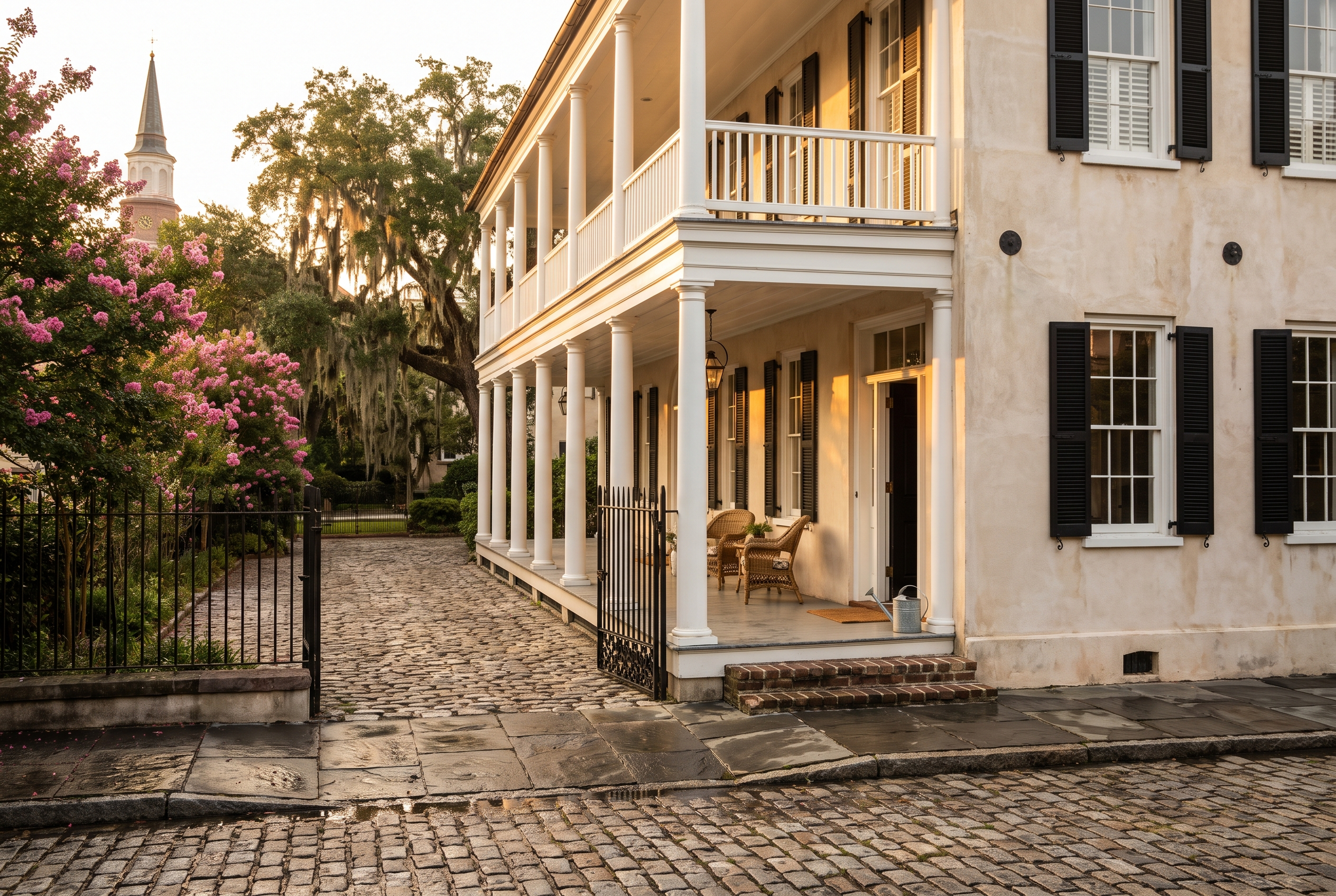
Two sellers on the same peninsula block are having completely different experiences right now, and neither saw it coming.
The first listed a fully restored single house in June, took a strong offer in under three weeks, and closed near ask. The second listed a comparable house two doors down — same street, same views — and is now ninety-plus days in with one price adjustment behind them and another coming. The difference was not marketing. It was that the second house needs roughly $400,000 of work the buyer would have to carry through Board of Architectural Review approval before touching it.
Buyers are misreading the same market from the other side. Headlines about a softening high end have some downtown shoppers writing offers twelve percent under ask on turnkey inventory and losing them, while the project houses — where the real negotiating room actually exists — sit with nobody bidding.
That is the downtown Charleston luxury market heading into fall 2026. Not one market that is up or down, but two running in opposite directions inside the same zip code.
What the Peninsula Numbers Actually Say
Start with the local figure, because it contradicts the national one. Peninsula Charleston posted a median sale price of $1,400,000 through the first five months of 2026, up 7.8% year over year, with closed sales up 12.1% (per Charleston Trident MLS data compiled in a mid-year regional analysis, as of 2026). Volume and price both moved up. That is not a market in retreat.
Nationally, the picture is the opposite. The luxury price threshold — the entry point to the top tier — sat at $1,250,750 in July, down 2.7% year over year and marking the 29th consecutive month of annual decline (per Realtor.com's July 2026 luxury report, as of July 2026). Days on market for the top tier ran 68 days, with ultra-luxury at 91.
Zillow's read on the same period explains why both can be true. Luxury sales nationally were up 6.2% year over year with luxury inventory down 5.2% — but price cuts still hit 20.6% of luxury listings (per Zillow, as of July 2026). Demand at the high end is real. It is just selective, and sellers who guess wrong on price get cut.
Two more numbers matter. Charleston-metro median days on market ran 57 in July 2026, up from 44 in April (per FRED / Realtor.com listing data, as of July 2026) — normal summer seasonality, but the direction shapes expectations. And the 30-year fixed averaged 6.66% on August 27 (per Freddie Mac PMMS, as of August 2026). Rates are stable, not falling. Nobody at this price point should underwrite a purchase assuming a refinance.
Why Two Houses on the Same Block Get Two Different Markets
The dividing line downtown is not location, and barely even square footage. It is how much unfinished risk transfers to the buyer at closing. Three inputs decide it.
Completed work carries a premium buyers are not pretending about
A downtown buyer at $1.5M to $4M is usually relocating, buying a second home, or trading down. Very few want an eighteen-month restoration. When they see a finished house, they compete for it. When they see a project, they subtract hard costs — then subtract again for time and uncertainty. Sellers consistently underestimate that second subtraction, and it is where most peninsula pricing disputes live.
Insurance is now a pricing input, not a closing detail
Since the National Flood Insurance Program moved to Risk Rating 2.0, premiums are priced property by property rather than by zone, which is why two houses on the same block South of Broad can carry very different numbers. Reported ranges run roughly $400–$800 a year in Zone X, $800–$1,500 in transitional areas, and $1,500 to more than $5,000 in the AE zones covering much of the lower peninsula (per a Charleston flood insurance guide, as of 2026). Two points get missed. NFIP building coverage caps at $250,000, so most downtown luxury buyers need excess or private coverage layered on top. And an NFIP policy can often be assumed from the seller — long-time owners frequently hold below-full-risk rates with capped annual increases, while a new policy is priced at full rates immediately. On a house carrying a four-figure premium, that is worth asking about before you write.
Anything requiring BAR review is priced as a project
Work visible from a public right-of-way in the historic district goes through the Board of Architectural Review across conceptual, preliminary, and final stages. The board meets twice a month, so straightforward residential projects still run roughly one to two months through BAR, with building permit review and revision cycles on top — realistically several months of approvals before anyone breaks ground (per Charleston permitting guidance, as of 2026). Cost follows. Lowcountry additions are running $150–$300 per square foot in 2026, coastal construction carries a 15–30% premium over inland work for hurricane-rated assemblies and flood-compliant foundations, and raising a foundation to meet elevation requirements can add $15,000–$70,000 (per 2026 Charleston renovation cost data). A buyer facing that scope is not comparing the project to the finished house down the street. They are comparing it to buying the finished house and skipping a year.
Seller Strategy: Price the Condition, Not the Comp
If you are listing on the peninsula this fall, three moves matter more than anything else you do.
Choose your comp set by condition first, location second. A restored house four blocks away is a better comp than an unrenovated house next door. Pull the ones that actually closed, and be honest about where yours sits.
Retire the objections before they cost you a price cut. Order the elevation certificate. Get a current flood quote and confirm whether your NFIP policy is assumable. If there is known deferred work, get a real contractor number for it rather than letting a buyer invent one — buyers left to guess always guess high, and their guess becomes your reduction.
Price the first three weeks correctly. With metro days on market at 57 and rising into the fall, the initial listing window is where your leverage lives. A house that starts high and chases the market down carries visible price history, and at this price point every serious buyer's agent pulls that history before writing.
Buyer Strategy: Underwrite the Whole Number
The deals downtown right now are in the houses nobody wants to think about — but only if you underwrite them properly.
Build the all-in number before you write. Purchase price, hard construction cost at current Charleston pricing, soft costs, and carry through an approval timeline that realistically runs months before construction begins. Then compare that total to the finished house. Sometimes the project wins by a wide margin. Sometimes the finished house at full ask is the better trade.
Price the insurance during due diligence. Get a written quote on the actual property, ask about assuming the seller's policy, and confirm whether excess coverage is needed above the NFIP cap. This is a monthly-payment line item, not a formality.
Ask what the scope triggers. Some work is staff-level. Some pulls full board review across three stages. That distinction moves your timeline by months and belongs in your offer terms.
Do not expect a discount on turnkey. With luxury inventory tight and buyers competing for finished product, a lowball on a well-priced restored house is usually just a lost house.
Where the Peninsula Sits Against the Islands
Downtown is not the strongest performer in the Charleston luxury market — it is the most nuanced one. Through the first five months of 2026, Sullivan's Island posted a median of $4,750,000, up 21.8%. Isle of Palms came in at $2,195,000, up 8.4%, with sales volume up 32.4%. Daniel Island's median was $1,625,000 with sales up 31.7% (all per Charleston Trident MLS data compiled in a 2026 mid-year regional analysis).
The island markets compete on scarcity of land and new coastal construction. The peninsula competes on something harder to replace: a finite stock of historic houses where the spread between a restored one and an unrestored one can run seven figures once you carry the work through approvals at current construction pricing. That spread is why finished downtown inventory holds value while project inventory negotiates — and why a well-executed peninsula restoration remains some of the most durable value creation in this market.
Frequently Asked Questions
Is now a good time to buy a luxury home in downtown Charleston?
It depends which side of the market you are shopping. Turnkey peninsula inventory is competitive with limited negotiating room. Houses needing significant restoration have real room, but only for buyers equipped to underwrite construction cost and approval timelines.
What is the median home price on the Charleston peninsula in 2026?
Peninsula Charleston's median sale price ran $1,400,000 through the first five months of 2026, up 7.8% year over year, with closed sales up 12.1% (per Charleston Trident MLS data, as of 2026).
How much is flood insurance for a downtown Charleston home?
Reported ranges run roughly $400–$800 annually in Zone X, $800–$1,500 in transitional areas, and $1,500 to over $5,000 in AE zones on the lower peninsula, priced property by property under Risk Rating 2.0. Get a quote on the specific address — block-level assumptions are unreliable.
How long does Board of Architectural Review approval take in Charleston?
The board meets twice monthly and reviews projects across conceptual, preliminary, and final stages. Straightforward residential work generally runs one to two months through BAR, with permit review and revisions on top — plan for several months of approvals before construction starts.
Does a historic downtown home cost more to renovate than a Mount Pleasant home?
Generally yes. Coastal construction carries roughly a 15–30% premium over inland work, Lowcountry additions are running $150–$300 per square foot in 2026, and historic-district requirements add design constraints, specified materials, and approval time.
Are mortgage rates helping downtown Charleston buyers right now?
Rates are stable rather than falling — the 30-year fixed averaged 6.66% in late August 2026 (per Freddie Mac PMMS). A meaningful share of peninsula luxury transactions are cash or heavily down-weighted, so rates move this segment less than the broader market. For lending specifics, talk to a mortgage professional.
Let's Talk About Your Downtown Charleston Move
Looking to buy, build, or invest in Charleston real estate? I'm Chris Eller, Broker Associate with The Cassina Group and a luxury real estate developer specializing in new construction and coastal properties across Charleston and the barrier islands. Call or text 843-343-3359, email Chris@TheCassinaGroup.com, or visit ChrisEllerRealEstate.com. If you're considering buying, selling, or building in Charleston or anywhere in the Lowcountry, reach out anytime for expert guidance.
