

Selling a Home on Daniel Island: Why the First 21 Days Decide Your Price
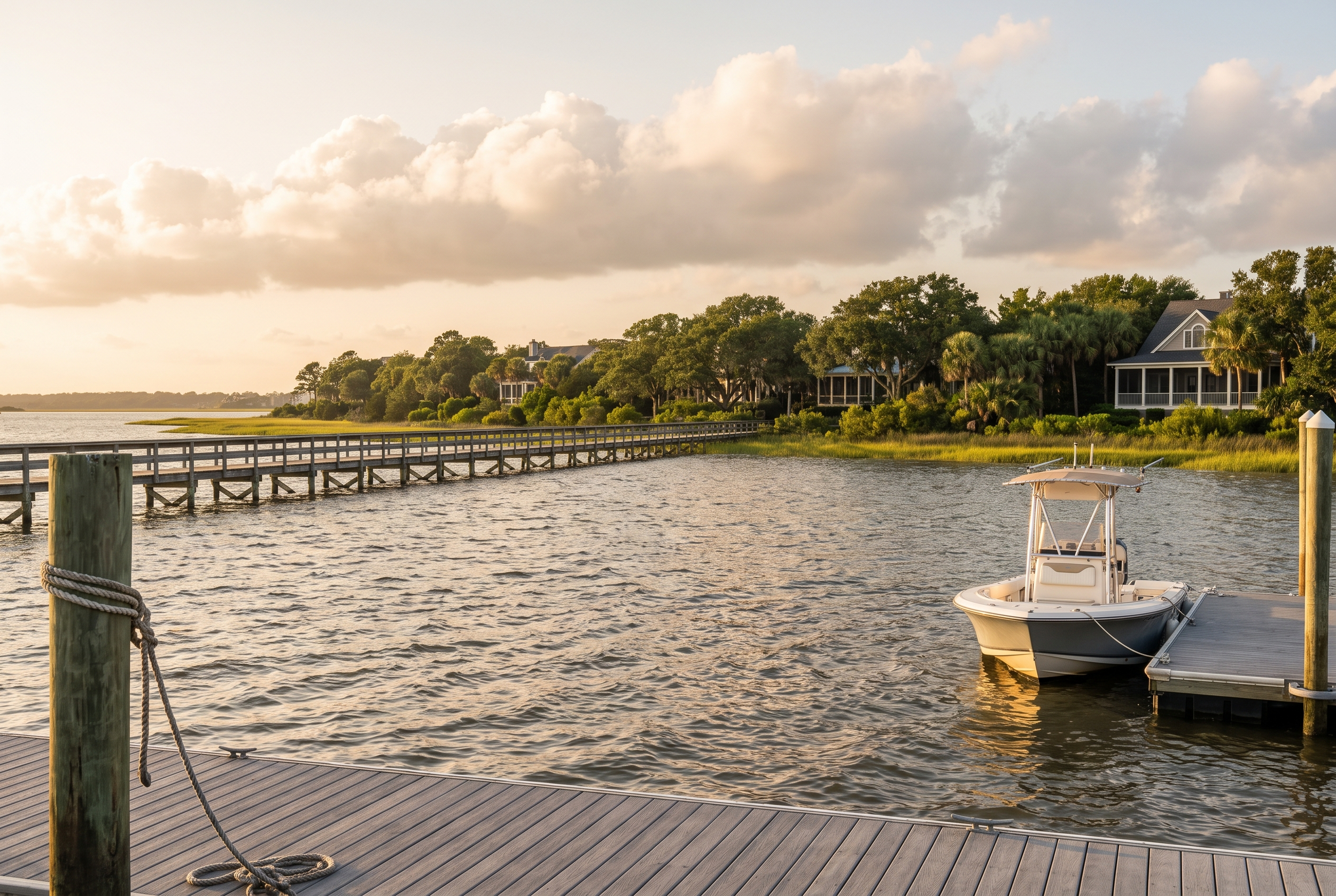
Here's a conversation we have almost every week on Daniel Island. A homeowner watches a neighbor list on a Thursday, get four showings that weekend, and go under contract inside two weeks. Three months later they list their own house above the neighbor's number because "the market went up" — and then sit. Two showings in ten days. A reduction at week five, another at week nine. They eventually sell for less than the neighbor got, after carrying the house all summer.
Nothing about the market changed between those two listings. What changed was the launch.
The Charleston market in 2026 is not soft and it is not hot. It is selective. Buyers have options they didn't have three years ago, they're not in a hurry, and they're very good at spotting a home that has been sitting. Which means the price you ultimately get is decided earlier than most sellers realize — inside the first three weeks, before a single offer is written. If you're selling a home on Daniel Island this fall, this is the part worth getting right.
What the Daniel Island Market Actually Looks Like Right Now
Start with the money. The 30-year fixed mortgage averaged 6.66% this week, essentially flat from 6.65% the week before and a touch higher than the 6.56% of a year ago, per Freddie Mac's Primary Mortgage Market Survey, as of August 2026. Rates have stopped moving in a way that changes anyone's plans. Buyers who were waiting for a 5-handle have mostly stopped waiting.
Now the local picture. Across the Charleston Trident region in July 2026, the median sales price was $449,918, up 4.6% year over year, with 5,697 homes for sale — 4.7% more inventory than a year ago — and 3.6 months of supply, per Charleston Trident Association of Realtors market data, as of August 2026. Days on market ran 47, up 4.4%. Sellers collected 96.0% of original list price, down slightly from a year ago.
That 96.0% is the number to sit with. It averages two very different outcomes: homes priced correctly that sold near ask, and homes that launched high, chased the market down and gave up real money. There is no third group.
Daniel Island itself sits well above the regional numbers. At mid-year 2026 the island posted a median of $1,625,000 with sales volume up 31.7% year over year, per a Charleston regional mid-year analysis, as of 2026. Demand at this price point is genuinely strong. But strong demand and forgiving buyers are not the same thing.
Why the First 21 Days Carry So Much Weight
When your home hits the MLS it triggers a burst of attention you will never get again. Saved-search alerts fire. Buyer agents working a Daniel Island client get an email. Portals push new listings to the top. That burst lasts two to three weeks, then decays hard.
Here's what sellers underestimate: the buyers who see your home in that window are the most qualified in the market. They've been looking for months. They know what a Cooper River view is worth versus a golf course view, and what the last four comps closed at. If your price is wrong they don't negotiate — they just don't come, and nobody writes you a note explaining why.
What a stale listing actually costs
By day 30 the story your listing tells has changed. Days-on-market is public. So is price-reduction history. A buyer who would have offered 97% of ask in week one opens at 92% in week ten, because the market has told them you're motivated. You didn't lose that money on the price cut — you lost it on the launch.
How to Price and Launch a Daniel Island Home in This Market
This is the sequence we use, and most of it happens before the sign goes in the yard.
1. Price against the last 90 days, not the last three years
Pull closed sales from the last 90 days in your specific pocket — Codner's Ferry, Smythe Park, the Ralston Creek area, the river-front streets — and then look at what is currently active and unsold. Active competition sets your ceiling. A comp from 2022 is a nice memory; it is not a data point a 2026 buyer will pay for.
2. Price into a search bracket, not next to one
Buyers search in round numbers. A home at $1,525,000 is invisible to every buyer whose search caps at $1.5M. Listing at $1,499,000 puts you in front of hundreds more saved searches for about 1.7%. On Daniel Island the brackets that matter fall at $1M, $1.25M, $1.5M, $2M and $2.5M. Land just under one.
3. Build the reduction plan before you list
Decide up front what you'll do at day 10 and day 21 if traffic isn't there. Fewer than six showings in the first ten days is a pricing signal. Showings without offers is a condition or value signal. Deciding early keeps you from making an emotional call at week seven, which is when sellers overcorrect.
4. Get the coastal paperwork done before you're under contract
This is where Charleston sellers lose deals that never should have been lost. Have the elevation certificate, flood zone determination, wind mitigation report, roof age and permit history, and current Daniel Island Property Owners Association documents in one folder before you list. Insurance and flood questions are now routine in underwriting along the Wando and Cooper. A buyer waiting eleven days on an elevation certificate is a buyer with eleven days to get cold feet. Hand it over on day one.
5. Pre-inspect, then fix the cheap things
A pre-inspection lets you fix a small problem on your own schedule instead of negotiating an outsized credit against it under a repair deadline. On coastal homes, look hard at crawl space moisture, HVAC condensate, deck and dock fasteners, and soft spots in exterior trim — those generate the biggest repair requests here.
Concession or Price Cut — Which One to Give
Nationally, 46.2% of home sellers gave a concession to buyers in May 2026, the highest May share on record, up from 43.1% a year earlier, per Redfin, as of 2026. Concessions are no longer a sign of a distressed seller. They're a standard tool.
The practical question is which lever moves a buyer further per dollar you spend. A price reduction trims the loan balance a little. A closing-cost credit applied to a rate buydown lowers their monthly payment — the number most buyers are actually solving for. A credit often produces more perceived relief than a price cut of the same size, and it doesn't reset your list price or add to your days-on-market story. Run the specific numbers with your lender first; the math turns on the loan program, down payment and current buydown pricing, and that's a conversation for a mortgage professional.
One caution: a concession only helps if buyers are showing up. No traffic is a price problem, and no credit will fix it.
Local Market Context: What's Moving on Daniel Island
Daniel Island's strength this year is real — a 31.7% jump in sales volume at a $1,625,000 median is not a rounding error. For comparison at mid-year 2026: Sullivan's Island $4,750,000, Isle of Palms $2,195,000 with sales up 32.4%, the peninsula $1,400,000. Charleston's water-adjacent segment is carrying the market.
Three things are shaping what sells here right now:
Deep water and marsh frontage still command a premium buyers will chase. A private dock or a permitted dock allocation is one of the few features on Daniel Island that cannot be replicated by new construction anywhere else. Market it as the asset it is.
You are competing with builders, and builders have tools you don't. The Cainhoy peninsula pipeline keeps adding inventory a short drive away, and a builder can buy down a rate, cover closing costs and add a design allowance without touching list price. Regionally, sellers received 96.3% of original list price in April 2026 against builders doing exactly that, per Charleston Housing News, as of May 2026.
Carrying costs are the quiet killer. Between taxes, coastal insurance, HOA dues and a mortgage, four extra months on a $1.6M home is real money. Sellers who price for a 30-day sale usually net more than sellers who price for a 90-day sale and get one.
Frequently Asked Questions
How long does it take to sell a home on Daniel Island right now?
Regionally, days on market ran 47 in July 2026 per CTAR data. Correctly priced Daniel Island homes typically move faster than that; overpriced ones stretch well past it. Plan on 30 to 45 days to contract if your pricing is right, plus 30 to 45 days to close.
Is fall a bad time to list in Charleston?
No. Inventory thins out after Labor Day while relocation and second-home buyers stay active through the holidays. Less competition on the market often matters more than the raw number of buyers looking.
Do I need an elevation certificate to sell on Daniel Island?
It isn't legally required, but on coastal Charleston property it is functionally expected. Buyers and their insurance carriers will ask, and having it in hand can meaningfully affect the flood premium a buyer is quoted — which affects what they can afford to pay you.
Should I reduce my price or offer a buyer credit?
If you're getting showings but no offers, a credit toward closing costs or a rate buydown often moves a buyer further per dollar than an equivalent price cut, and it doesn't reset your listing. If you're not getting showings at all, that's a price problem and a credit won't solve it. Confirm the actual numbers with a lender.
Will all the new construction on Cainhoy hurt my resale value?
It affects your competition more than your value. New construction pulls buyers who want turnkey and builder incentives. Established Daniel Island homes compete on location, mature landscaping, dock access and walkability — advantages a new subdivision can't deliver for years. Price and market against that difference rather than ignoring it.
Is it worth renovating before I list?
Rarely a full renovation. Paint, landscaping, lighting and deferred exterior maintenance return well. Kitchens and primary baths generally don't return their cost against brand-new competition. Fix what looks like neglect; don't chase what looks like taste.
Let's Talk About Your Sale
Looking to buy, build, or invest in Charleston real estate? I'm Chris Eller, Broker Associate with The Cassina Group and a luxury real estate developer specializing in new construction and coastal properties across Charleston and the barrier islands.
Call or text: 843-343-3359 | Email: Chris@TheCassinaGroup.com | Website: ChrisEllerRealEstate.com
If you're considering buying, selling, or building in Charleston or anywhere in the Lowcountry, reach out anytime for expert guidance.
