

Isle of Palms Mortgage Rates Aren't What's Breaking Deals Right Now — the Carrying Cost Is
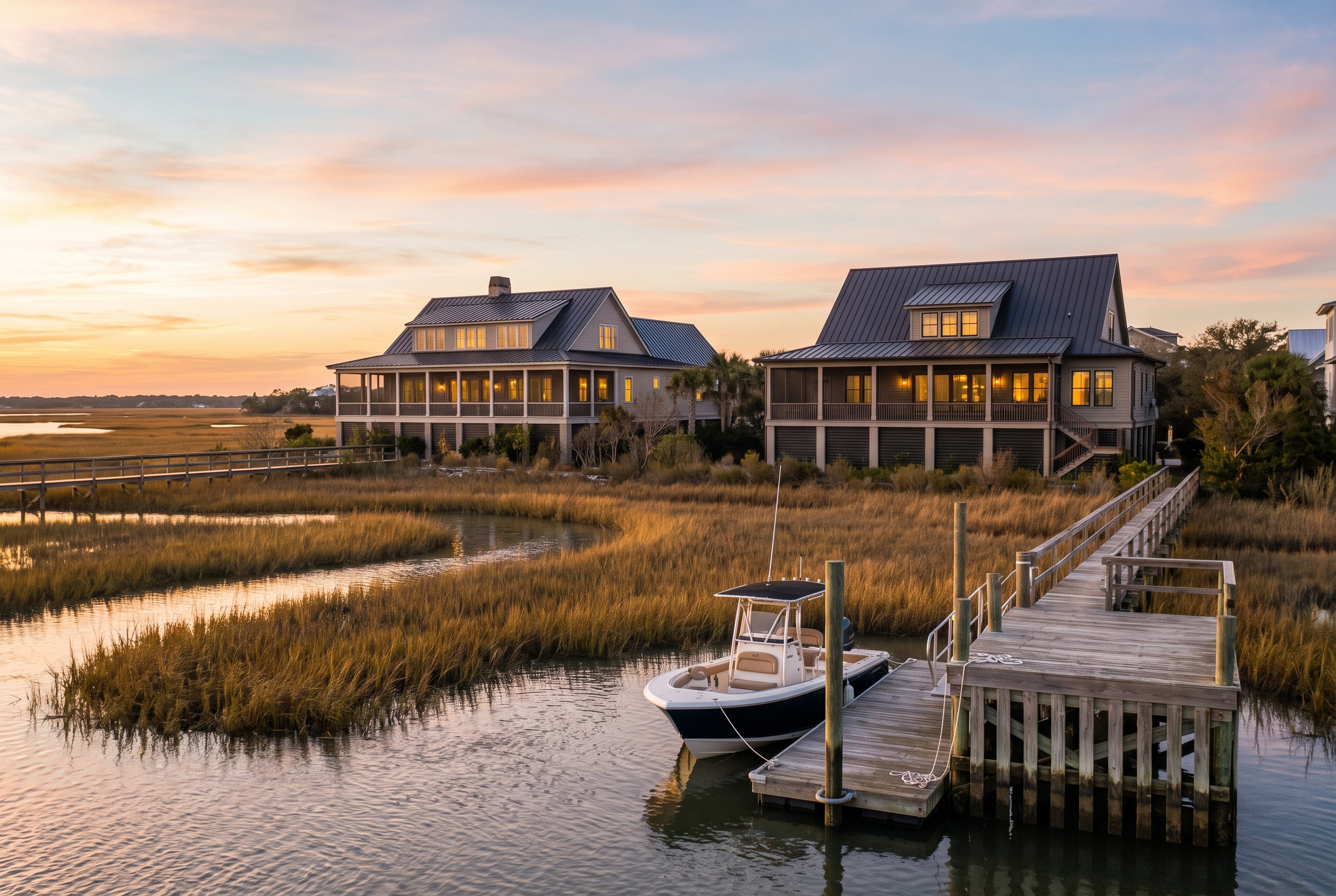
The question I get most often from buyers working the barrier islands used to be "where are rates headed?" This summer it changed. Now it's "why is the payment my lender quoted $1,800 a month higher than the one I built in my spreadsheet?"
The answer is almost never the note rate. On Isle of Palms, the rate has been the most stable line in the model all year. What moved is everything stacked around it: wind and hail premiums, flood, the escrow that funds both, and the occupancy classification that determines how the loan gets priced in the first place. A buyer running a napkin calculation at 6.75% on $2.4 million and stopping there will be off by a meaningful margin — not because the math is wrong, but because it's incomplete.
That gap is where deals die — not at offer, but two weeks into due diligence, when the insurance binder lands and the buyer re-runs the numbers. It's avoidable. The buyers closing cleanly on Isle of Palms right now priced the entire carry before they wrote the contract, not after.
Where Rates Actually Sit Heading Into September
Start with the benchmark. The 30-year fixed averaged 6.66% in the week ending August 27, 2026 — up a single basis point week over week and about ten basis points above where it sat a year earlier, per Freddie Mac's Primary Mortgage Market Survey. Daily pricing has firmed slightly since: 30-year conventional quotes ran near 6.80% and 30-year jumbo near 6.81% on September 2, both up roughly twelve to thirteen basis points on the week, per Fortune's daily rate tracker.
Two things matter in those numbers for anyone buying on Isle of Palms.
First, jumbo and conforming are effectively at parity. That is not the historical norm and it is not guaranteed to hold, but right now the jumbo premium that used to punish barrier island buyers has largely compressed away. That's relevant here because the 2026 baseline conforming limit is $832,750, with the high-cost ceiling at $1,249,125, per FHFA. Charleston County sits at the baseline. With Isle of Palms home values averaging roughly $1.72 million as of July 31, 2026, up 5.9% year over year, per Zillow's Home Value Index, essentially every financed purchase on the island is a jumbo loan. Parity pricing is a real, currently available advantage.
Second, the volatility is gone. Rates have traded in a narrow band all year, with weekly moves measured in single basis points. The Fed meets September 15–16, with CPI landing September 10 and PCE on September 25. Consensus forecasts put the quarterly average modestly below current levels rather than materially lower. Translation: there's no obvious payoff to waiting, because there's no clear catalyst in the window.
Underwrite the Whole Carry, Line by Line
Here is the sequence I'd run before writing an offer on the island.
1. Pin down the occupancy classification first
This determines pricing before anything else. Second home financing generally runs 0.25% to 0.75% above primary residence pricing, with investment property adding roughly 0.50% to 1.50%, per JVM Lending's 2026 rate guidance. Second homes typically require 10% down at minimum, with 15–20% producing materially better execution, plus two to six months of combined reserves across both properties. On a $2 million loan, the spread between a well-priced second home and a poorly structured investment loan is real money every month. Have that conversation with your lender before you're under contract, not during.
2. Price the insurance stack — separately
This is the line that surprises people. South Carolina's Wind and Hail Underwriting Association received approval for an 8% increase on dwelling policies effective February 2026, and Insurify data cited by coastal agencies shows renewal rates rising 20% or more even on policies with no claims history. Carriers have also been shifting older roofs from replacement cost to actual cash value coverage since late 2025 — a change that doesn't show up in the premium but shows up hard after a storm.
Wind and hail, flood, and the primary homeowners policy are three separate quotes. Get all three during due diligence, in writing, on the specific address — not a regional estimate.
3. Confirm the elevation and mitigation file
Elevation certificate, roof age and material, opening protection, roof-to-wall connection, secondary water resistance. These aren't paperwork — they're the inputs that set your wind premium. A home re-roofed to current standards can price dramatically better than a comparable home two doors down. On new construction we build to those credits deliberately, because the difference compounds over the hold period.
4. Net the rental offset honestly
Isle of Palms requires a rental license, with short-term defined as any stay under 30 days. Occupancy is capped at two people per bedroom plus two, to a maximum of twelve. License fees run $450 on the first $2,000 of gross rental income plus $4.60 per additional thousand, with renewals due April 30 annually, per the City of Isle of Palms. Voters declined to cap the total number of licenses, so the supply question is open rather than restricted.
Model the rental income net of management, cleaning, the license fee, wear, and realistic vacancy — then treat it as an offset to carry, not as the reason the deal works.
What Buyers and Sellers Should Do Right Now
Buyers: negotiate the carry, not the sticker
On a jumbo loan, a seller-funded rate buydown often delivers more monthly relief per dollar than an equivalent price reduction — and sellers frequently accept it more readily, because it protects the closed comp. Run both scenarios side by side with your lender before you decide which concession to ask for.
Then front-load the insurance work. Quote wind, flood, and hazard in the first week of due diligence, not the last. If the numbers come back heavy, you still have room to renegotiate or walk. If they come back clean, you've removed the single most common reason these contracts fall apart.
Sellers: bring the file to the table
If you're listing on Isle of Palms, assemble the insurance and construction file before you go live: current declarations pages, elevation certificate, roof age and documentation, any wind mitigation improvements, and rental license history with gross revenue. A buyer who can price the carry accurately on day one moves faster and negotiates less. A buyer who has to discover it themselves prices in a worst-case assumption — and that assumption comes straight out of your number.
Isle of Palms in Regional Context
The broader Charleston market is active and segmented rather than uniformly hot. Regionally, the median sale price reached $460,000 in June 2026, up 7.0% year over year, on 1,920 closed sales — a 13.2% annual increase — with roughly 3.4 months of supply, still below a fully balanced level, per Southern Bell Living's compilation of Charleston-area MLS data. New listings rose 2.2%.
The segmentation matters. Mount Pleasant's median came in around $874,000 over the rolling three-month period, down 3.5% year over year on Redfin data, while Isle of Palms values climbed 5.9%. Different buyer pools, different inventory, different outcomes. Barrier island product with a strong insurance and elevation profile behaves differently than mainland inventory competing on price.
For new construction, the same logic runs through the pro forma. Elevated foundations, impact-rated openings, and current wind-code detailing carry real cost — and they buy down the insurance line for the life of the asset while protecting resale. On a coastal build, that's not an upgrade decision. It's an underwriting decision.
Frequently Asked Questions
What are mortgage rates on Isle of Palms right now?
Isle of Palms purchases follow national jumbo pricing. As of September 2, 2026, 30-year jumbo quotes ran near 6.81% and conventional 30-year near 6.80%, per Fortune, with Freddie Mac's weekly survey average at 6.66% as of August 27. Your actual rate depends on credit profile, down payment, occupancy, and loan size.
Do I need a jumbo loan to buy on Isle of Palms?
Almost certainly. The 2026 conforming limit in Charleston County is $832,750, per FHFA, and average Isle of Palms values run well above that. Jumbo pricing is currently close to conventional, which reduces the historical penalty.
How much higher is a second home mortgage rate?
Generally 0.25% to 0.75% above primary residence pricing, with investment property classification adding more, per JVM Lending. Down payment, reserves, and how the property is actually used all factor in. Your lender should model the classifications side by side before you write an offer.
Why did my insurance quote come in so much higher than expected?
Three drivers are stacking in 2026: reinsurance costs, an approved 8% dwelling rate increase at the South Carolina Wind and Hail Underwriting Association effective February 2026, and carriers moving older roofs from replacement cost to actual cash value coverage. Roof age, elevation, and opening protection now swing the premium significantly.
Should I wait for rates to drop before buying?
There is no obvious near-term catalyst. Rates have moved in a tight band all year and forecasts point to gradual easing rather than a sharp drop. Meanwhile Isle of Palms values rose 5.9% over the past year, per Zillow. Waiting has a cost too — run both scenarios rather than assuming one direction.
Is short-term rental income still viable on Isle of Palms?
Yes, with a rental license. Stays under 30 days are classified short-term, occupancy is capped at two per bedroom plus two up to twelve, and license fees are income-based with an April 30 renewal deadline. Voters declined to cap the total number of licenses. Model income net of all costs and treat it as an offset, not the whole thesis.
This article is general market information, not lending, tax, insurance, or legal advice. Confirm loan pricing with a licensed lender, premiums with a licensed insurance agent, and tax treatment with your CPA.
Let's Talk About Your Charleston Purchase
Looking to buy, build, or invest in Charleston real estate? I'm Chris Eller, Broker Associate with The Cassina Group and a luxury real estate developer specializing in new construction and coastal properties across Charleston and the barrier islands.
Call/Text: 843-343-3359 | Email: Chris@TheCassinaGroup.com | Website: ChrisEllerRealEstate.com
If you're considering buying, selling, or building in Charleston or anywhere in the Lowcountry, reach out anytime for expert guidance.
