

Charleston Buyers Waiting on Rates to Drop Just Got a Different Number
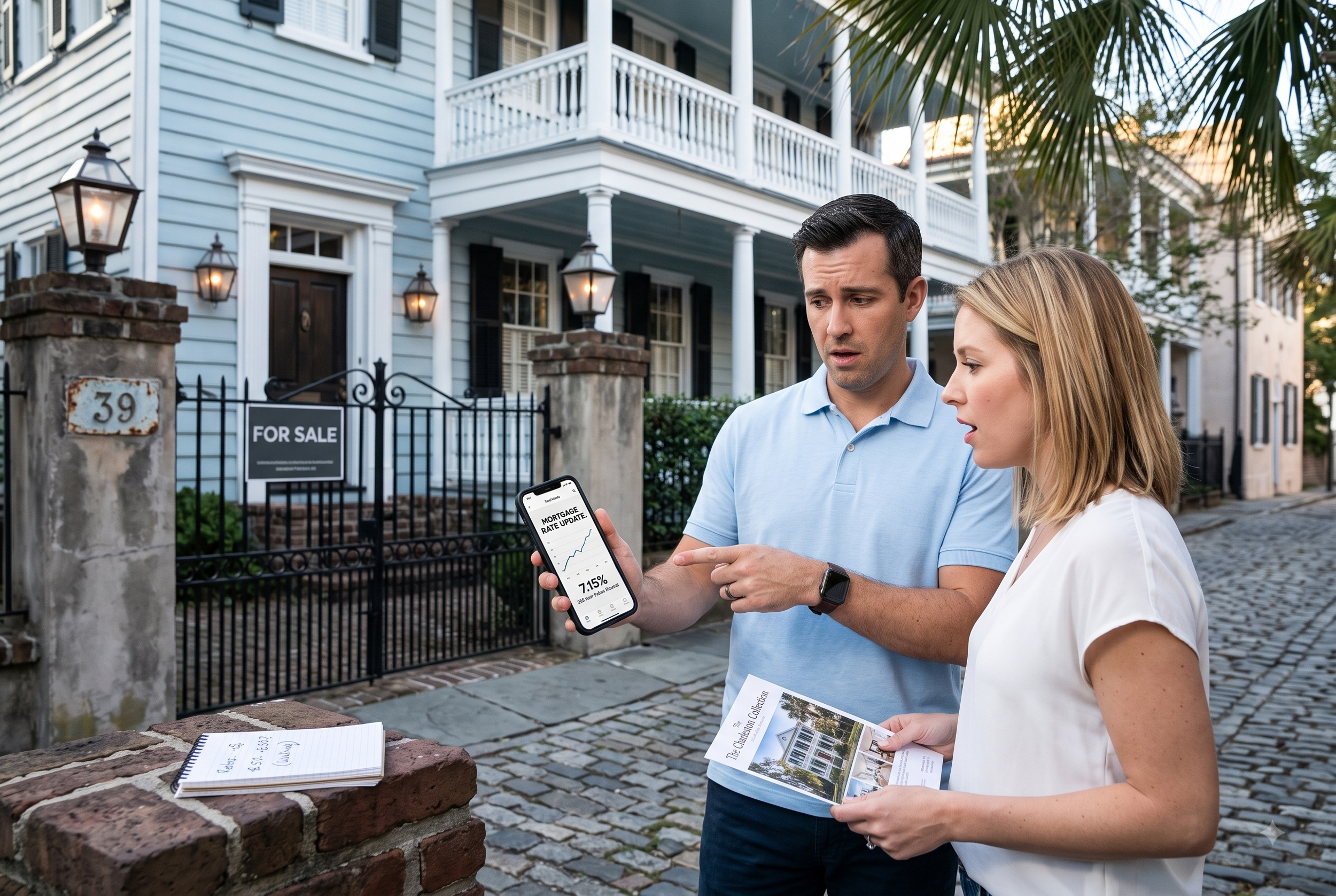
For most of the summer, the Charleston buyers I've been working with had a plan: wait. Rates had drifted under 6.5% earlier in 2026, forecasters kept promising the 5s were coming, and plenty of people figured patience would pay off. This week that plan got harder to defend. The 30-year fixed is averaging 6.72% on Bankrate and closer to 6.86% on some daily lender surveys — up from 6.66% just two weeks ago — as inflation data and a divided Federal Reserve pulled rates the wrong direction.
If you're shopping in Mount Pleasant, on Isle of Palms, or anywhere in between and you've been telling yourself you'll buy "once rates come down," this is the week to rethink that math. Charleston's market isn't waiting on you, and the rate environment isn't cooperating on anyone's timeline. Here's what actually changed, what it means for buyers and sellers right now, and the specific moves — rate locks, builder buydowns, adjustable-rate loans — that put you back in control instead of guessing at the Fed's next meeting.
What's Actually Happening With Rates Right Now
The numbers moved fast. Freddie Mac's weekly survey had the 30-year fixed at 6.69% on August 6, up from 6.66% the week before. By August 11 and 12, daily surveys from Bankrate and other lenders were showing 6.72% to 6.86% — a meaningful jump in less than two weeks. The cause is a genuine tug-of-war in the bond market. Inflation is still running above the Fed's 2% target, and at the Fed's most recent meeting three policymakers pushed for a rate hike, a sharp contrast to June's unanimous vote to hold steady. At the same time, July's jobs report came in weak — payrolls up just 23,000, with May and June revised down another 103,000 combined — which normally argues for lower rates. Mortgage rates are reacting to both signals at once, and right now inflation concern is winning.
None of this means Charleston's market is in trouble. The Charleston Trident Association of Realtors closed out 2025 with 17,776 sales across the tri-county area, up 1.7% year over year, and a median sales price of $426,947, up 2.4%. That's steady, sustainable growth, not a boom or a correction. What it does mean is that the "wait for rates" strategy has a real cost attached to it, and that cost changed again this week.
What "Locking" Actually Means — and When It Makes Sense
A rate lock guarantees your interest rate for a set window, typically 30 to 60 days, once you're under contract. It protects you if rates rise before closing, but it also means you're stuck with that rate if they happen to drop. Some lenders offer a float-down option for a fee — it lets you lock now for protection, then capture a lower rate later if one becomes available before closing. In a week like this one, where rates are moving in both directions day to day, a float-down is worth asking about specifically. It removes the guesswork of trying to time your lock to the exact right day.
For new construction, there's a second lever most buyers overlook: builder-funded rate buydowns. On a lot of Lowcountry new-build contracts, including several I'm involved with as a developer, builders will fund a temporary 2-1 buydown or a permanent rate buydown instead of cutting the sale price. That structure matters more than it sounds — a price cut drags down the comps for every other home in the neighborhood, including the one you're buying. A rate buydown doesn't touch the sale price at all; it just lowers your effective payment, which is usually what buyers are actually worried about.
Adjustable-rate mortgages are worth a second look too, particularly for second-home buyers on Isle of Palms or Sullivan's Island, or investors who don't plan to hold a loan for 30 years. A 7/6 or 10/6 ARM typically prices below the current fixed rate for the initial period, and if you're likely to sell or refinance inside that window anyway, you may be paying for fixed-rate protection you'll never use.
The Move for Buyers Right Now
Stop trying to time the Fed. Nobody — not economists, not lenders, not the forecasters predicting 6.4% to 6.5% by year-end — has been consistently right about where rates land next. The buyers doing well in this market are the ones negotiating the cost of the loan into the deal itself, rather than waiting on a number that keeps moving. That means getting fully underwritten and pre-approved before you're under contract, asking every new-construction builder directly whether they'll fund a buydown instead of a price reduction, and requesting a float-down provision when you do lock. On a resale purchase, this is also where negotiating seller-paid points or closing cost credits can offset a chunk of what higher rates are costing you monthly.
The Move for Sellers Right Now
If your home has sat and you're tempted to cut the price, consider a buydown credit instead. Across Mount Pleasant, a large share of active listings have taken at least one price reduction in 2026, and each one resets the buyer psychology around your home — it starts to look like a property nobody wants. A rate buydown credit solves the buyer's real objection, which is almost always the monthly payment, without touching your list price or the comps you're relying on for your next purchase. It's a more expensive concession on paper, but it protects your equity story in a way a straight price cut never does.
What This Means Across Charleston's Luxury and Coastal Submarkets
Rate moves hit harder the bigger the loan, which makes this an especially important week for buyers on the barrier islands. Isle of Palms carries a median sale price around $1.2 million with a range stretching from roughly $400,000 to $8 million-plus, and 2025's luxury segment there posted a 32.5% jump in median sales price to $2.66 million. At those numbers, most purchases require jumbo financing, and jumbo spreads over conforming rates can widen or narrow independently of the headline 30-year number — which is exactly why working with a lender who prices jumbo loans daily, not just quoting the Freddie Mac average, matters more on IOP and Sullivan's Island than almost anywhere else in the Lowcountry.
Mount Pleasant remains the market's steadier engine, with a median home price around $685,000 and a still-active new construction pipeline feeding buyers who want modern builds without the barrier-island price tag. Relocation buyers and investors continue moving into the area even with rates elevated, which tells you demand hasn't disappeared — it's just gotten more sensitive to how a deal is structured. That's the opening: buyers and sellers who understand rate strategy right now have real leverage over those who are still waiting for a headline number to change in their favor.
Frequently Asked Questions
Are Charleston mortgage rates going to drop before the end of 2026?
Some forecasters still expect rates to ease toward the mid-6% range later in the year if inflation cools, but that's a projection, not a guarantee. Rates have moved up and down by a quarter point or more in just the past two weeks, so treat any year-end forecast as a range, not a target date to plan your purchase around.
Should I lock my rate now or wait to see if it drops?
If you're under contract, ask your lender about a float-down option rather than trying to guess the bottom. It lets you lock in protection against further increases while still capturing a lower rate if one becomes available before closing, without the stress of picking the exact right day.
What is a builder rate buydown, and is it worth it on new construction?
A builder buydown lowers your effective interest rate, either temporarily for the first one to two years or permanently for the life of the loan, funded by the builder instead of a price cut. It's typically worth more to you than an equivalent price reduction because it doesn't affect the home's comparable sales value.
Do jumbo loan rates on Isle of Palms and Sullivan's Island follow the same trend as conventional rates?
Generally yes, but the spread between jumbo and conforming rates moves independently based on investor demand for larger loans. On barrier-island purchases, get a same-day jumbo quote rather than assuming the national 30-year average applies to your loan amount.
Is now a good time to sell if mortgage rates are rising?
Yes, if your home is priced accurately and you're willing to offer a rate buydown credit instead of a price cut when needed. Buyer demand hasn't left the market — it's just more payment-sensitive, and sellers who solve that problem directly are still closing deals.
How much does a 0.25% rate increase actually cost on a Charleston-area mortgage?
On a $500,000 loan, a quarter-point increase adds roughly $80 to $85 to the monthly payment. On a $1.5 million jumbo loan closer to Isle of Palms or Sullivan's Island pricing, that same quarter point adds closer to $240 to $250 a month — which is exactly why rate strategy matters more as loan size increases.
Ready to Talk Strategy?
Looking to buy, build, or invest in Charleston real estate? I'm Chris Eller, Broker Associate with The Cassina Group and a luxury real estate developer specializing in new construction and coastal properties across Charleston and the barrier islands. Call/Text: 843-343-3359 | Email: Chris@TheCassinaGroup.com | Website: ChrisEllerRealEstate.com. If you're considering buying, selling, or building in Charleston or anywhere in the Lowcountry, reach out anytime for expert guidance.
