

Short answer: the 30-year fixed averaged 7.28% on November 19, up from 7.11% the week before, which ended a four-week run of declines (per Freddie Mac's Primary Mortgage Market Survey, as of November 2026). On a $750,000 loan, that one-week move is roughly $86 a month. It is not a reason to restructure your search. It is a reason to shorten your lock window and move your negotiating energy off the sticker price and onto the concession. Here's how we're coaching Daniel Island buyers through it this week.
Key Takeaways
- The weekly move is noise. 7.11% to 7.28% costs about $86/month on a $750,000 loan. The year-over-year move — 6.26% to 7.28% — costs about $509/month. That is the number repricing Charleston.
- Affordability is eroding faster than prices are rising. Charleston Trident's affordability index fell 12.3% year over year while the median price rose 4.7%. Financing cost, not list price, is doing the damage.
- This is a negotiation market, not a correction. Pending sales are down 13.1% and new listings are down 11.7%. Buyers paused; sellers didn't flood in. Months supply sits at 3.6.
- Spend the concession on the rate, not the price. Matching a 100-basis-point rate reduction with a price cut alone takes roughly $73,000 off a $750,000 loan. Almost no Daniel Island seller cuts 10%. Many will fund a buydown.
- Lock inside 30 days and verify your real carry — insurance, and the 4% versus 6% tax assessment — before setting your maximum payment.
What Actually Happened to Rates
Four straight weekly declines took the 30-year fixed from 7.18% on November 5 down to 7.11% on November 12 — the lowest in seven weeks, and the point at which a lot of buyers on the fence decided to start watching again. A week later it was back to 7.28%, a 17-basis-point jump. The 15-year followed the same path, 6.45% to 6.66% (per Freddie Mac's PMMS release, as of November 2026).
We get the same call every time this happens: should I wait for it to come back down? Look at what the moves are actually worth here.
| 30-year fixed | Rate | P&I on a $750,000 loan |
|---|---|---|
| November 19, 2026 | 7.28% | $5,132/mo |
| November 12, 2026 | 7.11% | $5,045/mo |
| November 2025 | 6.26% | $4,623/mo |
Principal and interest only, calculated from the published PMMS averages. The week cost $86. The year cost $509. Buyers refresh the weekly number and almost nobody runs the annual one — which is backwards, because the annual gap is what moved their price ceiling.
Why Charleston Feels This More Than the Headline Suggests
Here's the stat we keep coming back to in listing appointments. Across the Charleston Trident MLS in October 2026, the median sale price rose 4.7% year over year to $445,239 and the average rose 11.5% to $728,704. Over the same twelve months, the housing affordability index fell from 81 to 71 — down 12.3%.
Run those against each other: affordability deteriorated about 2.6 times faster than prices rose. Prices aren't what priced people out this year. Roughly 102 basis points of added mortgage rate did.
Citation & Key Stat
"In the Charleston Trident market, housing affordability fell 12.3% year over year while median sale prices rose only 4.7% — affordability eroded about 2.6 times faster than prices climbed. Over the same period the 30-year fixed rate added 102 basis points, from 6.26% to 7.28%."
Calculated by Chris Eller from Charleston Trident Association of REALTORS / ShowingTime October 2026 Quick Facts (median price and affordability index) and Freddie Mac PMMS, November 2026.
The rest of the October data tells you what kind of market that produced. Closed sales fell 6.2%, pending sales fell 13.1%, and new listings fell 11.7% — while active inventory rose just 1.1% and months supply held at 3.6. Homes took 53 days to sell and brought 95.8% of original list price.
Read it together: buyers stepped back harder than sellers did. That's not a correction — it's a thinner buyer pool chasing the same inventory, which is exactly what creates room to negotiate for whoever shows up with a lender letter.
The Charleston Lock Ladder: Three Rungs Before You Commit
This is the framework we walk clients up, in this order — because it forces the decisions in the sequence where they actually have leverage.
Rung 1 — Price your runway, not the rate
Your exposure isn't the rate — it's the days between signing and funding, multiplied by what a move costs you. On a $750,000 loan, every 25 basis points is roughly $127 a month, so a 45-day float carries about twice the risk of a 21-day one. Decide your closing timeline first, then buy a lock that covers it with days to spare. If a seller wants a longer runway than your lock covers, that's a concession you should be paid for.
Rung 2 — Convert the concession before you negotiate it
This is where most buyers leave money on the table. Dropping your rate by 100 basis points on a $750,000 loan takes the payment from about $5,132 to about $4,623. To reach that same payment through price alone, you'd need the loan roughly $73,000 smaller — close to a 10% cut. Daniel Island sellers do not cut 10%. But a seller or builder credit applied to a permanent buydown often gets there for a fraction of that, which is why a rate buydown has been beating a price cut all year in Charleston. Before you write, ask your lender what a permanent 100-basis-point reduction costs in points today, and compare that figure to $73,000. Then ask for the credit, not the discount.
Rung 3 — Set your walk-away payment on real carry, not P&I
Principal and interest is the smallest surprise in a coastal purchase. Insurance — wind, hail, and flood, priced off elevation and construction type — and property tax are what actually break budgets here. The tax piece is the one out-of-state buyers get wrong most often, because South Carolina assesses an owner-occupied primary residence at 4% and a second home or investment property at 6%, and buyers routinely underwrite Daniel Island homes off the seller's 4% bill when they'll be paying the 6% one. Get both quotes in writing, add them to P&I, and that total is your ceiling. Not the pre-approval number.
What We'd Do This Week — Buying or Selling
If you're buying: get fully underwritten rather than pre-qualified, because in a market where pending sales are off 13.1% your certainty is the thing sellers are short of. Shorten your lock. Ask for the concession as a buydown. And look hard at new construction alongside resale — builders run standing incentive programs with their own lending arms, and a resale seller on Daniel Island simply cannot match that structure even when they want to.
If you're selling: your buyer pool is genuinely thinner than it was in the spring, and homes are bringing 95.8% of original list. The old move — list high, cut in three weeks — is the expensive one now, because a listing that sits through a repricing cycle gets shopped on its history. Price it right the first time, and hold a buydown credit in reserve as your negotiating tool instead of your price.
Daniel Island in Context
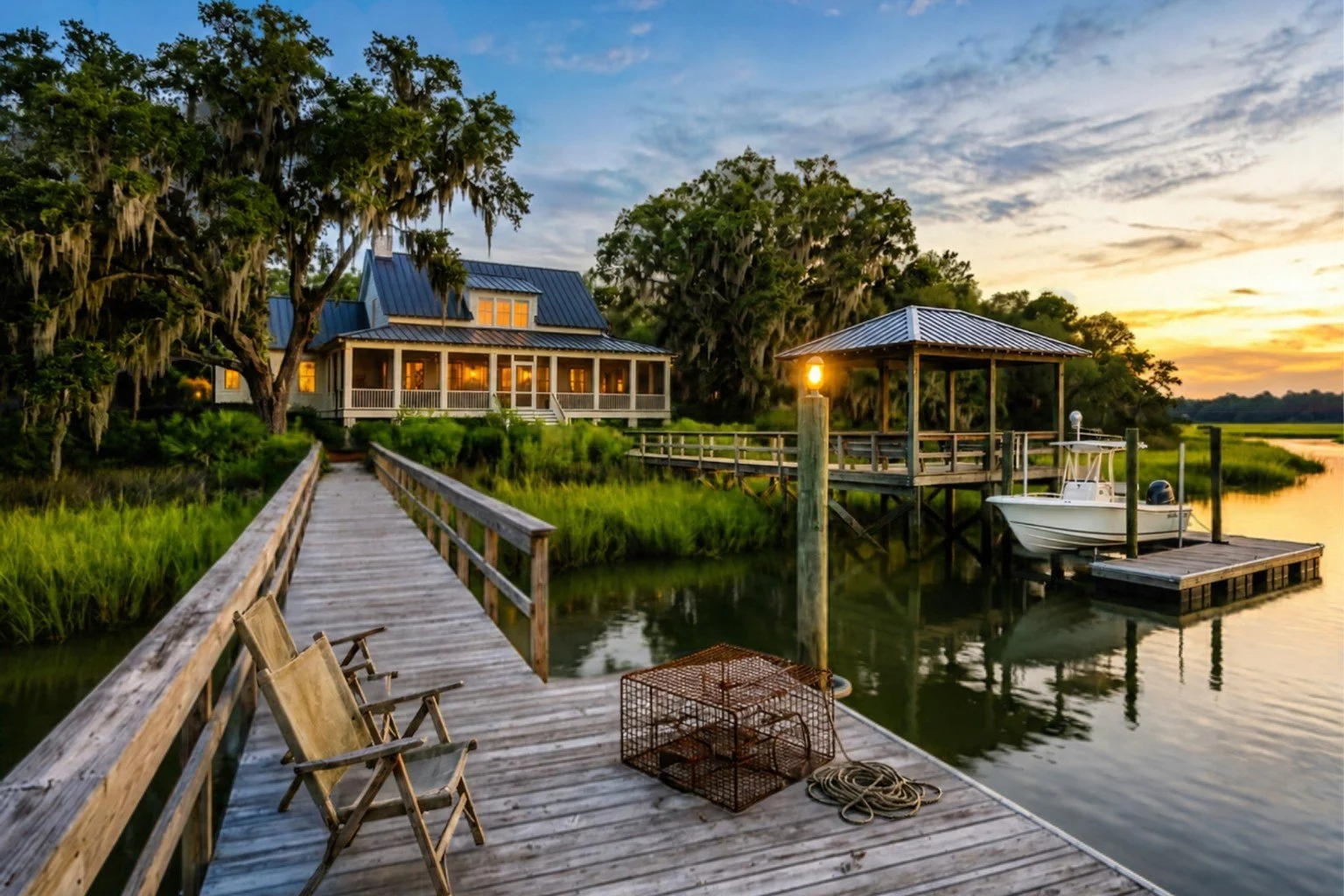
Daniel Island sits in an unusual spot right now. It carries a Charleston address with Berkeley County taxes, it has genuinely finite remaining lot inventory in the established sections, and it has a substantial pipeline coming — roughly 2,200 additional homes planned. That combination means the rate environment hits the two halves of the island differently.
Established resale — particularly waterfront and anything with deepwater access — still trades on scarcity. Those buyers often pay cash or structure around the rate, and a 17-basis-point week doesn't register. New construction is the opposite: rate-sensitive, and where the incentives live. If you're weighing the two, the deciding question usually isn't price per square foot. It's whether you need a finished home in 2027 or can carry a build schedule through permitting, stormwater review, and a coastal inspection calendar that doesn't care when your lock expires.
Frequently Asked Questions
Will Charleston mortgage rates drop again before the end of 2026?
Nobody can tell you that, and anyone who does is guessing. The record shows rates fell four consecutive weeks and gave most of it back in one, per Freddie Mac's November 2026 surveys. Plan around the payment you can carry today, and treat any decline as upside you refinance into later.
Should I wait to buy on Daniel Island until rates come down?
Waiting costs you the negotiating room. Pending sales are down 13.1% year over year and homes are closing at 95.8% of original list — that room disappears the week rates drop meaningfully, because buyers come back faster than listings do.
Is a rate buydown better than a price reduction?
In most Charleston scenarios this year, yes — and the math in Rung 2 above shows why. Matching a 100-basis-point rate cut through price alone takes roughly 10% off the loan. Confirm the point cost with your lender for your specific loan, and note that a buydown's value depends on how long you hold the loan.
What is the 30-year fixed mortgage rate right now?
7.28% as of November 19, 2026, up from 7.11% the prior week and 6.26% a year earlier, per Freddie Mac's Primary Mortgage Market Survey. Your quoted rate will differ based on credit, loan size, occupancy, and property type.
How much more will I pay per month than a buyer last year?
On a $750,000 loan, about $509 a month in principal and interest, comparing the November 2026 average to November 2025. On top of that, coastal insurance and the 4% versus 6% tax assessment question can move the real monthly number by several hundred dollars more.
Do new construction builders on Daniel Island offer better financing than resale sellers?
Often, structurally — builders with affiliated lenders can offer buydown programs an individual seller can't replicate. That doesn't automatically make new construction the better buy. Compare total monthly carry, delivery timeline, and lot premium side by side.
Let's Talk
Looking to buy, build, or invest in Charleston real estate? I'm Chris Eller, Broker Associate with The Cassina Group and a luxury real estate developer specializing in new construction and coastal properties across Charleston and the barrier islands.
Call/Text: 843-343-3359 | Email: Chris@TheCassinaGroup.com | Website: ChrisEllerRealEstate.com
If you're considering buying, selling, or building in Charleston or anywhere in the Lowcountry, reach out anytime for expert guidance.
