

Smythe Park · Daniel Island, South Carolina
Oak Overhang
An elevated marshfront custom home in Smythe Park on a lot bordering protected wetlands, with site-finished hardwood, gas lanterns and a screened porch facing the tidal marsh. Four bedrooms, three baths, 3,083 heated square feet, completed in 2021.


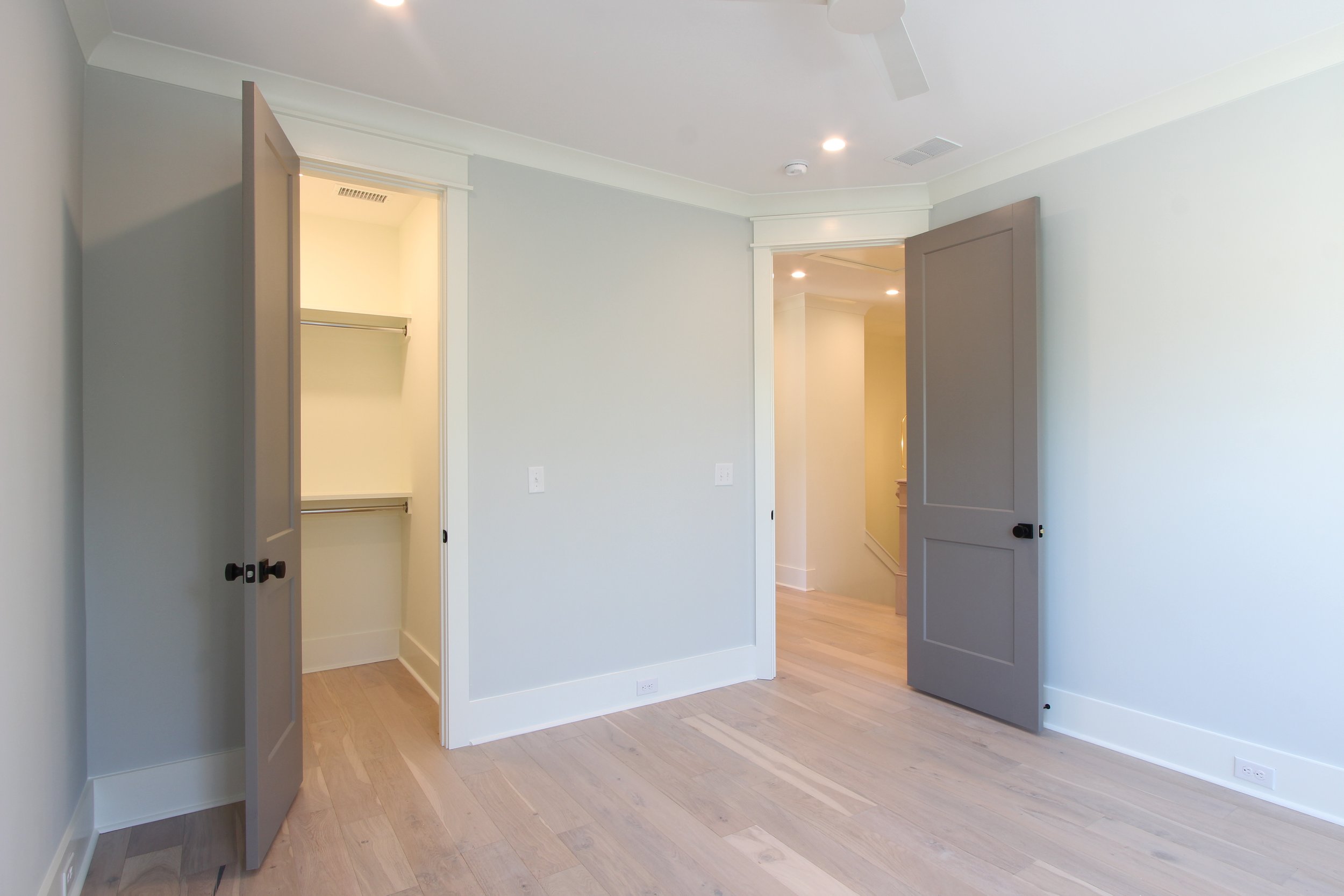
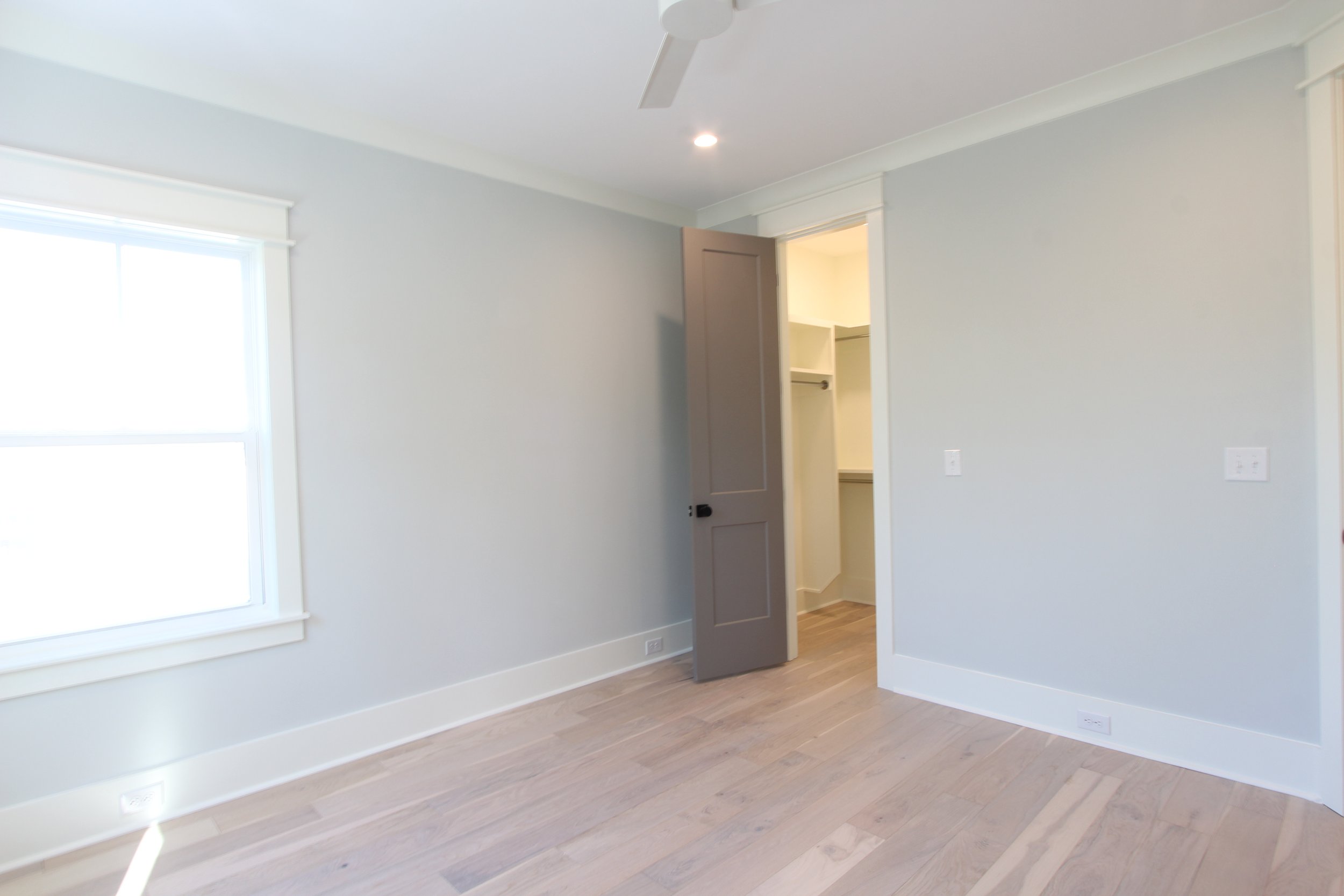


The lot is the reason this house exists in the shape it does. Just over ten thousand square feet backing directly onto protected wetlands, which means the marsh view behind it is permanent — not a current condition, a legal one. Everything above the foundation was oriented to that: the screened porch, the primary suite windows, the run of the main-level glass. Smythe Park, Daniel Island.
The Residence
Site & Setting
A marshfront lot bordering a protected wetland buffer is a different asset from a lot that merely has a view today. The buffer cannot be built on, so the sightline behind the house is fixed permanently — and on Daniel Island that is a small and shrinking category. The house sits elevated on a custom pier foundation among mature live oaks, and the rear yard reads as a tree house rather than a lawn. The constraint that comes with it: the buffer limits what you can do with your own ground near the marsh edge, and that is worth understanding before you buy, not after.
Exterior & Construction
Entry & Main Level
Kitchen
Owner’s Suite
Outdoor Living & Grounds
At a Glance
| Location | Smythe Park, Daniel Island |
|---|---|
| City | Charleston, South Carolina 29492 |
| Bedrooms | 4 |
| Bathrooms | 3 |
| Heated Square Feet | 3,083 |
| Year Completed | 2021 |
| Lot | Just over 10,000 sq ft, bordering protected wetlands |
| Construction | Elevated custom pier foundation, under-home garage |
| Accessibility | Three-stop residential elevator pre-wire |
Frequently Asked Questions
What does a protected wetland buffer behind a lot actually guarantee?
That nothing gets built there. A jurisdictional wetland buffer is a regulatory line, not a courtesy, so the open ground behind the house stays open regardless of what happens to the parcels around it. That is worth real money on Daniel Island and it is the single most durable thing a lot can own. The other half of the answer is the part buyers skip: the buffer also restricts what you can do on your own side of the line — clearing, filling, structures and hardscape near the edge are all limited. Read the buffer terms during due diligence.
What is site-finished hardwood, and why choose it over prefinished?
Site-finished means the boards go down raw and are sanded and finished in place after installation. You get a continuous flat plane with no micro-bevel between boards, seams that disappear, and the ability to match stain exactly across the whole floor. The cost is time and disruption — it happens late in the schedule, the house has to be empty, and cure time is real. Prefinished is faster and tougher out of the box. Site-finished looks better and refinishes better, which is why it is still the choice on custom work.
Does a marshfront lot cost more to build on?
Usually, and the cost is in the approvals more than the construction. Setbacks from the critical line, buffer requirements, stormwater treatment and the elevation the structure has to meet all narrow the buildable envelope, which can push a house taller or tighter than the same plan would be inland. Add pier foundation work and the pricing gap widens further. What you get for it is a view that cannot be taken away, which is the one thing in real estate that genuinely does not depreciate.
What is a butler’s pantry doing in a three-thousand square foot house?
Earning its space, if it is placed correctly. Positioned between kitchen and dining it becomes staging and cleanup, which keeps the mess out of an open plan where the kitchen is visible from everywhere. In a house this size the mistake is treating it as extra cabinetry rather than as circulation — if it is a dead-end closet it is wasted footage. Here it sits on the path from the foyer to the dining room, which is what makes it work.
Can Iconic Developments build for me in Smythe Park?
Yes, and on a marsh-edge lot the first work is the site, not the plan. Where the critical line falls, what the buffer allows, the required elevation and how the house is turned to the water all get resolved before a floor plan is chosen — because on a marshfront lot the orientation is worth more than any finish you will pick later. From there it is design, a real construction budget, permitting and the build. Chris Eller has more than 22 years in Charleston custom construction, land acquisition and luxury sales.
Building on a marshfront lot?
Chris Eller has more than 22 years in Charleston custom construction, land acquisition and luxury sales. On a marsh-edge lot the critical line, the buffer and the required elevation decide the house before a plan is ever drawn.