

Short answer: yes, you can buy in a Berkeley County community that still has years of construction ahead of it — and for a lot of our clients, that's exactly where the value is. But you have to underwrite the unfinished part instead of ignoring it. Three things decide whether it works: how many homes are still coming inside your resale radius, how big a discount the builder can hand the buyer you'll eventually compete with, and what the development agreement actually obligates anyone to build. Get those right and the growth works for you. Skip them and you find out in year four.
Key Takeaways
- Berkeley County Council gave final-reading approval to the Lake Village project near Cane Bay on September 28, 2026 — a build-out the county expects to run 20 to 25 years.
- Your real resale competition in a growing community isn't your neighbor. It's a builder who can cut price and buy down a rate indefinitely.
- Nationally, 46% of builders cut prices in November and 68% offered incentives — both post-Covid highs (NAHB, November 2026).
- The 30-year fixed sits at 7.28% (Freddie Mac, November 19, 2026), up from 7.11% a week earlier, which is why builder buydowns carry so much weight right now.
- Run the Build-Out Exposure Test below before you write an offer: count the doors, price the incentive gap, read the agreement.
What Actually Changed in Berkeley County This Fall
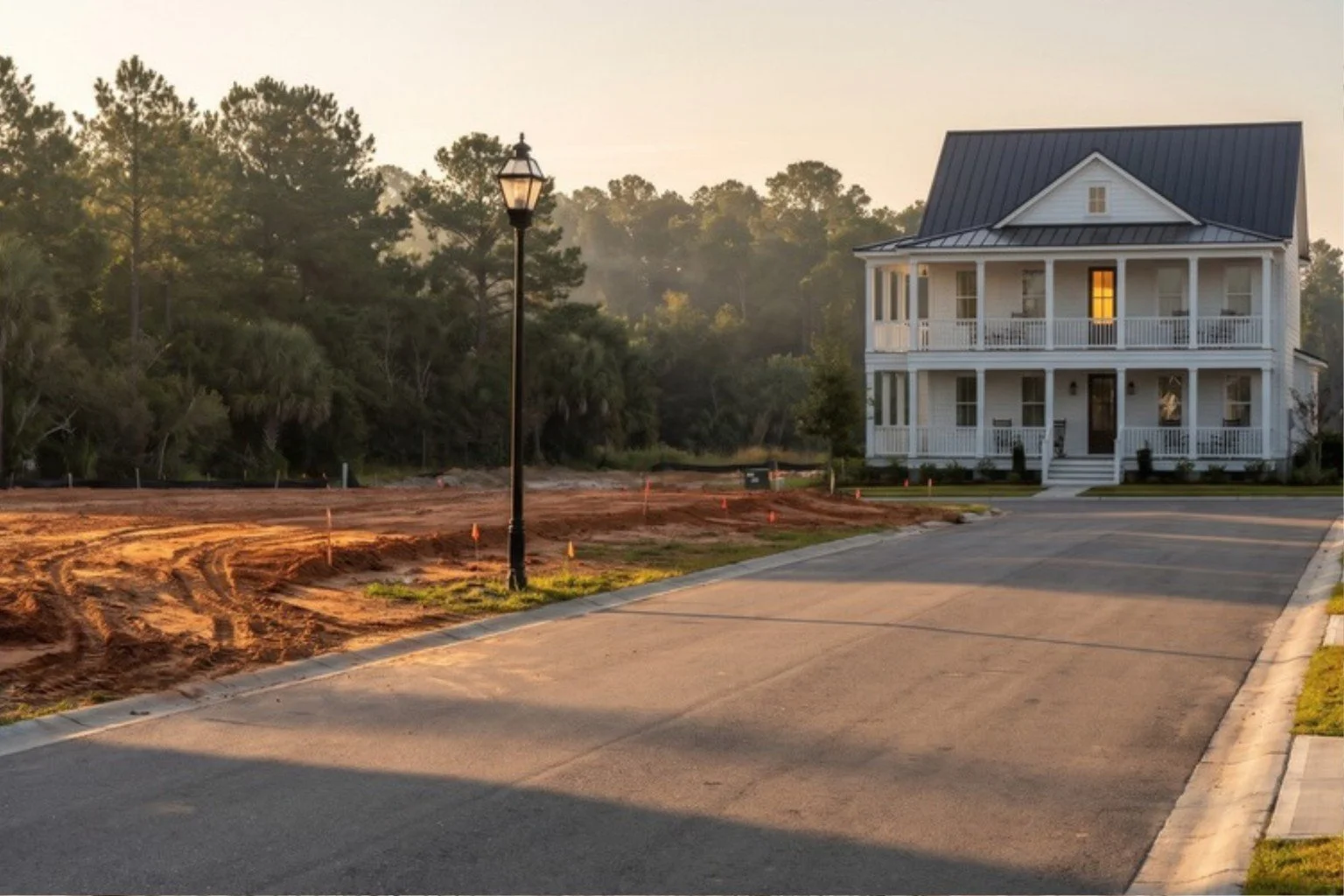
On September 28, 2026, Berkeley County Council held its final reading and approved the mixed-use Lake Village project in the Cane Bay area. When it went through the Planning Commission in June on a 4–2 recommendation, it was described as roughly 5,500 homes across more than 1,500 acres — somewhere near 15,000 new residents, per the Berkeley Observer. County Supervisor Johnny Cribb put the timeline plainly: there's no construction start date yet, and the thing is expected to take 20 to 25 years to finish.
Here's the part most buyers miss: that land was already entitled. Cribb's argument for the approval was that it replaces a 2006 development agreement providing no funds for public safety, infrastructure or schools — and that the county gets those commitments "without any increased density." He also noted existing stormwater there is engineered to a 100-year storm standard while current county regulation calls for 25-year.
So the vote didn't decide whether Berkeley County grows. It decided the terms. That reframes the buyer question entirely. You're not asking "will this get built?" You're asking "on what terms, in what order, and what does that do to my exit?"
"Berkeley County approved roughly 5,500 homes in a single September vote — about 98% of the 5,582 homes actively listed across the entire Charleston Trident MLS in October 2026. One signature, a decade-plus of shadow inventory."
SOURCES: Home count per Berkeley Observer, June 2026; active inventory per Charleston Trident Association of Realtors Monthly Market Indicators, October 2026. Ratio calculated by Chris Eller, Iconic Developments.The Build-Out Exposure Test
We run this on every Berkeley County deal, new or resale. It takes about an hour, and it's the difference between buying growth and being buried by it.
Step 1: Count the doors still coming
Draw a two-mile circle around the house, then find out how many entitled-but-unbuilt homes sit inside it — not units for sale today, but approved density. Planning department records and the development agreement will tell you. A community with 200 lots left behaves nothing like one with 5,000, even if today's listing inventory looks identical. Two miles is the radius because that's roughly where a Charleston-area buyer stops treating two communities as substitutes.
Step 2: Price the incentive gap
This is the step almost nobody runs, and it's the one that costs money. Take the builder's current base price for the closest comparable floor plan. Subtract the incentive package — closing costs, design credits, and especially the rate buydown. Nationally, 46% of builders reduced prices in November 2026, with the average reduction holding at 6% for the eighth straight month, and 68% offered sales incentives, both post-Covid highs (NAHB/Wells Fargo Housing Market Index, November 2026). Builder confidence fell to 25, with the buyer-traffic component down at 16.
That effective price — not the sticker — is your resale competition. A builder facing that traffic number will keep cutting. You can't. If the gap between your likely resale ask and the builder's effective price runs more than about 5%, you're relying on something the builder can't replicate to close it.
Step 3: Read the agreement, not the brochure
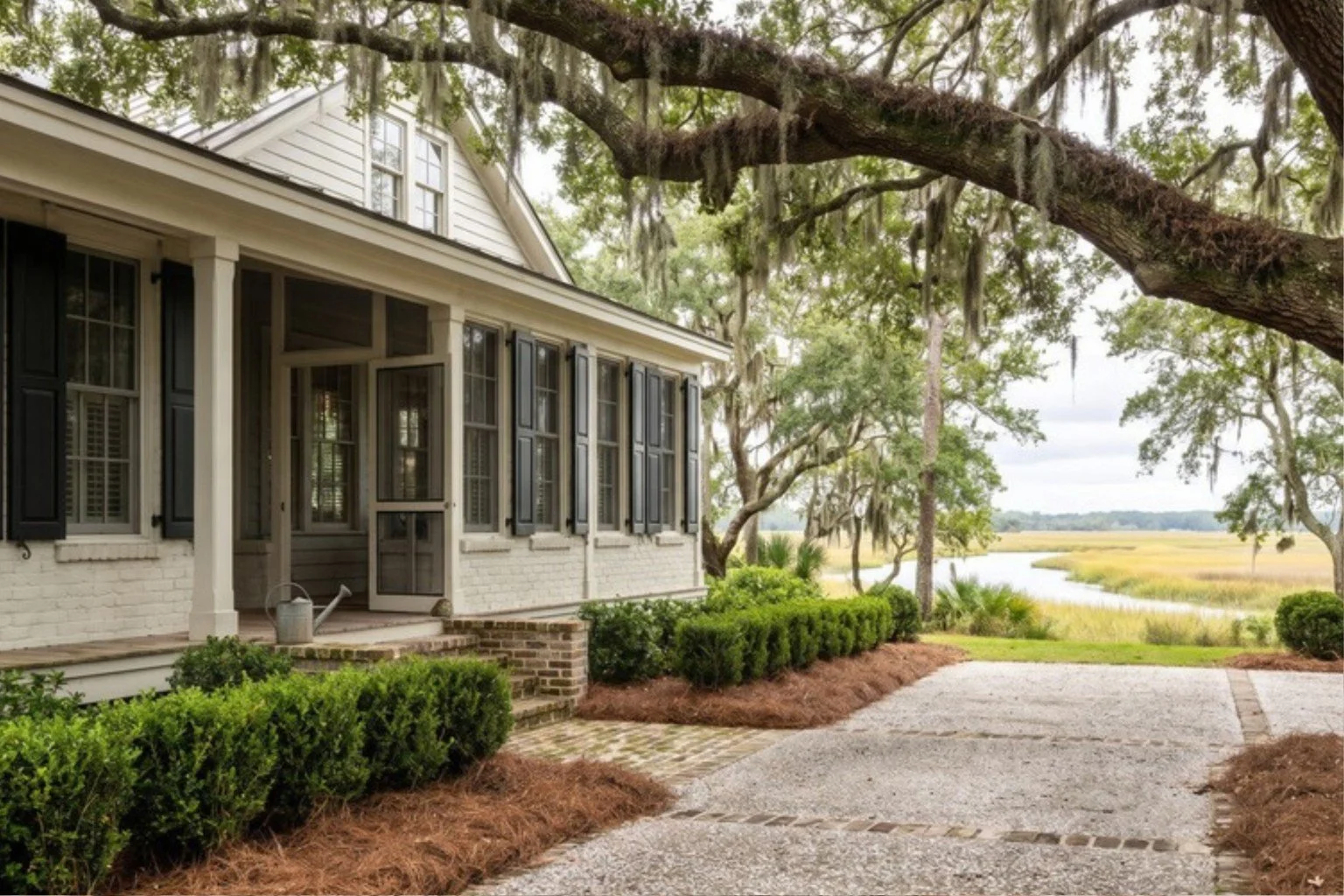
The development agreement is the only document that obligates anyone to anything. The brochure is marketing. Read it for four things: the phasing order (which sections get built when, and whether yours is surrounded by future phases or by preserved land), the infrastructure triggers (which road and school commitments attach to which phase — a 25-year build-out means some of those land after you've sold), the stormwater standard the community was actually engineered to, and the amenity obligations. In the Lowcountry, that last one includes the lake and detention pond system, which is both the amenity and the drainage infrastructure — verify the standard your specific section was engineered to, not the community at large.
What We'd Do Right Now
If you're buying new construction in a growing Berkeley County community, take the builder's money — and take it as a rate buydown rather than a price cut. At 7.28%, a forward commitment does more for your monthly number than an equivalent price discount, and the price cut shows up in comps later used against you. We've written about why a rate buydown is beating a price cut in 2026 — the same logic runs in reverse when you're the buyer.
If you're buying resale, buy what the builder physically cannot reproduce in Phase 7. A mature live oak canopy. Real water frontage, not a retention pond view. A cul-de-sac position backing to preserved land or wetlands rather than to a future phase. Those are the attributes that hold a premium against a brand-new house 400 yards away with $40,000 of incentives on it. A builder-grade spec home in year three of a 25-year build-out, bought at full resale price, is the single worst position in this market — and it's the one buyers walk into most often. If you're on the other side of that trade, selling a home in Berkeley County when the builder down the road is writing checks is its own problem with its own playbook.
And don't let any of this talk you out of the county. The math that sent Charleston buyers north still holds: more house, newer house, lower tax base. Berkeley County is still where a lot of Charleston buyers are actually closing. The point isn't to avoid the growth — it's to pick a position inside it that doesn't depend on the growth stopping.
Where This Sits in the Broader Charleston Market
The tri-county numbers explain why builders are leaning on incentives while sellers mostly aren't. Per the Charleston Trident Association of Realtors, October 2026:
| Metric | October 2026 | Year over year |
|---|---|---|
| Median sales price | $445,239 | +4.7% |
| Closed sales | 1,312 | −6.2% |
| Inventory of homes for sale | 5,582 | +1.1% |
| Months supply | 3.6 | −2.7% |
| Days on market | 53 | −1.9% |
| New listings | 1,885 | −11.7% |
| Pct. of original list received | 95.8% | +0.3% |
Read those together and you get a market tight on resale supply and soft on demand. New listings down 11.7% with months supply at 3.6 is no buyer's market by any historical measure. But closed sales are off 6.2% and the affordability index fell to 71 from 81 — which says buyers are priced out, not absent. That's the exact condition in which a builder with a buydown wins the marginal buyer and a seller holding out for last spring's number sits for 90 days.
One more figure for anyone shopping the 4-bedroom Berkeley County product: inventory of homes with four or more bedrooms rose 4.8% in the 12 months through October while 3-bedroom inventory fell 0.7% — the 4-bedroom-plus tier was the only one where months supply rose. That's where the new construction pipeline shows up in the resale data, and where your negotiating room is.
Frequently Asked Questions
Is it a bad idea to buy a home in a neighborhood that's still being built?
No — but it changes what you should buy. In an unfinished community, lot position and irreplaceable features carry the premium, because the house itself can be rebuilt newer nearby. Buy the lot attributes first and the floor plan second.
How long will the Cane Bay area keep building?
Per reporting on the September 28, 2026 Berkeley County Council approval of Lake Village, the project is expected to take 20 to 25 years to complete, with no announced construction start date. Plan your hold period against that, not against a single phase.
Will all this new construction hurt my home's value in Berkeley County?
Not necessarily — median tri-county prices were still up 4.7% year over year in October 2026. What new supply does is compress your pricing power at resale, especially if your home is a close substitute for whatever the builder is selling that quarter. Differentiated homes hold up; substitutes get undercut.
Should I buy new construction or resale in Berkeley County right now?
If you want the incentive package and a rate buydown, new construction is where the leverage is — 68% of builders nationally are offering incentives. If you want a position that defends itself in five years, a resale on a superior lot with mature landscaping usually wins. We look at both for most clients and let the lot decide.
What should I ask the builder's sales agent before I sign?
Three questions: how many lots remain in the entire approved development, not just this phase; what the full incentive package is on this plan this month; and which future phase borders my lot. Get the answers in writing, then check them against the county's development agreement.
Do flooding and stormwater matter in these inland Berkeley County communities?
Yes. Inland doesn't mean dry in the Lowcountry — these communities drain through engineered lake and pond systems, and flooding was the central objection at the Lake Village hearings. Ask what storm standard your section was engineered to, and pull an elevation certificate before you waive due diligence. A licensed insurance agent can tell you what that means for your premium.
Looking to buy, build, or invest in Charleston real estate? I'm Chris Eller, Broker Associate with The Cassina Group and a luxury real estate developer specializing in new construction and coastal properties across Charleston and the barrier islands.
Call/Text: 843-343-3359 | Email: Chris@TheCassinaGroup.com | Website: ChrisEllerRealEstate.com
If you're considering buying, selling, or building in Charleston or anywhere in the Lowcountry, reach out anytime for expert guidance.
