

If you are buying a James Island lot to build on, the answer you need first is this: a stormwater submittal is part of nearly every new single-family build here, and the tier you land in is set by two things you can measure before you ever hire an architect — how close the lot sits to a tidal creek, and how much dirt your plan moves. Cross roughly half an acre of land disturbance within a half-mile of a coastal receiving water and you leave the simple site-plan lane for an engineered permit: a sealed technical report, a construction stormwater pollution prevention plan, and a recorded operating permit. The county allows itself 20 working days on the first review alone.
Key Takeaways
- Proximity changes the tier. Under the Charleston County stormwater manual, a half-acre-to-one-acre site within a half-mile of a coastal receiving water is a Type II permit — not the lighter Type I. On James Island, very little land is more than a half-mile from tidal water.
- Half an acre arrives sooner than people think. Half an acre is about 21,780 square feet of disturbance — footprint plus driveway, pool, utility trenching, grading, and lay-down area. Not just the house.
- Type II means an engineer. Technical report with calculations, full construction plans, a maintenance schedule, and a recorded operating permit.
- Twenty working days, per review cycle. That is about four calendar weeks before comments come back, and a resubmittal not returned within six months is treated as withdrawn.
- Where the water goes is a diligence item. Some James Island outfalls now sit inside funded capital projects. Others sit inside nobody's budget.
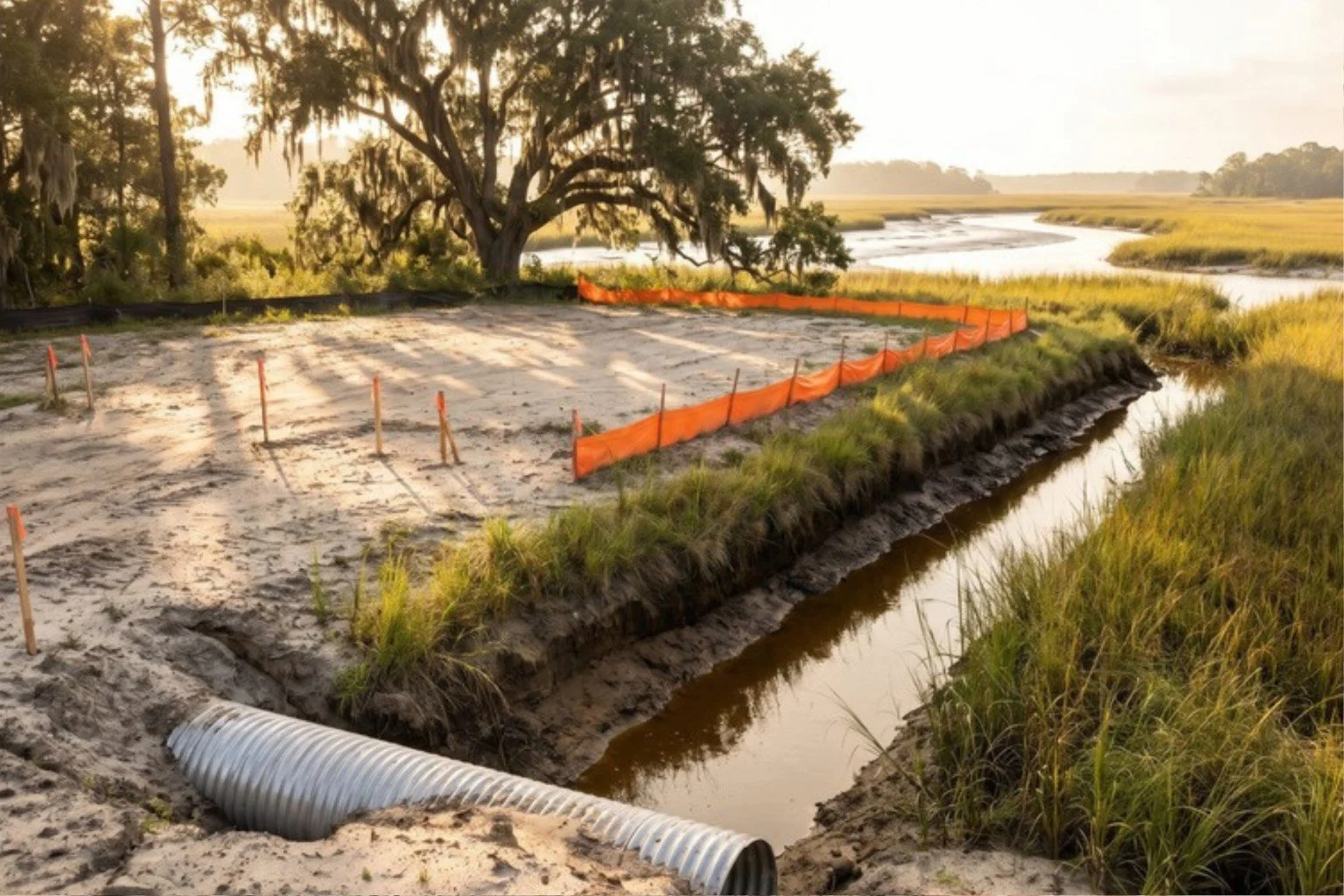
What Buyers Are Actually Running Into This Fall
The Charleston market has not gotten easier to time. The 30-year fixed averaged 7.28% in the week ending November 19, up from 7.11% the week before and 6.26% a year ago, per Freddie Mac's Primary Mortgage Market Survey as of November 2026. Across the Trident region, October's median sale price was $445,239, up 4.7% year over year, on inventory of 5,582 homes and 3.6 months of supply — per the Charleston Trident Association of Realtors monthly indicators, as of November 2026. New listings fell 11.7%.
Read together, those numbers explain why land has stayed interesting. Resale supply is thin, financed carry is expensive, and a buyer who wants a specific location on James Island increasingly concludes that building is the cleaner path. That conclusion is usually right. What goes wrong is the schedule and the budget assumption underneath it, because most lot contracts are written on a 30-day diligence window that was designed for a house inspection, not for a drainage question that takes a civil engineer three weeks to answer.
The Three-Line Drainage Test
Before I let a client go hard on a James Island lot, I want three lines drawn on a map. Each one is measurable, each one moves money, and none of them requires a design.
Line One: The Half-Mile Line
Draw a half-mile radius from the nearest coastal receiving water — James Island Creek, the Stono, Folly Creek, the marsh fingers in between. Inside that line, a site disturbing roughly half an acre to an acre is classified Type II rather than Type I under the Charleston County Stormwater Program Permitting Standards and Procedures Manual. Same acreage, heavier permit, purely because of where the lot sits. Check your jurisdiction at the same time: James Island parcels fall under the Town of James Island, the City of Charleston, or unincorporated Charleston County, and the permit path your parcel sits on sets your schedule before design does.
Line Two: The Half-Acre Line
Add up everything you will disturb, not everything you will roof. A 3,400-square-foot footprint is comfortable. Add a circular drive, a pool and deck, a detached garage, utility trenching to the road, tree removal, grading for positive drainage away from an elevated foundation, and a lay-down area the crew can actually work in, and 21,780 square feet stops being theoretical. This is the single most common miss I see, and it is a design decision, not a fixed condition. Shrinking the pool deck or moving the staging area to an adjacent lot you also control can hold a project under the line.
Line Three: The Outfall Line
Follow the water off the lot and keep following it. Every James Island lot discharges somewhere, and the condition of that somewhere is now a value input. A roadside ditch with a scheduled capital project behind it is a different asset than a ditch with no owner and no money. The City of Charleston approved a disbursement in November 2026 to receive a $100,000 state appropriation for the Brockman Drive Drainage Improvement Project, designed for a storm with a one-in-25 chance of occurring in any year and sized with sea level rise accounted for. Survey and design come next, with a stated goal of completion by mid-to-late 2027. Meanwhile the final phase of the 500-acre Central Park Drainage Basin moved forward on a $4.5 million contract in September 2026. If your outfall is inside one of those footprints, you are buying into an improving system. If it is not, you are buying the ditch as it stands.
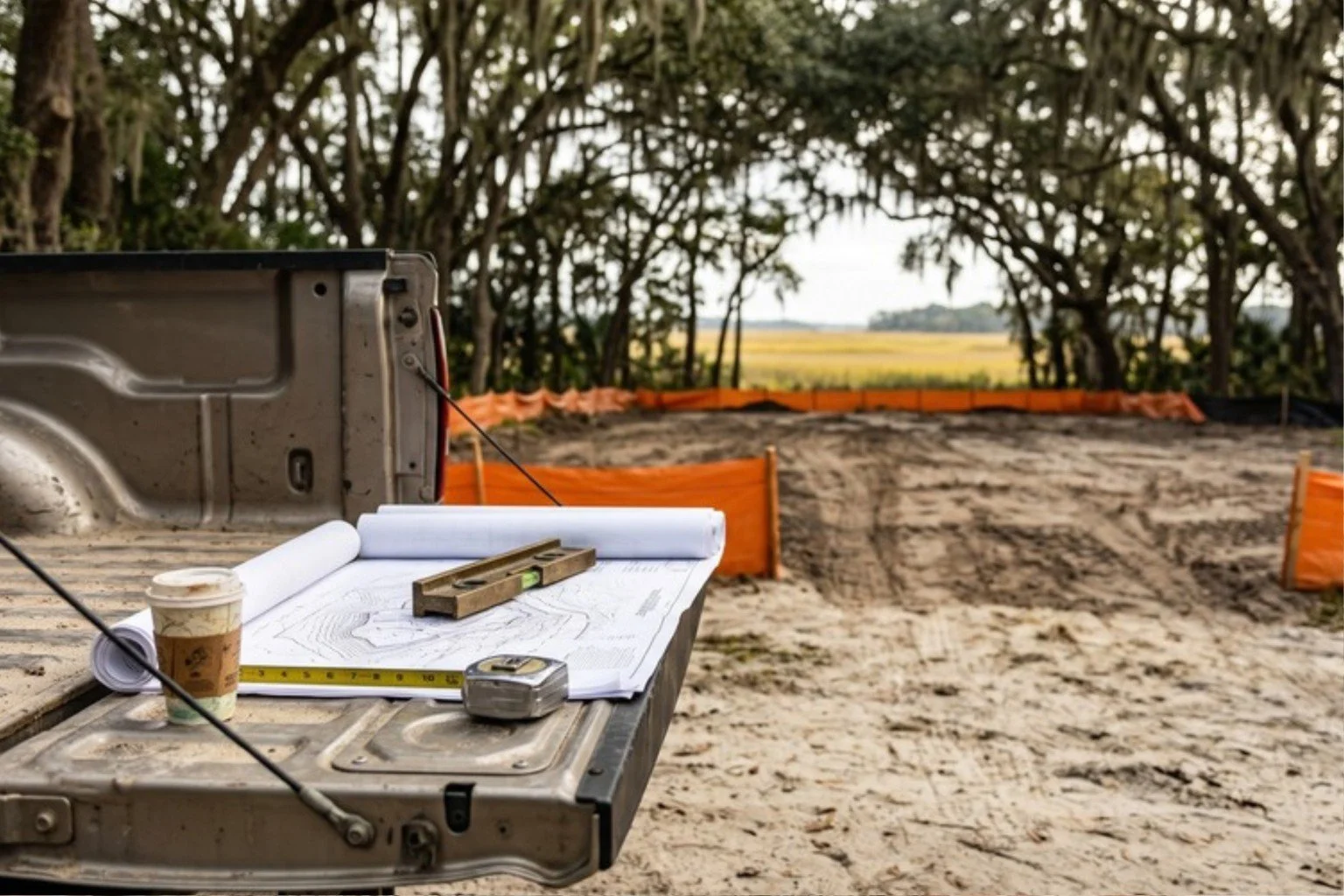
“Charleston spends roughly $2 million a year on roadside drainage projects of the Brockman Drive type. One James Island basin — Central Park, at 500 acres — represents a $10 to $20 million investment. A single basin is worth five to ten years of the city's entire annual roadside-drainage budget.”
Ratio calculated by Chris Eller, Iconic Developments, from figures attributed to Matthew Fountain, City of Charleston director of stormwater management, in WCSC Live 5 News reporting dated November 17, 2026 and September 21, 2026.That ratio is the argument for diligence in one line. Public money moves basin by basin, on a horizon measured in years — and the buyer who confirms which side of it a lot sits on is underwriting the real asset.
Buyer and Seller Strategy Right Now
If you are buying a lot: negotiate the diligence period against the review calendar, not the calendar month. Forty-five to sixty days, with an extension tied to receipt of first-round stormwater comments, is a reasonable ask in a market with 3.6 months of supply. Spend the money on a civil engineer's preliminary opinion before the architect's fee — a sealed site plan concept costs a fraction of a redesign. And price the tier into the land, not the build; a lot that pushes a project into Type II carries real engineering, bonding, and schedule cost that belongs in what you pay for the dirt.
If you are selling a lot: do the engineering first and sell the certainty. A lot listed with a completed topographic survey, a wetlands delineation, a soils report, and a civil engineer's letter identifying the likely permit tier and the receiving outfall removes the buyer's largest unknown. In a market where new listings are down 11.7% year over year, the scarcity is real — but buyers paying 7.28% money are disciplined, and they discount uncertainty harder than they discount location.
| Diligence item | Why it moves money | Typical timing |
|---|---|---|
| Topographic survey | Establishes existing flow patterns the site plan must show | Week 1–2 |
| Wetlands delineation | Delineated wetlands are required on the submittal; buildable area may shrink | Week 1–3 |
| Disturbance takeoff | Determines which side of the half-acre line the plan falls on | Week 2 |
| Outfall trace | Identifies capacity, ownership, and any funded capital project | Week 2–3 |
| Civil engineer's tier letter | Converts all of the above into a cost and schedule you can contract against | Week 3–4 |
James Island in Context
James Island has become the value answer for buyers who want proximity to downtown and the beaches without barrier-island pricing. That demand is why infill teardowns and marsh-edge lots keep trading. What has changed is that the land is being asked to do more: larger homes, pools, elevated foundations, and more impervious surface on parcels that were platted when the drainage expectation was a ditch and a culvert.
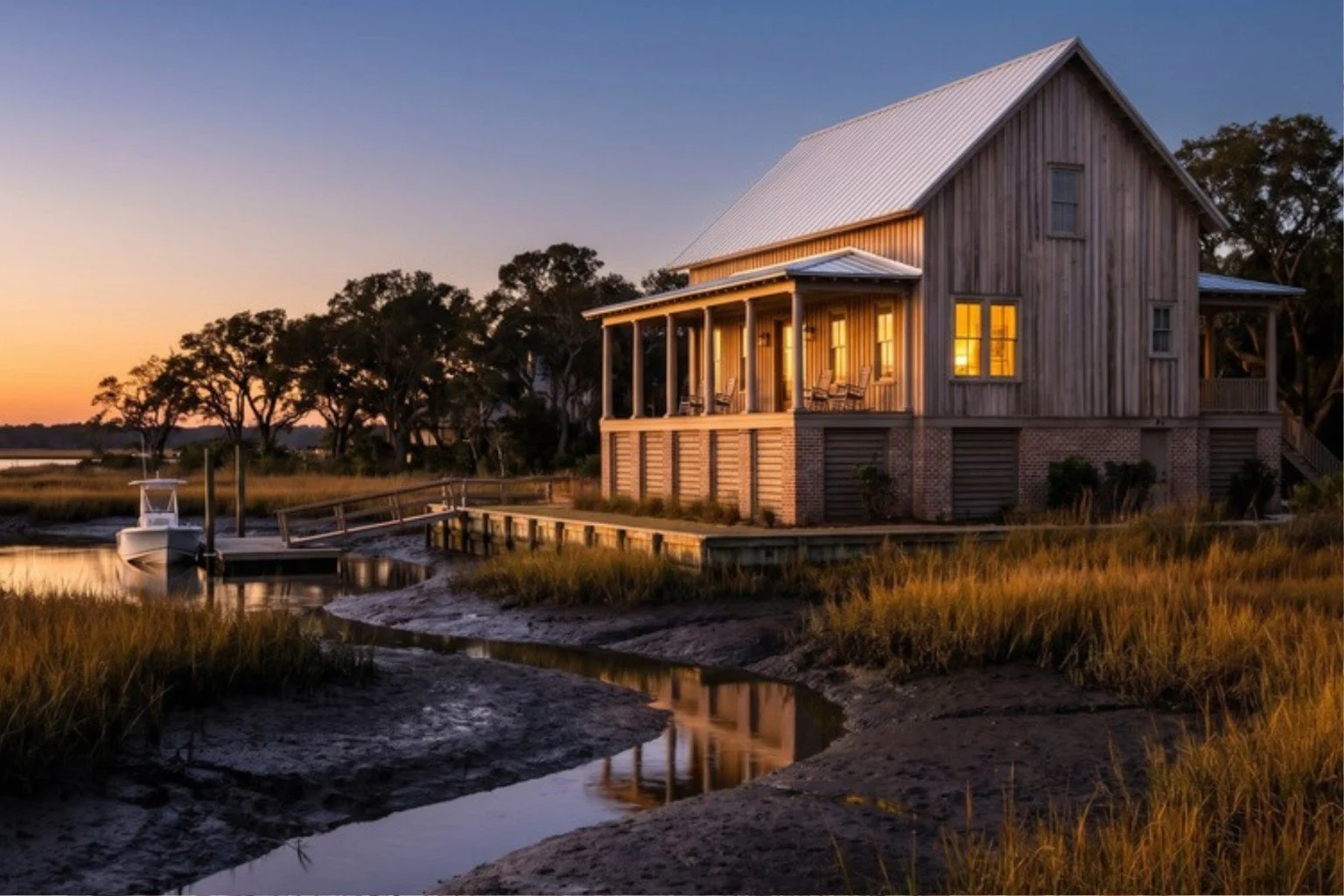
For a builder, that is a solvable problem — underground detention, pervious drives, grading that works with the site instead of against it. For a buyer, it is a pricing problem, and it belongs in the land negotiation. The same logic that changed the math on Mount Pleasant lots when the wetlands buffer rule landed applies here. And once the permit tier is settled, the rest of the number follows the pattern in what it actually costs to build a custom home on James Island in 2026.
Frequently Asked Questions
Do I need a stormwater permit to build a single house on James Island?
In practice, yes — a single-family residential stormwater submittal is part of the process, and it requires a scaled site plan showing existing and proposed flow patterns, structures, and delineated wetlands, plus an owner certification that best management practices will be installed and maintained. What varies is the tier, and with it the engineering.
What is a coastal receiving water, and why does a half-mile matter?
It is the tidal water your site ultimately drains to. Under the county manual, a site of a half acre to an acre within a half-mile of one is reviewed as Type II rather than Type I — a meaningfully heavier submittal for identical acreage.
How long does stormwater review take?
The county manual gives the Public Works Director 20 working days to approve or deny after a complete application. Budget for at least one comment cycle. Note also that a resubmittal must come back within six months of comments or the application is treated as withdrawn.
Can I reduce my permit tier by changing the design?
Often, yes. Total land disturbance is a design output. Reducing hardscape, relocating staging, phasing a pool to a separate later permit, or shifting the footprint can keep a project under a threshold. That conversation is worth having before construction drawings, not after.
Does a funded drainage project nearby make a lot worth more?
It removes a risk, which buyers pay for. A lot whose outfall sits inside a funded, scheduled basin improvement has a more predictable future than one whose outfall has no owner and no budget. Verify the project footprint and stage rather than assuming the nearest headline applies to your parcel.
Let's Talk About Your Lot
Looking to buy, build, or invest in Charleston real estate? I'm Chris Eller, Broker Associate with The Cassina Group and a luxury real estate developer specializing in new construction and coastal properties across Charleston and the barrier islands.
Call or text: 843-343-3359
Email: Chris@TheCassinaGroup.com
Website: ChrisEllerRealEstate.com
If you're considering buying, selling, or building in Charleston or anywhere in the Lowcountry, reach out anytime for expert guidance.
