

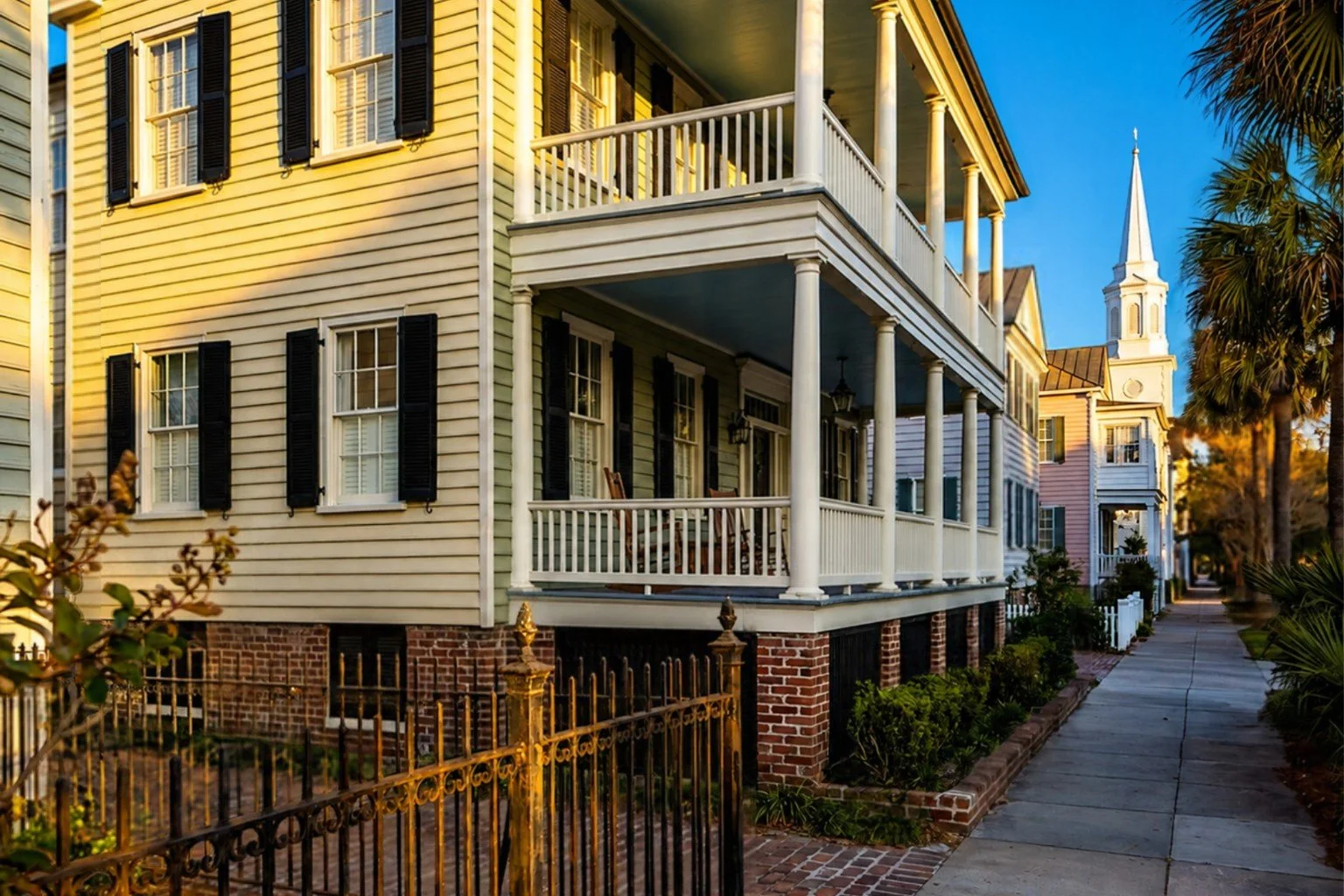
If you are shopping downtown Charleston neighborhoods right now, here is the short answer: the peninsula has not gotten cheaper, but the search has moved north. Buyers who three years ago were writing offers South of Broad and in Harleston Village are now underwriting in Cannonborough-Elliotborough, Radcliffeborough and the Westside — not because those blocks are a bargain, but because the payment math at today's rates forces a different price band. The mistake is assuming an upper-peninsula address carries the same cost structure as a lower-peninsula one. It does not. Elevation, architectural review and carrying cost all change within a few blocks, and those three variables decide your deal more than the asking price does.
Key Takeaways
- The Charleston Trident median closed at $445,239 in October 2026, up 4.7% year over year, while closed sales fell 6.2% and new listings fell 11.7% (per CTAR, October 2026 report).
- Financing that median at 7.28% (per Freddie Mac, November 19, 2026) costs roughly 16% more per month than financing last October's median at the year-ago rate — on prices that rose less than 5%.
- Thin new supply, not weak demand, is what is holding peninsula pricing up. New listings are falling faster than closings.
- Run the Peninsula Three-Block Test — elevation, review, carry — before you run comps. Two houses four blocks apart can carry very different annual costs on nearly identical purchase prices.
- Sellers: at 3.6 months of supply and 53 days on market, the market is balanced, not soft. Precision beats patience.
What the October Numbers Actually Say
The Charleston Trident region closed 1,312 sales in October 2026, down 6.2% from a year earlier, on 1,885 new listings, down 11.7% (per CTAR, October 2026). Pending sales fell 13.1%. Read quickly, that looks like a cooling market. It isn't. Inventory finished the month at 5,582 homes, up just 1.1% year over year, and months supply actually tightened slightly to 3.6. Days on market held at 53.
What that combination describes is a market where fewer people are transacting on both sides at once. Sellers are not listing, so buyers have less to choose from, so the price floor holds. The median rose 4.7% to $445,239. Sellers are still collecting 95.8% of original list price — a tenth of a point better than last October.
The pressure is not in prices. It is in the payment.
Charleston's median sale price rose 4.7% over the past year — but the monthly principal-and-interest payment to buy that median home rose about 16%. A buyer financing October 2025's $425,400 median at the then-prevailing 6.26% paid roughly $2,100 a month at 20% down. Financing October 2026's $445,239 median at 7.28% costs roughly $2,440 — about $4,100 more per year for the same middle-of-the-market house.
Calculated by Chris Eller, The Cassina Group, from Charleston Trident Association of Realtors monthly market indicators (October 2026) and Freddie Mac Primary Mortgage Market Survey (November 19, 2026). 30-year fixed, 20% down, principal and interest only.
That gap is the single most useful number on the peninsula right now. At 7.28%, the purchase price that produces last October's payment is roughly $383,000 — about $62,000 below today's median. That $62,000 is the distance buyers are covering by moving up the peninsula, raising down payments, or buying down the rate.
The Peninsula Three-Block Test
Before comps, before the inspection, before you argue over $15,000 in price, run three checks. Each one can move your true annual cost by more than the negotiation will.
Block One: Elevation
The peninsula is not one flood profile. Finished floor elevation relative to base flood elevation drives the flood premium, and on an older upper-peninsula house that sits low on short piers, it can be the largest single line in your carrying cost. Pull the elevation certificate before you go under contract — not after. If there is no certificate on file, assume you are buying the obligation to produce one.
Elevation also sets your renovation ceiling. Once improvements cross the substantial-improvement threshold, the structure has to come up to current flood standards, which turns a kitchen-and-bath budget into a structural one. This is the trap behind the 50% rule peninsula buyers find out about too late.
Block Two: Review
Whether an address falls inside the Old and Historic District, the Old City District, or outside both determines who approves your exterior work and how long it takes. Two houses on adjacent blocks can face completely different approval calendars for the same window replacement. Review does not usually kill a project; it reprices the schedule, and schedule is money on a carried renovation. If you are buying to renovate, get the jurisdiction answer in writing during due diligence — buying a historic home downtown means buying a second set of rules, and those rules have calendars attached.
Block Three: Carry
Three lines, every year, regardless of what you paid: insurance, taxes, and parking. South Carolina home insurance averages $3,102 a year statewide, about 30% above the national average, and rose nearly 10% in 2025 alone (per ValuePenguin, September 2026) — and coastal Charleston County sits well above that statewide figure. Taxes turn on classification: the 4% owner-occupied assessment ratio versus the 6% ratio applied to second homes and investment property is the difference between two very different annual bills on the same house. And on much of the peninsula, off-street parking is a priced amenity, not a given.
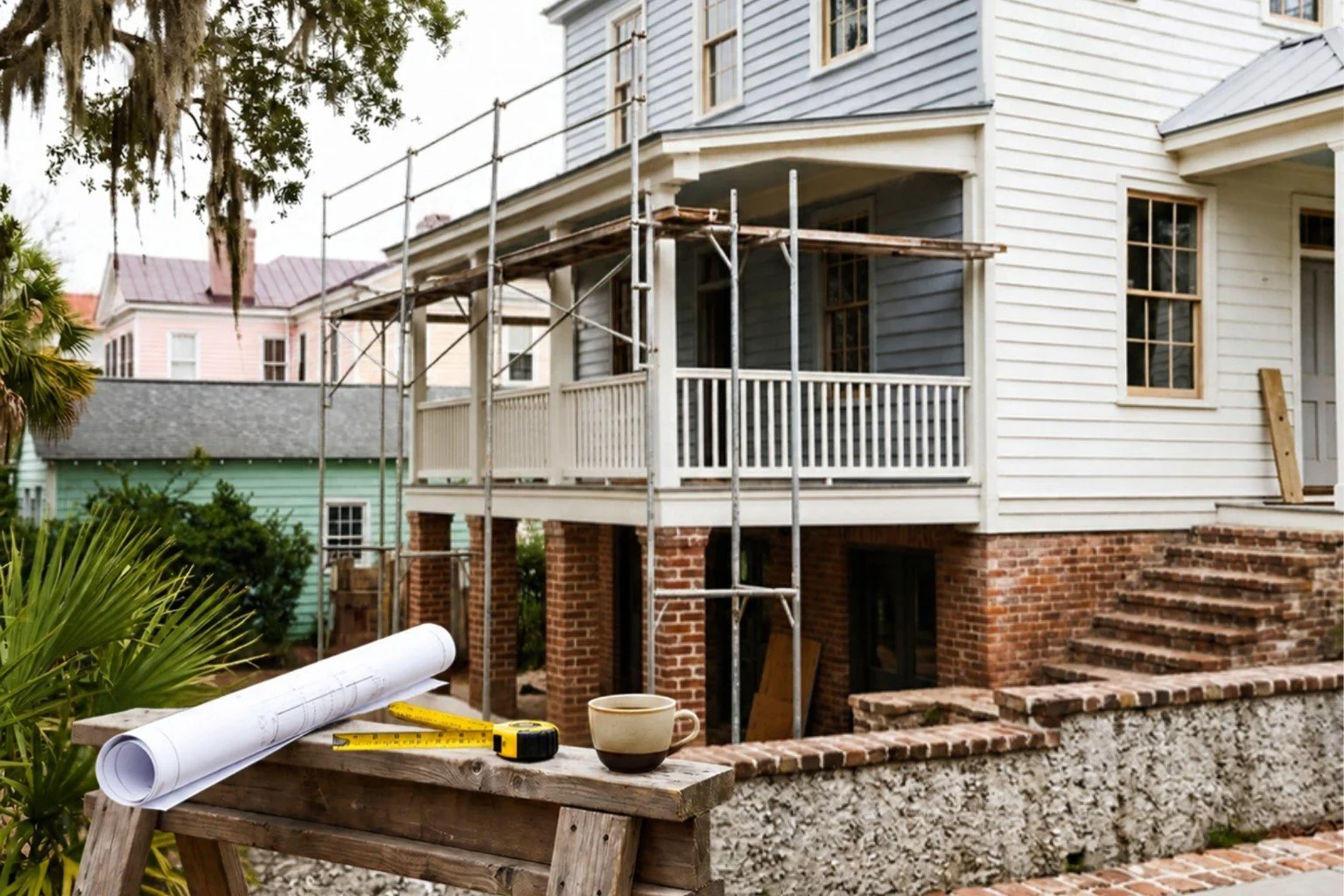
Score each block before you offer. A house that passes all three at $700,000 beats one that fails two at $640,000 — and that spread shows up in year one, not year ten.
What to Do Right Now
If you are buying: underwrite the payment, not the price. The $62,000 rate-equivalent gap above means a seller credit applied to a permanent rate buydown is frequently worth more to you than the same dollars taken off the price — and with new listings down 11.7%, sellers who have been sitting are more willing to structure than to cut. Ask for the elevation certificate and the current insurance declarations page in your first document request. On a renovation target, get a contractor through the property during due diligence, not after.
If you are selling: 3.6 months of supply and 95.8% of original list price is a balanced market, not a buyer's market — but 53 days on market means the window for a clean, fast result is real and narrow. Price into the band, not above it. The buyer pool at any given price point is thinner than it was, so a 3% pricing error now costs you more weeks than it used to. Bring the elevation certificate, the insurance history and the permit record to the table on day one; every unanswered peninsula question becomes a re-trade later.
Where the Peninsula Money Is Actually Moving
The split is widening. The average Charleston Trident sale price hit $728,704 in October — roughly 1.64 times the median, up from about 1.54 times a year earlier (calculated from CTAR data, October 2026). That ratio is the clearest signal in the whole report: the upper end is pulling away from the middle. Cash and low-leverage buyers at the top are largely unaffected by a one-point move in rates, while the financed middle feels every basis point.
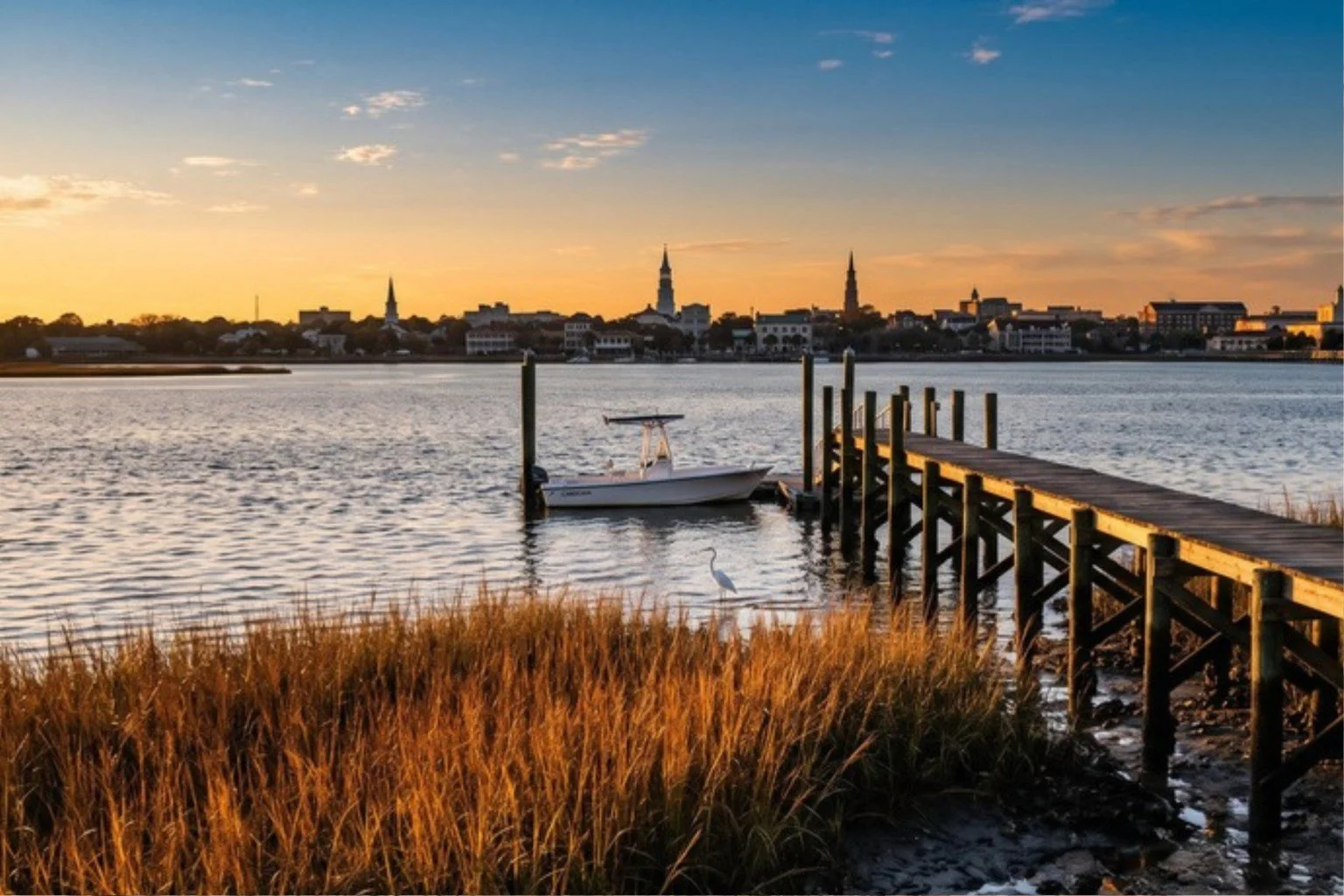
On the peninsula, that plays out geographically. Lower-peninsula trophy properties trade on scarcity and condition. The upper peninsula is where financed buyers compete — and where renovation risk concentrates: older stock, more deferred maintenance, more elevation and review questions. It is also where the value gets created, if the Three-Block Test runs before the offer rather than after the inspection.
Peninsula new construction and gut renovation remain cost-constrained, not demand-constrained. Lot scarcity, review timelines and coastal construction standards push replacement cost well above most existing-home pricing — the structural floor keeping values from softening even as volume falls.
Frequently Asked Questions
What are the most affordable downtown Charleston neighborhoods right now?
The upper peninsula — Cannonborough-Elliotborough, Radcliffeborough, the Westside and the Eastside — generally prices below the lower peninsula. "Affordable" is relative; these are still peninsula prices. The real variable is condition and elevation, which can swing annual carrying cost by thousands on otherwise comparable houses.
Is now a good time to buy in downtown Charleston?
It depends on your holding period and your payment tolerance. Rates moved up to 7.28% as of November 19, 2026 (per Freddie Mac), while inventory is only 1.1% above last year. You are not catching a falling market — you are buying into a tight one at an expensive cost of capital. Buyers who can structure the financing, or who are paying cash, have real negotiating room on days-on-market listings.
How much is flood insurance on a downtown Charleston home?
It varies enormously by elevation, and no honest estimate exists without the elevation certificate. Get that document and a live quote during due diligence. For the broader cost picture, see our breakdown of what Charleston coastal home insurance actually costs.
Can I renovate a historic home on the peninsula?
Usually yes, with review. Exterior work in the historic districts requires approval, and the scope of your project relative to the structure's value determines whether flood-code upgrades are triggered. Budget for the calendar, not just the construction.
Are downtown Charleston home prices going to drop?
Nothing in the October data points that way. Supply tightened, days on market held, and sellers collected a higher share of original list price than a year ago. Replacement cost on the peninsula sits above most resale pricing, which limits downside. Flat-to-modest appreciation with lower transaction volume is what the current numbers describe.
Should I buy on the peninsula or in Mount Pleasant?
Different products. The peninsula trades on irreplaceable location and historic stock, with renovation and carrying-cost risk attached. Mount Pleasant trades on newer construction and square footage per dollar. Run the Three-Block Test, then compare all-in annual cost rather than purchase price.
Looking to buy, build, or invest in Charleston real estate? I'm Chris Eller, Broker Associate with The Cassina Group and a luxury real estate developer specializing in new construction and coastal properties across Charleston and the barrier islands.
Call/Text: 843-343-3359 | Email: Chris@TheCassinaGroup.com | Website: ChrisEllerRealEstate.com
If you're considering buying, selling, or building in Charleston or anywhere in the Lowcountry, reach out anytime for expert guidance.
Sources: Charleston Trident Association of Realtors monthly market indicators, October 2026 · Freddie Mac Primary Mortgage Market Survey, November 19, 2026 · ValuePenguin South Carolina home insurance analysis, September 2026. This article is general market information, not legal, tax, lending or insurance advice; consult the appropriate licensed professional for your situation.
